


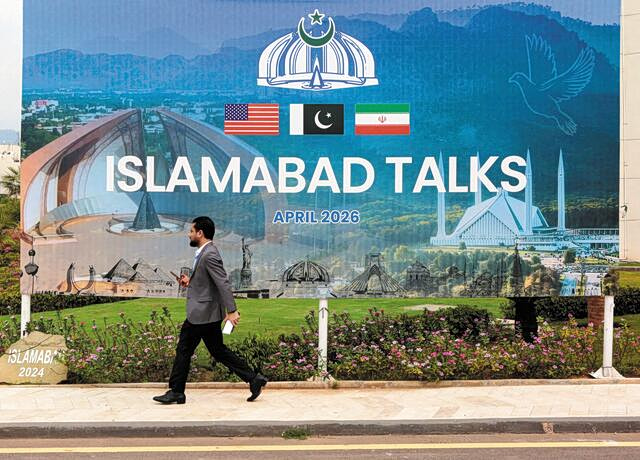
US, Iran Representatives Converge in Pakistan Amid Fragile Ceasefire
Translated from Greek, summarized and contextualized by DistantNews.
TLDR
- The United States and Iran are reportedly sending representatives to Islamabad, Pakistan, for potential talks aimed at ending the ongoing conflict.
- Despite the diplomatic movement, there are no guarantees of direct negotiations, as a previous round of talks failed just two weeks prior.
- A fragile ceasefire in Lebanon remains precarious, and the conflict, which began with a US and Israeli attack on Iran on February 28, has resulted in thousands of casualties and significant global economic disruption.
A delicate diplomatic dance is unfolding in Islamabad, Pakistan, as representatives from the United States and Iran converge, raising hopes for a potential de-escalation of the protracted conflict. The presence of high-level envoys, including Iran's Foreign Minister Abbas Araghchi, signals a willingness to engage, yet the path forward remains fraught with uncertainty. This development occurs against the backdrop of a fragile ceasefire in Lebanon and the ongoing war, which has inflicted a heavy toll in terms of human lives and global economic stability since its inception on February 28.
While the dispatch of US envoys Steve Witkoff and Jared Kushner, at Tehran's request according to the White House, suggests a potential opening, the lack of guaranteed direct negotiations is a stark reminder of the challenges. The previous round of talks collapsed just two weeks ago, underscoring the deep-seated mistrust and complex geopolitical dynamics at play. Pakistan's role as a mediator is crucial, serving as a conduit for relaying Tehran's positions to Washington, a testament to the nation's diplomatic engagement in regional security matters.
no Iran-US meeting is planned.
The international markets have reacted with cautious optimism, as evidenced by the slight dip in WTI crude prices and a more modest rise in Brent. This sensitivity highlights the global economic implications of the conflict, particularly concerning the Strait of Hormuz, a vital artery for global oil and LNG transport, which remains under a dual Iranian and US blockade. Any progress, however tentative, in resolving the conflict could have significant positive repercussions for global energy markets and economic stability.
From a Pakistani perspective, hosting these crucial talks underscores the country's strategic importance in regional diplomacy. While the article focuses on the US-Iran dialogue, the situation in Lebanon and the broader Middle East conflict are of paramount concern to Pakistan and its neighbors. The successful navigation of such sensitive negotiations could bolster Pakistan's standing as a key player in promoting peace and stability in a volatile region. The world watches closely as these diplomatic efforts unfold, hoping for a breakthrough that could alleviate suffering and restore order.
The meeting was requested by Tehran.
DistantNews Editorial
Originally published by Ta Nea in Greek. Translated, summarized, and contextualized by our editorial team with added local perspective. Read our editorial standards.
More Stories


From Our Blog

What Gets Lost (and Found) When News Is Translated

The Critical Role of Diaspora Media in Global News

What Travellers Should Know About Countries with Restricted Press

A Digital Nomad's Guide to Following Local News

How the Same Story Looks Different in Different Countries
