


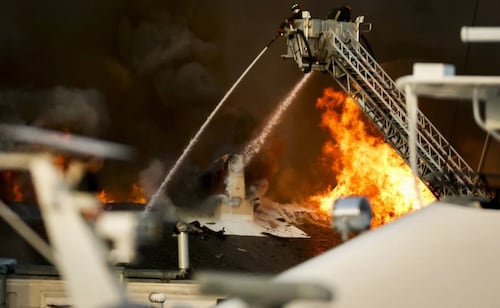
USF St. Petersburg Lab Fire: Building Likely Total Loss, No Injuries Reported
Translated from Spanish, summarized and contextualized by DistantNews.
TLDR
- Firefighters battled a blaze in a laboratory at the University of South Florida in St. Petersburg.
- The fire, which started Saturday night, caused extensive damage, with the building potentially a total loss.
- No injuries or hazardous material releases were reported, and the cause is under investigation.
A significant fire ravaged a marine science laboratory at the University of South Florida's St. Petersburg campus over the weekend. Firefighters worked through the night to contain the blaze, which erupted Saturday evening and sent thick plumes of smoke into the sky. While the building appears to be a total loss, university president Moez Limayem confirmed that no injuries were reported and no hazardous materials were released, a crucial detail given the nature of a science facility. The cause of the fire remains under investigation. The university is now focused on assessing the damage and salvaging key research materials and equipment. Classes and exams scheduled for the affected building will be relocated, underscoring the disruption to academic life. From our perspective in Mexico, this incident highlights the critical importance of robust safety protocols in research institutions, especially those dealing with potentially volatile materials. While the USF incident is unfortunate, the lack of injuries is a testament to emergency preparedness. However, the potential loss of valuable research underscores the need for continued investment in both scientific advancement and the infrastructure that supports it.
Nuestros equipos de recuperación están trabajando con el Colegio de Ciencias Marinas para priorizar material y equipo de investigación clave para evaluar su posible recuperación cuando se despeje el edificio
DistantNews Editorial
Originally published by El Universal in Spanish. Translated, summarized, and contextualized by our editorial team with added local perspective. Read our editorial standards.
More Stories



From Our Blog

What Press Freedom Means for the News You Read

What Gets Lost (and Found) When News Is Translated

The Critical Role of Diaspora Media in Global News

What Travellers Should Know About Countries with Restricted Press

A Digital Nomad's Guide to Following Local News
