


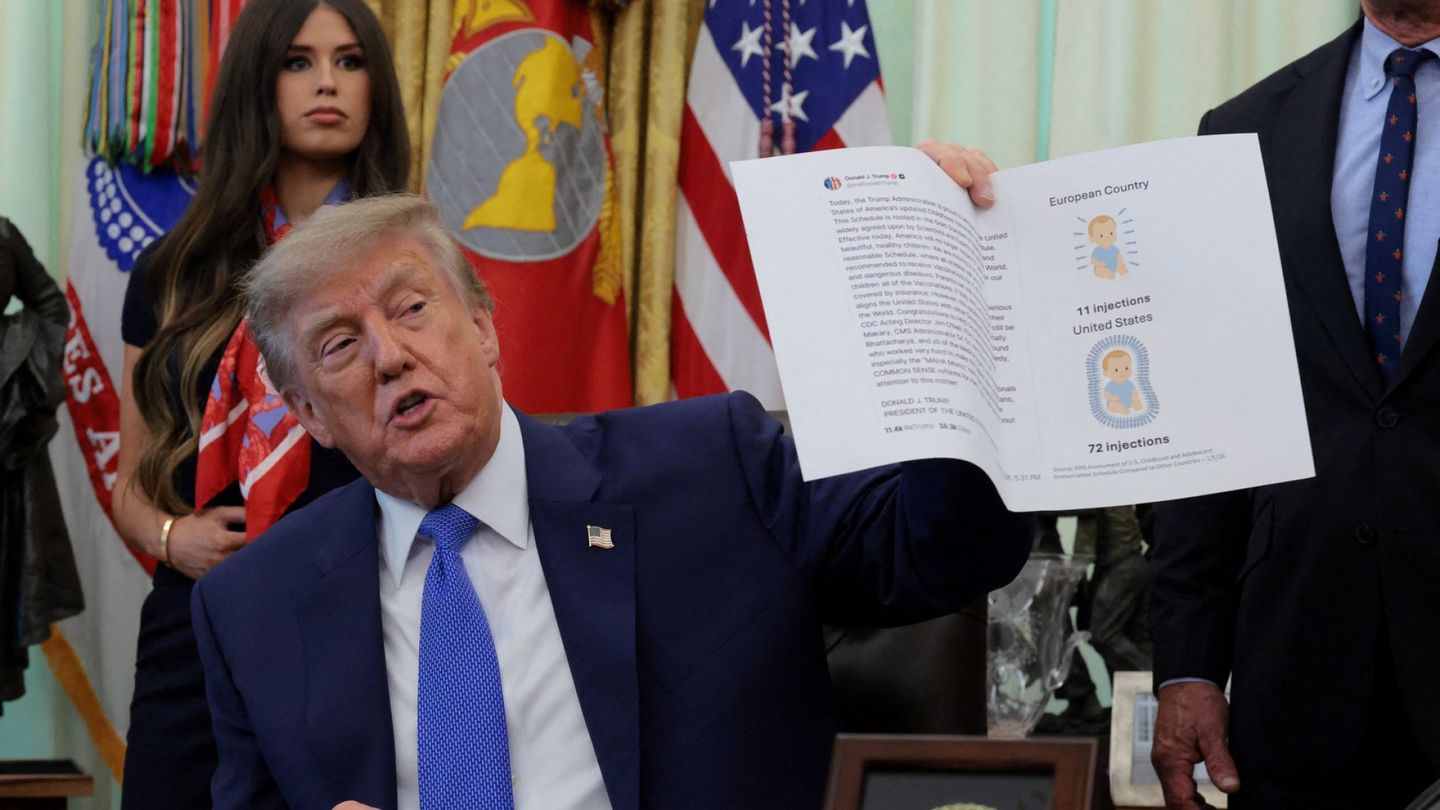
Vaccines | Trump Orders Reduction in Childhood Vaccinations
Translated from Finnish, summarized and contextualized by DistantNews.
At a glance
News
Named sources
New plan
- President Donald Trump ordered changes to the U.S. childhood vaccination schedule, aiming to reduce the number of recommended vaccines and spread them over a longer period.
- The directive challenges decades of federal recommendations and is based on Trump's unsubstantiated claims linking childhood vaccines to autism.
- Medical experts, Democrats, and some Republicans criticize the plan as dangerous and scientifically unfounded, while some conservative Republicans support the reform.
President Donald Trump has issued an executive order to alter the U.S. childhood vaccination schedule, a move that would significantly reduce the number of recommended vaccines and extend their administration over a longer period. This directive challenges decades of established federal recommendations and is rooted in President Trump's long-held, yet scientifically unsubstantiated, claims that childhood vaccines contribute to rising autism rates. He asserts that spacing out vaccinations will make the process safer.
The proposed changes would scale back the recommended vaccinations from 18 diseases to 11 for all children. Certain vaccines, including those for RSV, Hepatitis A and B, meningococcal disease, and dengue fever, would be recommended only for specific risk groups or regions. Furthermore, the order mandates separating the combined measles, mumps, and rubella (MMR) vaccine into three individual shots. When pressed on his claim that the current MMR vaccine could be "deadly," Trump admitted to having no scientific evidence to support it, according to The Washington Post.
The plan has drawn widespread criticism from researchers, doctors, Democrats, and even some Republican members of Congress, who have labeled it dangerous and scientifically baseless. While many in the medical community and political sphere oppose the directive, some conservative Republicans have expressed approval of the reform. Public trust in U.S. health authorities has reportedly declined during Trump's presidency, though most Americans still support vaccination.
Historically, the White House has deferred such decisions to expert bodies, with presidents typically emphasizing the importance of vaccines in preventing childhood diseases. Trump's administration has previously attempted to revise vaccination guidelines, including appointing vaccine-critical Robert F. Kennedy Jr. as health minister last year. The practical impact of the new order remains uncertain, but it is expected to pressure states, insurers, pharmaceutical companies, and healthcare providers to align with the president's vaccination stance. Many states have already indicated they will continue to follow medical organizations' recommendations over federal guidelines.
I don't have evidence. I just, we have to have the discussion. The discussion has to take place.
DistantNews Editorial
Originally published by Helsingin Sanomat in Finnish. Translated, summarized, and contextualized by our editorial team with added local perspective. Read our editorial standards.
More Stories


From Our Blog

What Gets Lost (and Found) When News Is Translated

The Critical Role of Diaspora Media in Global News

What Travellers Should Know About Countries with Restricted Press

A Digital Nomad's Guide to Following Local News

How the Same Story Looks Different in Different Countries
