


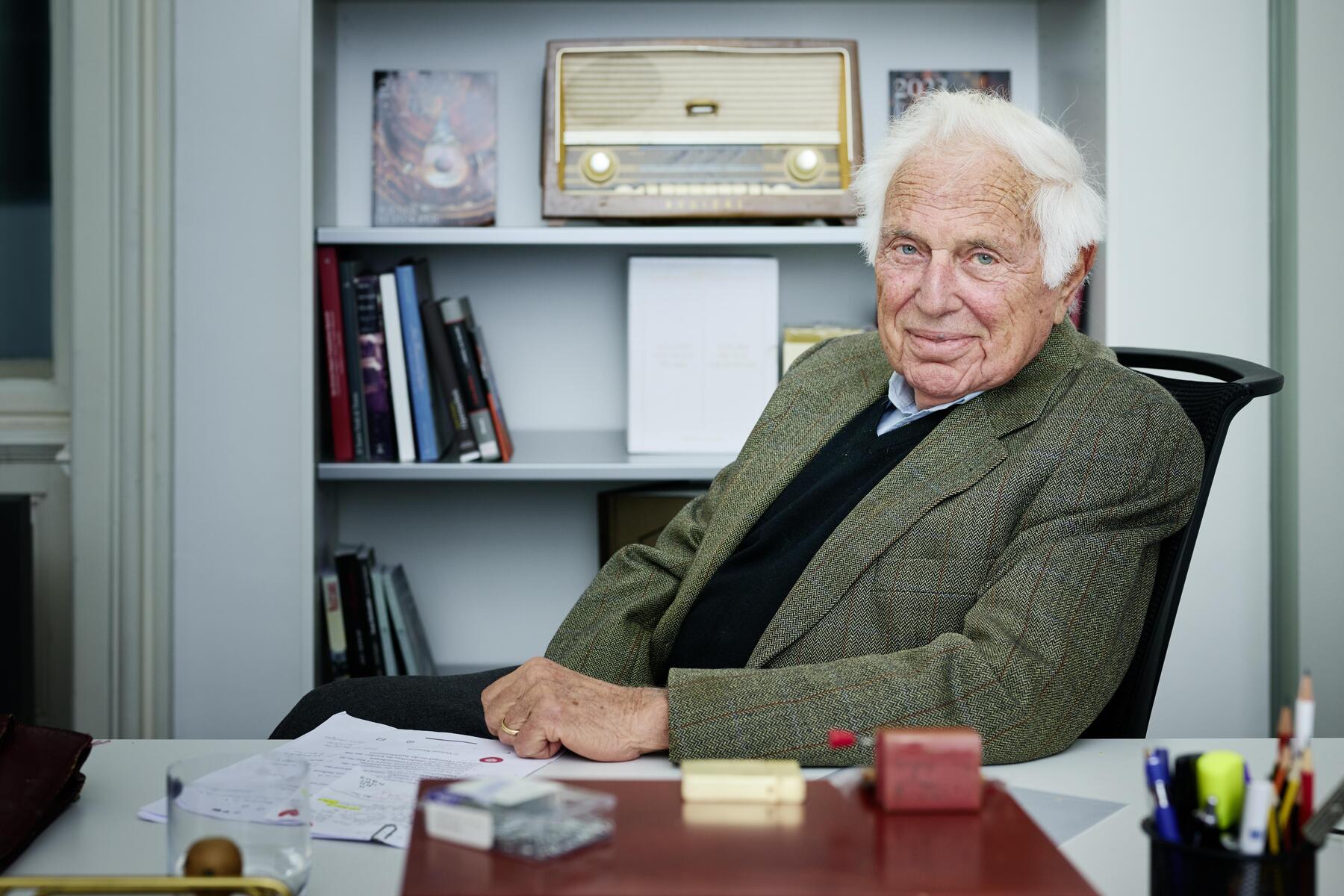
Vienna State Opera's former director Ioan Holender: 'The Viennese are a deeply unsympathetic people'
Translated from German, summarized and contextualized by DistantNews.
At a glance
In-depth
Sources not specified
Context piece
- Ioan Holender, a prominent figure in Austrian culture and former director of the Vienna State Opera, reflects on his life and his complex relationship with Vienna.
- Holender, who fled Romania in 1959, rose from a mechanical engineering student to a celebrated opera director, singer, and agent.
- He expresses strong criticism of Viennese people, describing them as unsympathetic, unartistic, stingy, and antisemitic, while acknowledging his own outspoken nature.
Ioan Holender, who arrived in Vienna as a 24-year-old Romanian engineering student in 1959, has become one of Austria's most significant cultural figures. His journey from political exile to a celebrated singer, agent, and the longest-serving director of the Vienna State Opera is a testament to a life shaped by circumstance and ambition.
I came to Vienna reluctantly and with the feeling that I had a failed life.
Despite his deep involvement in Austrian cultural life for decades, Holender admits to having "no relationship with Vienna." His critique extends to the Viennese people themselves, whom he describes with harsh terms: "They are a deeply unsympathetic people, these Viennese. Without any artistic curiosity, stingy, uninterested, malicious, and deeply antisemitic." He justifies his bluntness by stating he has "nothing more to lose."
I never became what I wanted.
Holender's outspokenness is not new. He recalls publicly addressing the Nazi past of former opera directors, even when met with shouts to "Stop, stop" from the audience. His mother, he remembers, worried about his career choices, fearing he was making too many enemies. This willingness to confront uncomfortable truths, even within the arts establishment, has defined his career.
They are a deeply unsympathetic people, these Viennese. Without any artistic curiosity, stingy, uninterested, malicious, and deeply antisemitic.
DistantNews Editorial
Originally published by Die Presse in German. Translated, summarized, and contextualized by our editorial team with added local perspective. Read our editorial standards.
More Stories



From Our Blog

What Gets Lost (and Found) When News Is Translated

The Critical Role of Diaspora Media in Global News

What Travellers Should Know About Countries with Restricted Press

A Digital Nomad's Guide to Following Local News

How the Same Story Looks Different in Different Countries
