

Vietnam's 'Cần': Overcoming Passive Mindsets with Action-Oriented Thinking
Translated from Vietnamese, summarized and contextualized by DistantNews.
At a glance
Analysis
Sources not specified
Context piece
- The article discusses the importance of the Vietnamese word 'Cần' (Need/Must) in promoting action-oriented thinking among officials.
- It addresses the issue of 'waiting mentality' among some cadres during administrative restructuring, hindering efficiency.
- The piece emphasizes practicing 'Cần' through proactive adaptation, scientific work methods, and perseverance to overcome challenges and ensure public service continuity.
The Vietnamese concept of 'Cần,' translating to 'Need' or 'Must,' is presented as a crucial antidote to the 'waiting mentality' that can plague public administration, particularly during periods of restructuring. The article argues that merging administrative bodies, while a necessary streamlining effort, can inadvertently foster an environment where some officials adopt a passive stance, awaiting further directives rather than actively engaging with their duties.
This period of transition poses a significant test to the resolve of civil servants. Some may become preoccupied with personnel changes, spending work hours discussing rumors instead of processing official matters. Others might opt for a 'safe' approach, avoiding challenging tasks until the new structure stabilizes. Such behaviors, characterized by stagnation and a reluctance to innovate, have been openly criticized by the Politburo.
When one link stops to listen, the whole system is dragged down. During his lifetime, President Ho Chi Minh likened the apparatus to a smoothly running train; if one wheel goes off track, the whole train is delayed. In the context of merging bodies, the 'waiting mentality' is that derailed wheel, causing administrative procedure blockages and directly affecting the people and businesses.
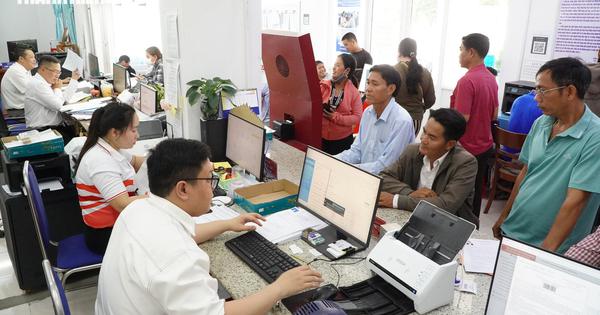
The article draws a parallel to President Ho Chi Minh's teachings, likening the administrative apparatus to a train. If one wheel deviates, the entire train slows down. In the context of mergers, the 'waiting mentality' acts as this derailed wheel, causing administrative bottlenecks and directly impacting citizens and businesses. The piece highlights that even in a single public service center, an official might handle up to 50 citizen requests daily, underscoring the need for continuous workflow.
Reinterpreting 'Cần' for the modern era involves moving beyond passive or reactive work habits. It requires a scientific approach, optimizing human resources, time, and effort for genuine productivity. In the current climate of streamlining and increased workloads, 'Cần' must translate into proactive adaptation, where officials anticipate tasks and acquire new skills. It also demands scientific work methods, including careful planning and delegation, ensuring the right person handles the right task. Finally, 'Cần' embodies perseverance, a commitment to continuous effort rather than sporadic bursts of activity, enabling officials to navigate initial disruptions and maintain momentum.
'Cần' in Ho Chi Minh's ideology is completely alien to passive, responsive ways of working, nor is it a 'hasty' or 'struggle-to-survive' approach without planning that wastes energy. He defined 'Cần' with scientific depth closely linked to 'Chuyên' (Professionalism), requiring optimal allocation of human resources, time, and effort to ensure real productivity and efficiency.
DistantNews Editorial
Originally published by Thanh Niên in Vietnamese. Translated, summarized, and contextualized by our editorial team with added local perspective. Read our editorial standards.
More Stories

From Our Blog

What Gets Lost (and Found) When News Is Translated

The Critical Role of Diaspora Media in Global News

What Travellers Should Know About Countries with Restricted Press

A Digital Nomad's Guide to Following Local News

How the Same Story Looks Different in Different Countries
