

Virtuelle Realität macht Demenz erlebbar
Translated from German, summarized and contextualized by DistantNews.
At a glance
News
Sources not specified
New plan
- A new virtual reality application developed by Austrian startup VitaBlick simulates the symptoms of dementia.
- The VR tool aims to help relatives and caregivers better understand the disease and foster empathy towards affected individuals.
- The simulator models three stages of dementia, depicting cognitive and physical challenges to provide a more immersive understanding of the condition.
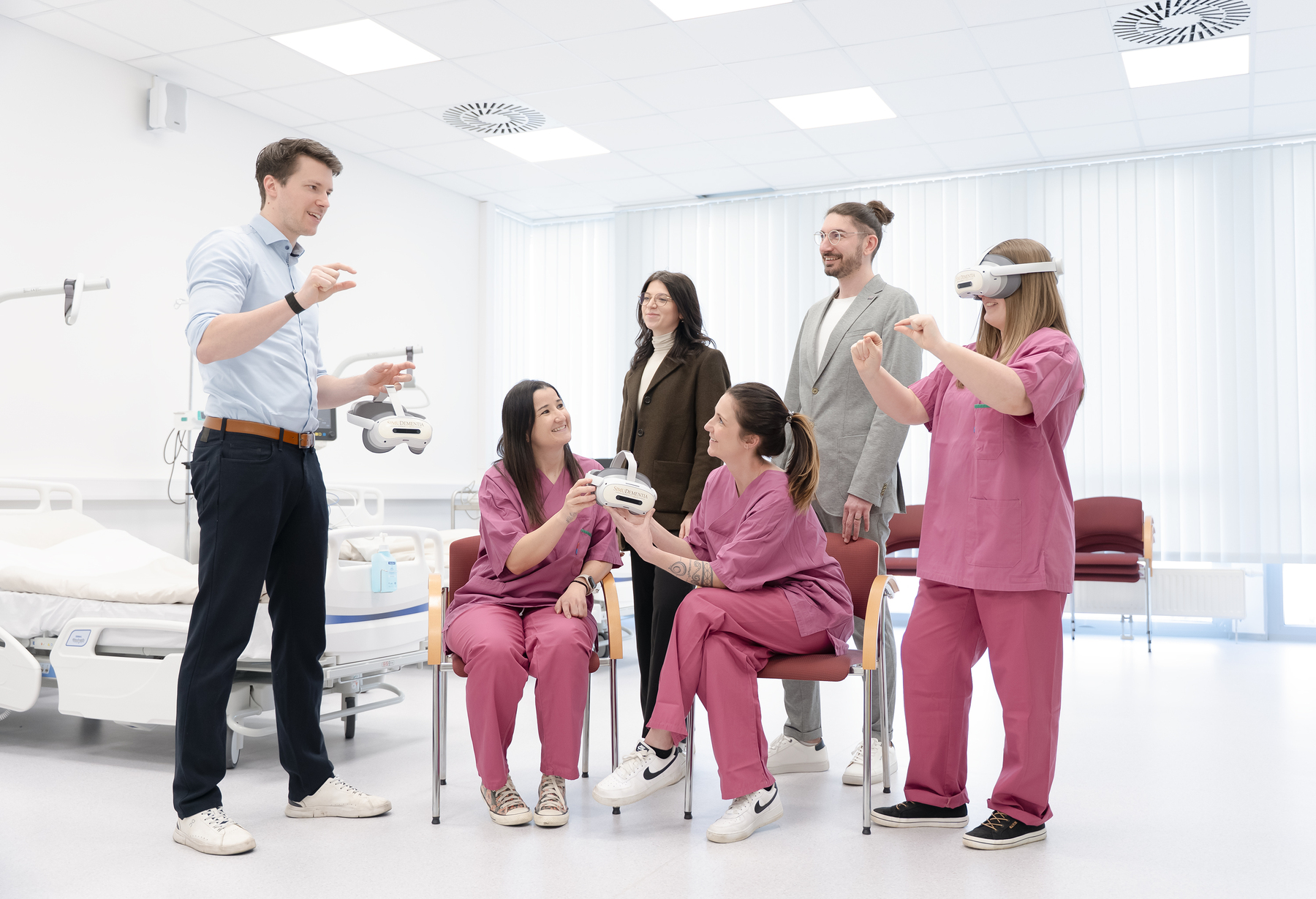
A novel virtual reality application developed by Austrian startup VitaBlick offers a unique way to experience the symptoms of dementia, aiming to deepen understanding and empathy among relatives and caregivers. The VR simulator is designed to provide a tangible glimpse into the cognitive and physical challenges faced by individuals living with the disease.
The tool, a collaboration between VitaBlick and the Department of Health & Social Sciences at the University of Applied Sciences Burgenland, meticulously recreates three distinct stages of dementia. Early symptoms like forgetfulness and difficulties with daily routines are depicted, leading to feelings of uncertainty and anxiety in the simulated experience. As the simulation progresses to the second stage, users encounter more pronounced memory loss, increased need for assistance, and sensory overload, alongside physical challenges such as tremors and swallowing difficulties.
Developing the simulator involved a rigorous scientific approach. Researchers conducted a comprehensive literature review to identify the most common dementia symptoms and the subjective experiences of patients. This information was then translated into a virtual environment by VitaBlick, with project leader Christina Wiesenhofer noting the significant challenge of authentically portraying the complex symptoms and varied manifestations of the disease. The goal is to bridge the gap in understanding for those who care for individuals with dementia.
The third stage of the simulation illustrates the profound disorientation in time and space characteristic of advanced dementia, where individuals may no longer recognize close family members and require comprehensive care. By immersing users in these simulated realities, the application seeks to foster greater compassion and improve the quality of care provided to those affected by this progressive neurological disorder. The project highlights the potential of VR technology in healthcare education and patient advocacy.
The complex symptoms and different manifestations of dementia authentically in a Virtual Reality application.
DistantNews Editorial
Originally published by Die Presse in German. Translated, summarized, and contextualized by our editorial team with added local perspective. Read our editorial standards.
More Stories



From Our Blog

What Gets Lost (and Found) When News Is Translated

The Critical Role of Diaspora Media in Global News

What Travellers Should Know About Countries with Restricted Press

A Digital Nomad's Guide to Following Local News

How the Same Story Looks Different in Different Countries
