


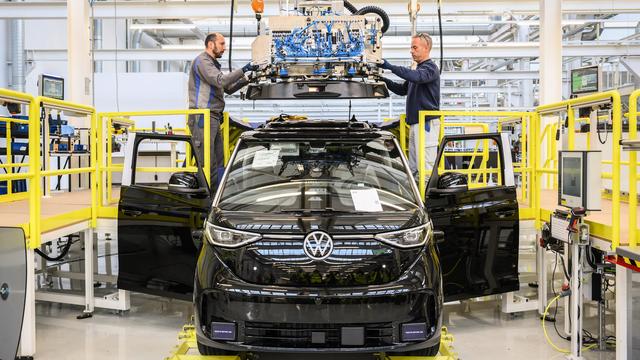
Volkswagen sees no viable economic future for Hanover plant after early 2030s
Translated from German and summarized by DistantNews. Read the original for the full story.
At a glance
News
Official statement
Ongoing story
- Volkswagen says it currently sees no economically viable successor production for its Hanover plant after existing products end in the early 2030s.
- The company says the same applies to three other German locations, which it did not identify.
- Volkswagen plans to cut capacity for about 500,000 vehicles across Europe to avoid an annual cost disadvantage of roughly 1.5 billion euros.
Volkswagen does not currently see a viable economic future for its Hanover plant once its existing products run out in the early 2030s. The warning also extends to three other German sites, whose names have not been disclosed.
Chief Financial Officer Arno Antlitz presented the assessment at a special works council meeting, according to a company statement. He said Volkswagen’s factory costs in Hanover remain significantly higher than those at other European plants, despite improvements.
From today's perspective, this applies to a total of four German locations.
The company plans to reduce production capacity across Europe by about 500,000 vehicles. Without that reduction, Antlitz said, Volkswagen would face a permanent cost disadvantage of around 1.5 billion euros a year.
The Hanover plant’s future therefore remains tied to a broader restructuring of Volkswagen’s European operations. Production there is expected to run out in the early 2030s, while the company continues to assess what, if anything, could replace the current products.
Otherwise, a permanent cost disadvantage of around 1.5 billion euros per year would arise.
About this summary
Originally published by Die Zeit in German. Translated, summarized, and contextualized automatically by DistantNews, with a note on how the source frames the story. Not individually reviewed before publishing. How this works.
More Stories


From Our Blog

What Gets Lost (and Found) When News Is Translated

How the Same Story Looks Different in Different Countries

The Critical Role of Diaspora Media in Global News

What Travellers Should Know About Countries with Restricted Press

A Digital Nomad's Guide to Following Local News
