


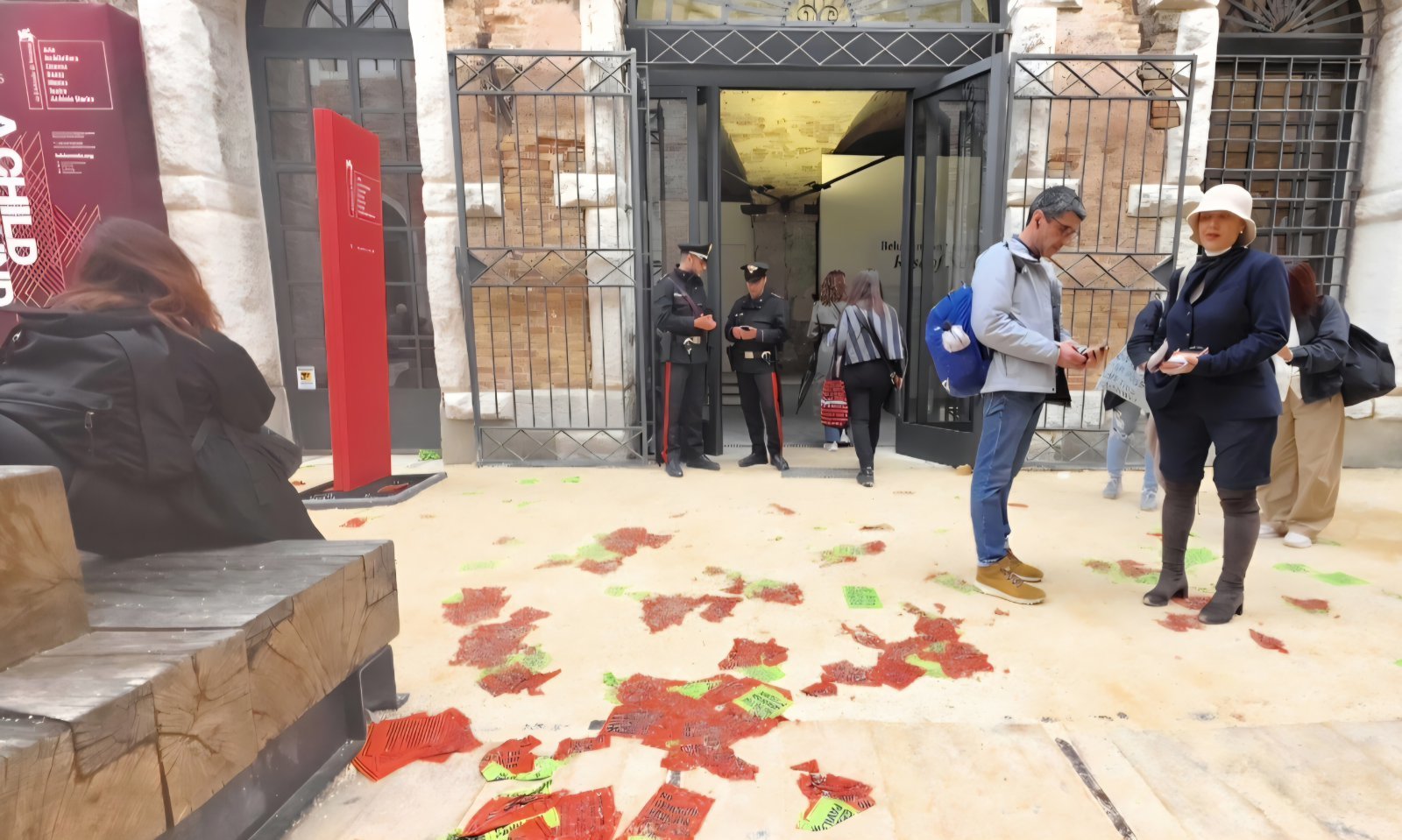
War Scars the Venice Biennale... Director Choi Bit-na: "99 National Pavilions, Why Rank Them?"
Translated from Korean, summarized and contextualized by DistantNews.
TLDR
- The 61st Venice Biennale opened amidst geopolitical tensions, including protests and the absence of some nations.
- The Israeli and Russian pavilions became focal points for demonstrations related to the Gaza war and Ukraine conflict.
- The Korean Pavilion, 'In Our Clumsy Possession: Monument and Memory', focuses on a more intimate, community-based approach, diverging from traditional competitive national displays.
The Venice Biennale, often hailed as the 'Olympics of the art world,' has this year become a stark reflection of global conflicts and political divides. The opening of the 61st edition was overshadowed by protests, the withdrawal of nations like Iran, and significant controversy surrounding the participation of Russia and Israel.
The Israeli pavilion, in particular, became a site of intense protest, with demonstrators calling for an end to the violence in Gaza and condemning cultural diplomacy. Similarly, the Russian pavilion faced backlash, highlighting the deep divisions exacerbated by ongoing international conflicts. These events underscore how the Biennale, intended as a space for artistic exchange, is increasingly becoming a platform for political statements and dissent.
Amidst this charged atmosphere, the Korean Pavilion, curated by Choi Bit-na and titled 'In Our Clumsy Possession: Monument and Memory,' offers a different narrative. Instead of grand, competitive displays, it emphasizes a more collaborative and introspective approach. The exhibition features a 'fellowship' structure, incorporating not just visual artists but also researchers, musicians, and writers, exploring themes of Korean society, division, and memory through a less confrontational lens.
This focus on community, healing, and peripheral narratives aligns with the Biennale's main curator's theme, 'In Minor Keys.' The Korean Pavilion's unique collaboration with the Japanese Pavilion, a first in Biennale history, further challenges the traditional competitive framework of national representation. This initiative seeks to build bridges and explore shared histories, offering a counterpoint to the geopolitical tensions that dominate the headlines. From a South Korean perspective, this approach is not just about artistic expression but also about navigating complex regional histories and forging new pathways for dialogue in a world often defined by conflict.
DistantNews Editorial
Originally published by Dong-A Ilbo in Korean. Translated, summarized, and contextualized by our editorial team with added local perspective. Read our editorial standards.
More Stories

Webtoon Artist Yoon Tae-ho Reveals 'Inside Men' Casting Surprise and Rights Negotiation Strategy on …

Seventeen's Dino to Officially Debut as Alter Ego P-Chul-in with Mini-Album 'Gilboard' on August 3rd

Super Junior's Leeteuk Heartbroken Over Dog's Heart Condition Battle: "Whole Family Nursing Kung-i"
From Our Blog

What Gets Lost (and Found) When News Is Translated

The Critical Role of Diaspora Media in Global News

What Travellers Should Know About Countries with Restricted Press

A Digital Nomad's Guide to Following Local News

How the Same Story Looks Different in Different Countries
