


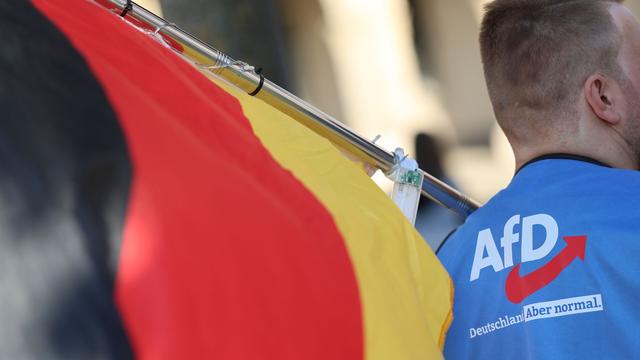
Warnings over AfD government: Germany's security architecture threatened
Translated from German, summarized and contextualized by DistantNews.
TLDR
- German federal politicians warn that the AfD's potential participation in government in Saxony-Anhalt threatens Germany's security architecture.
- Concerns are raised about the party's alleged far-right connections and pro-Russia stance, potentially compromising trust between federal and state governments and international partners.
- The AfD dismisses these warnings as election campaign tactics, while recent polls show the party leading in Saxony.
A stark warning has emerged from German federal politicians regarding the potential implications of the Alternative for Germany (AfD) party gaining governmental influence in the state of Saxony-Anhalt. The core concern revolves around the perceived threat to Germany's entire security architecture, a system built on trust among federal and state authorities, intelligence agencies, and international allies.
Marc Henrichmann, chairman of the parliamentary control body overseeing Germany's intelligence services, articulated these fears to the "Handelsblatt." He emphasized that a party with "provable connections to far-right circles and a conspicuously pro-Russia course" taking governmental responsibility would place "considerable strain on trust." This sentiment is echoed by Sebastian Fiedler, the SPD parliamentary group's domestic policy spokesperson, who cautioned that "right-wing extremists" could end up in positions of power within their own government, potentially compromising sensitive information and intelligence operations.
If a party with provable connections to far-right circles and a conspicuously pro-Russia course takes governmental responsibility, it places trust under considerable strain.
Fiedler specifically highlighted the AfD's numerous inquiries into security-related matters in parliaments, suggesting a possible motive of gathering information that could be of interest to Russia, which he described as being led by a "war criminal." This raises alarms about potential foreign influence and the compromise of national security interests.
When right-wing extremists are in power, they should ideally not know who among them was observed by the domestic intelligence service.
In response, the AfD has vehemently rejected these accusations, labeling them as mere "election campaign maneuvers" designed to "demonize the AfD," regardless of how "absurd" the allegations may be. This counter-argument underscores the deep political polarization surrounding the party.
Meanwhile, recent polling data from Infratest dimap for regional media outlets indicates that the AfD is currently leading in Saxony with 41 percent of the vote, significantly ahead of the CDU's 26 percent. This electoral strength fuels the ongoing debate and intensifies concerns among political opponents about the party's potential rise to power and its consequences for Germany's security and international relations.
The security politicians are grasping at straws, to demonize the AfD, no matter how absurd the allegations are.
DistantNews Editorial
Originally published by Die Zeit in German. Translated, summarized, and contextualized by our editorial team with added local perspective. Read our editorial standards.
More Stories


From Our Blog

What Gets Lost (and Found) When News Is Translated

How the Same Story Looks Different in Different Countries

The Critical Role of Diaspora Media in Global News

What Travellers Should Know About Countries with Restricted Press

A Digital Nomad's Guide to Following Local News
