

Warsaw Event Explores 'The Zone of Interest' and the Ethics of Witnessing
Translated from Polish, summarized and contextualized by DistantNews.
At a glance
In-depth
Named sources
Context piece
- A discussion event at the Pilecki Institute in Warsaw will feature a screening of the Oscar-winning film "The Zone of Interest."
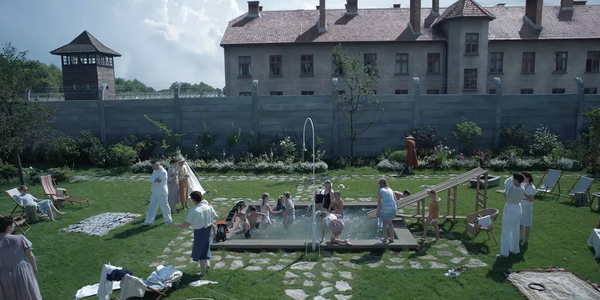
- The film depicts the domestic life of Auschwitz commandant Rudolf Höss's family, living next to the camp.
- The event aims to explore themes of witnessing, complicity, and the ethical questions raised by the film, especially in light of current global conflicts.
The Pilecki Institute in Warsaw is hosting a discussion event on July 23, 2026, centered around the Oscar-winning film "The Zone of Interest." The film offers a stark portrayal of the domestic life of Rudolf Höss, the commandant of Auschwitz, and his family, who resided in close proximity to the camp's atrocities.
No film shows how it really was. Also, 'The Zone of Interest,' which depicts the daily life of the Höss family on the safe side of the Auschwitz walls, is not a representation of past events, and its creator actually escapes the compulsion to show them objectively.
Dr. hab. Ewa Fiuk, a film scholar at the Polish Academy of Sciences' Institute of Art, noted that understanding the historical period depicted in the film is impossible for those who did not live through it. Even those who remember the era possess a unique, personal perspective that cannot be replicated or accurately conveyed through any narrative, including film. Fiuk suggests that "The Zone of Interest" does not aim to present an objective historical account but rather prompts reflection on preventing future atrocities.
"The film, as a visual medium, in the version proposed by the British director, paradoxically hides rather than reveals," Fiuk explained. "And this is a wonderful creative gesture. In 'The Zone of Interest,' the point is not so much how it was, but to contemplate what to do to prevent similar crimes from happening again."
In 'The Zone of Interest,' the point is not so much how it was, but to contemplate what to do to prevent similar crimes from happening again.
Coinciding with the anniversary of the Warsaw Uprising, the event will also feature an exhibition of rarely seen watercolors and drawings documenting the uprising by Walerian Bielecki. Dr. Aleksandra Burdziej from the Pilecki Institute highlighted the connection between the film's themes and the exhibition, posing the question from a Berlin exhibition: "The Holocaust – what did Germans know?" The discussion will delve into the ethics of witnessing, the act of knowing and remaining silent, seeing and looking away, and continuing one's own life amidst surrounding horror. Burdziej emphasized the contemporary relevance of these questions, particularly in the context of ongoing conflicts in Ukraine and Gaza.
We want to talk about the facts of the past, but also about the ethics of the witness today. Because Glazer's film mercilessly asks what we know and what we don't want to see – and how long we can say that something is not my business or not our business.
DistantNews Editorial
Originally published by Rzeczpospolita in Polish. Translated, summarized, and contextualized by our editorial team with added local perspective. Read our editorial standards.
More Stories

From Our Blog

What Gets Lost (and Found) When News Is Translated

The Critical Role of Diaspora Media in Global News

What Travellers Should Know About Countries with Restricted Press

A Digital Nomad's Guide to Following Local News

How the Same Story Looks Different in Different Countries
