


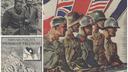
Wartime interests: Why the West switched from Chetniks to Partisans
Translated from Croatian, summarized and contextualized by DistantNews.
TLDR
- Western allies, initially supporting Mihailović's Chetniks and the Yugoslav government-in-exile, shifted their focus to Tito's Partisans by 1943.
- This shift was influenced by intelligence revealing Chetnik collaboration with Axis forces and their avoidance of significant conflict with the occupiers.
- The change in allegiance significantly impacted Yugoslavia's post-war political trajectory.
The complex geopolitical maneuvering during World War II saw Western allies, particularly Britain and the United States, pivot their support from Dragoljub 'Draža' Mihailović's Chetnik movement to Josip Broz Tito's National Liberation Movement. Večernji List delves into this critical shift, highlighting how strategic interests and evolving battlefield realities dictated alliances, ultimately shaping the future of Yugoslavia.
Initially, the Yugoslav government-in-exile in London and its Western backers favored Mihailović, with significant lobbying efforts aimed at British and American political and military circles. However, this support was often based on incomplete or misleading information, with Partisan actions sometimes misattributed to the Chetniks. Military missions were dispatched to Mihailović's headquarters in 1941 and 1942, but the ground truth began to challenge the initial perceptions.
The crucial turning point arrived in 1943. Intelligence reports increasingly indicated collaboration between the Chetniks and Italian and German forces, alongside a consistent avoidance of direct confrontation with the occupiers. Simultaneously, it became evident that Mihailović's movement lacked the pan-Yugoslav scope of resistance that Tito's Partisans were demonstrating. This growing body of evidence led the Allies to re-evaluate their strategic priorities, recognizing the Partisans as the more effective force against the Axis powers.
This reorientation of support was not merely a tactical adjustment; it had profound implications for Yugoslavia's post-war political landscape. As historian Dr. sc. Marica Karakaš Obradov explains, the evolving relationships between the Western Allies and the various Yugoslav resistance groups were fraught with political intrigue, mistrust, and differing assessments of the region's future. The decision to back Tito's Partisans, as analyzed by Večernji List, was a pragmatic response to the war's demands, but it undeniably laid the groundwork for the communist-led Yugoslavia that would emerge.
Ono što je prethodilo Travanjskom ratu bila su zbivanja u ožujku kada je došlo do državnog udara, kada je srušena vlada Cvetković-Maček, što je u neku ruku bilo podupirano od britanske strane. Povod tome bilo je pristupanje Kraljevine Jugoslavije Trojnom paktu, ali razlozi su bili puno dublji. Jedan od njih je zasigurno bila upravo taj sporazum između Cvetkovića i Mačeka i stvaranje Banovine Hrvatske kao zasebne ustrojbene jedinice unutar Kraljevine Jugoslavije, što dijelu srpske političke elite nije odgovaralo
DistantNews Editorial
Originally published by Večernji List in Croatian. Translated, summarized, and contextualized by our editorial team with added local perspective. Read our editorial standards.
More Stories


From Our Blog

What Gets Lost (and Found) When News Is Translated

The Critical Role of Diaspora Media in Global News

What Travellers Should Know About Countries with Restricted Press

A Digital Nomad's Guide to Following Local News

How the Same Story Looks Different in Different Countries
