


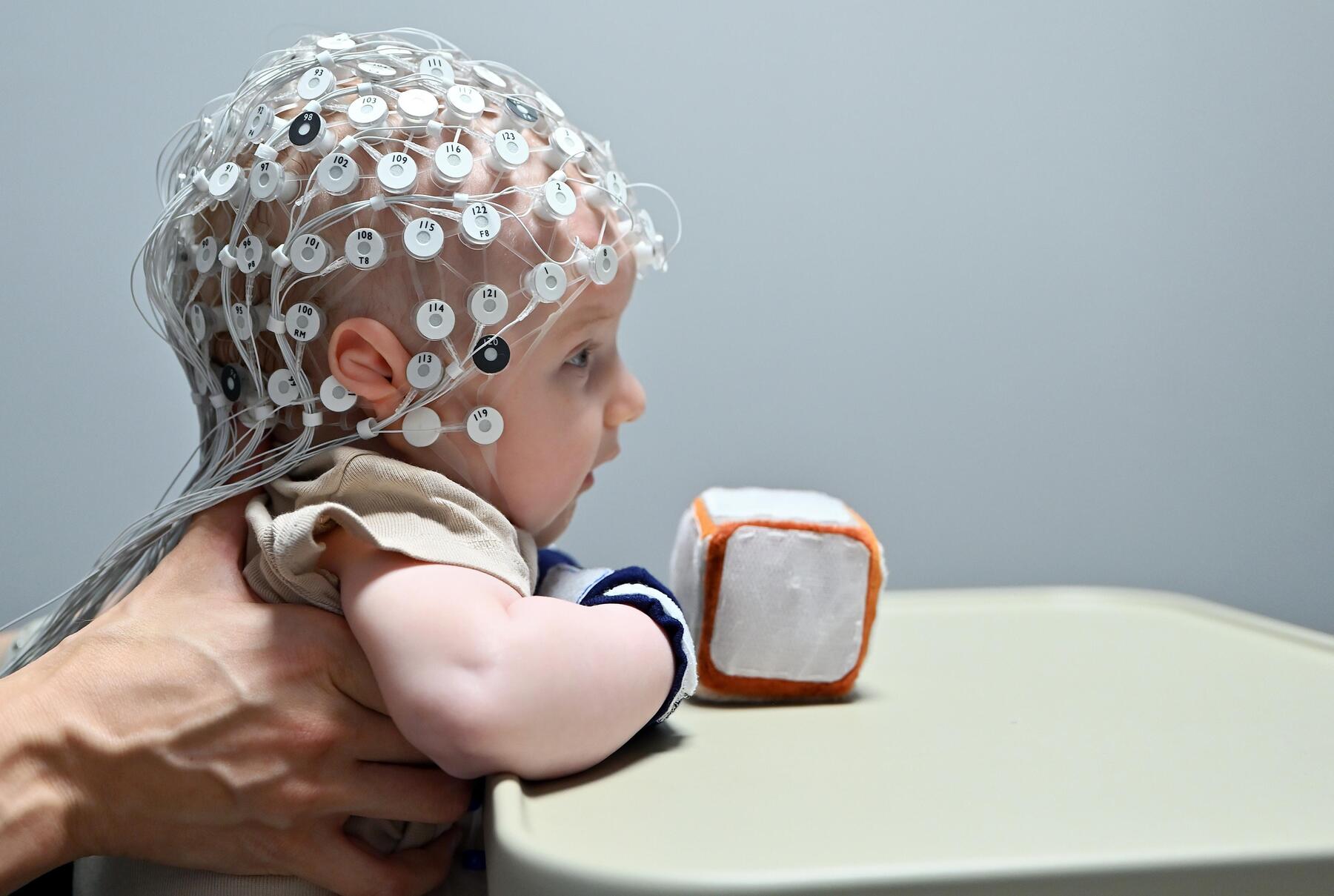
Watching Babies' Brains Learn
Translated from German, summarized and contextualized by DistantNews.
At a glance
In-depth
Sources not specified
Context piece
- Researchers at the Central European University in Vienna study how babies and toddlers learn about the world.
- The KiKo research facility uses play-based experiments to understand infant cognition, cooperation, and communication.
- Families are invited to participate when their babies are well-rested and fed, ensuring a comfortable environment for research.
At Vienna's Central European University (CEU), the KiKo research facility, short for Kinderkognition (Child Cognition), offers a unique glimpse into how infants and toddlers learn. Led by Ágnes Melinda Kovács, the center welcomes families to participate in studies designed to answer fundamental questions about human development.
Fun is very important so that everyone feels comfortable, but there is also information so that it is clear what the research is about and how the study proceeds.
The facility resembles a nursery or kindergarten, with colorful toys and a relaxed atmosphere. This environment is crucial for making both children and their parents feel comfortable. "Fun is very important so that everyone feels comfortable, but there is also information so that it is clear what the research is about and how the study proceeds," Kovács explained.
Researchers employ engaging experiments to observe how babies acquire information, understand cooperation, and begin to communicate. Families are invited to visit at what is considered "the best time for the baby," meaning when they are fed and rested. This approach ensures that the children are in the optimal state to participate.
Before an eye-tracking study, the children should not play too much, because then they are less willing to participate in the darkened, rather bare experimental room.
Liza, a mother who herself conducted research at KiKo, brought her three children. She shared that her doctoral research focused on cooperation in one-year-olds, exploring their understanding of a "social contract." Her daughter Linda, now six, has spent considerable time at the facility, with research group leader Jonathan Kominsky noting she has had more experiences at KiKo than any other child.
Ten years of my life in a few sentences?
CEU operates entirely in English, fostering an international research environment. The studies at KiKo aim to unravel the complexities of early childhood development through careful observation and interaction in a supportive setting.
If we hunt an antelope together, we will also eat it together.
DistantNews Editorial
Originally published by Die Presse in German. Translated, summarized, and contextualized by our editorial team with added local perspective. Read our editorial standards.
More Stories



From Our Blog

What Gets Lost (and Found) When News Is Translated

The Critical Role of Diaspora Media in Global News

What Travellers Should Know About Countries with Restricted Press

A Digital Nomad's Guide to Following Local News

How the Same Story Looks Different in Different Countries
