


Why Are Lam Dong's Eastern Projects Still Lagging?
Translated from Vietnamese, summarized and contextualized by DistantNews.
At a glance
News
Named sources
Ongoing story
- Investment capital disbursement and project progress in the eastern regions of Lam Dong province remain slow, primarily due to land clearance issues and limited contractor capacity.
- Despite efforts, the overall disbursement rate for public investment capital is significantly below the provincial leadership's expectations.
- Key bottlenecks include difficulties in compensation and site clearance, alongside financial and resource constraints faced by some contractors.
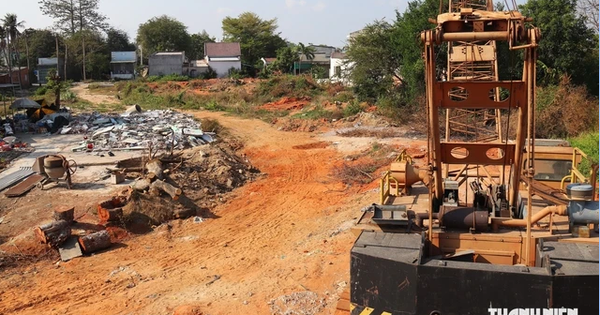
Investment capital disbursement and project progress in the eastern regions of Lam Dong province are lagging significantly, according to a report from the provincial Department of Finance. The primary obstacles identified are persistent land clearance problems and the limited capacity of contractors involved in these projects.
As of August 15, the Management Board for Construction Investment Projects No. 2 (Ban 2) and regional boards had been allocated a total of 3.326 trillion Vietnamese dong for 424 projects. However, the overall disbursement rate stands at only 1.404.6 trillion dong, or 42.23% of the planned budget. While an increase to 49.07% is projected by the end of August, this figure falls short of the targets set by the Lam Dong Provincial People's Committee leadership.
Ban 2's report highlights that the slow progress is not solely due to a lack of clear land sites but also stems from the inadequate capabilities of some construction contractors. For instance, the DT.719B coastal road project (Hòn Lan - Tân Hải section) has completed 35.5% of its construction volume but has only disbursed a mere 1.2% of its allocated budget. Similarly, the Văn Thánh bridge project, despite significant progress in land acquisition with only three households yet to hand over their sites, shows a construction completion rate of 64% and a disbursement rate of 57.13%.
Other projects experiencing delays include the Tân Minh to Sơn Mỹ road, with 20.8% construction and 36.33% disbursement; the DT.719 bypass and Dinh River bridge, at 29.4% construction and 57.82% disbursement; and the Sông Cà Ty apartment complex, with only 45.3% disbursement. Ban 2 attributes the sluggish disbursement rate primarily to compensation and land clearance issues, a long-standing "bottleneck." These problems arise from residents' disagreements over compensation rates or legal complexities related to land ownership, including informal sales. In one instance, residents at the Vĩnh Tiến village coastal dyke project obstructed construction, fearing the loss of their livelihood-generating sandbanks used for fishing.
Compounding these issues, some contractors suffer from weak financial capacity. Furthermore, shortages of fill materials and construction sand, coupled with new regulations requiring a complete inventory of existing crops for compensation, have further hindered project advancement. The Department of Finance noted that while Ban 2's disbursement rate of 41.83% exceeds the provincial average of 32.79%, significant disparities exist among different regions. For example, the La Gi, Đức Linh, and Bắc Bình project management boards show high disbursement rates (94.23%, 75.34%, and 71.97%, respectively), while Tánh Linh, Hàm Thuận Nam, and Phan Thiết boards lag behind with rates of 24.18%, 34.38%, and 34.47%. The department has identified four core reasons for the delays, including legal and policy changes, such as modifications to Resolution No. 254/2025/QH15, which necessitate redoing land acquisition notification procedures for many projects.
DistantNews Editorial
Originally published by Thanh Niên in Vietnamese. Translated, summarized, and contextualized by our editorial team with added local perspective. Read our editorial standards.
More Stories

From Our Blog

What Gets Lost (and Found) When News Is Translated

The Critical Role of Diaspora Media in Global News

What Travellers Should Know About Countries with Restricted Press

A Digital Nomad's Guide to Following Local News

How the Same Story Looks Different in Different Countries
