


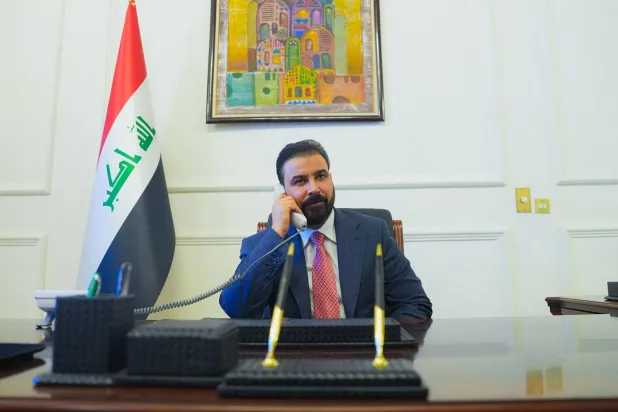
Why Does Trump Favor Iraq’s Al-Zaidi?
Summarized and contextualized by DistantNews.
TLDR
- Iraq's ruling Coordination Framework has appointed Ali al-Zaidi as Prime Minister-designate, a move that surprised many.
- President Trump congratulated al-Zaidi and invited him to Washington, signaling a potential shift in US-Iraq relations.
- The appointment occurs amid the broader US-Iran conflict, with Iraq caught in the middle, and raises questions about a potential deal between the US and influential Iraqi parties.
The recent appointment of Ali al-Zaidi as Iraq's Prime Minister-designate marks a significant and intriguing development in the country's complex political landscape, particularly given the backdrop of ongoing US-Iran tensions. The ruling Coordination Framework's journey to this point has been fraught with challenges, notably the United States' initial strong opposition to former Prime Minister Nouri al-Maliki taking the helm. The subsequent congratulatory call from President Donald Trump to al-Zaidi, coupled with an invitation to visit Washington, signals a potentially significant shift in American engagement with Iraq.
On January 27, Trump threatened to cut US support to Iraq if Maliki returned to power.
What makes this appointment particularly noteworthy from our perspective at Asharq Al-Awsat is the unusual quiet from pro-Iran factions within Iraq. Typically, such overtures from Washington would be met with fierce criticism from the "Resistance Axis." However, these hardliners appear preoccupied with advising the new Prime Minister-designate on cabinet appointments, suggesting a possible internal consensus or a strategic calculation to navigate this delicate phase. The timing of al-Zaidi's emergence, shortly after a visit by Iran's Quds Force commander Esmail Qaani to Baghdad, inevitably raises questions about the extent of Iranian influence or acquiescence in this development.
He even received an invitation to visit Washington.
Iraq finds itself in a precarious position, caught between the competing influences of the US and Iran. Al-Zaidi's designation could be interpreted as a strategic move by influential parties to find a way out of the political impasse, potentially brokered through a deal that intrigues even President Trump. Observers suggest that al-Zaidi, described as a "winning card," was strategically positioned by powerful factions within the Framework. The coming days will be crucial as al-Zaidi faces the challenge of securing a vote of confidence for his proposed cabinet, with various scenarios, including potential political maneuvering by the outgoing Prime Minister Mohammed Shia al-Sudani, still in play.
Al-Zaidi's name appeared out of nowhere just days after commander of Iran’s Quds Force Esmail Qaani visited Baghdad.
DistantNews Editorial
Originally published by Asharq Al-Awsat. Summarized and contextualized by our editorial team with added local perspective. Read our editorial standards.
More Stories

From Our Blog

What Gets Lost (and Found) When News Is Translated

The Critical Role of Diaspora Media in Global News

What Travellers Should Know About Countries with Restricted Press

A Digital Nomad's Guide to Following Local News

How the Same Story Looks Different in Different Countries
