


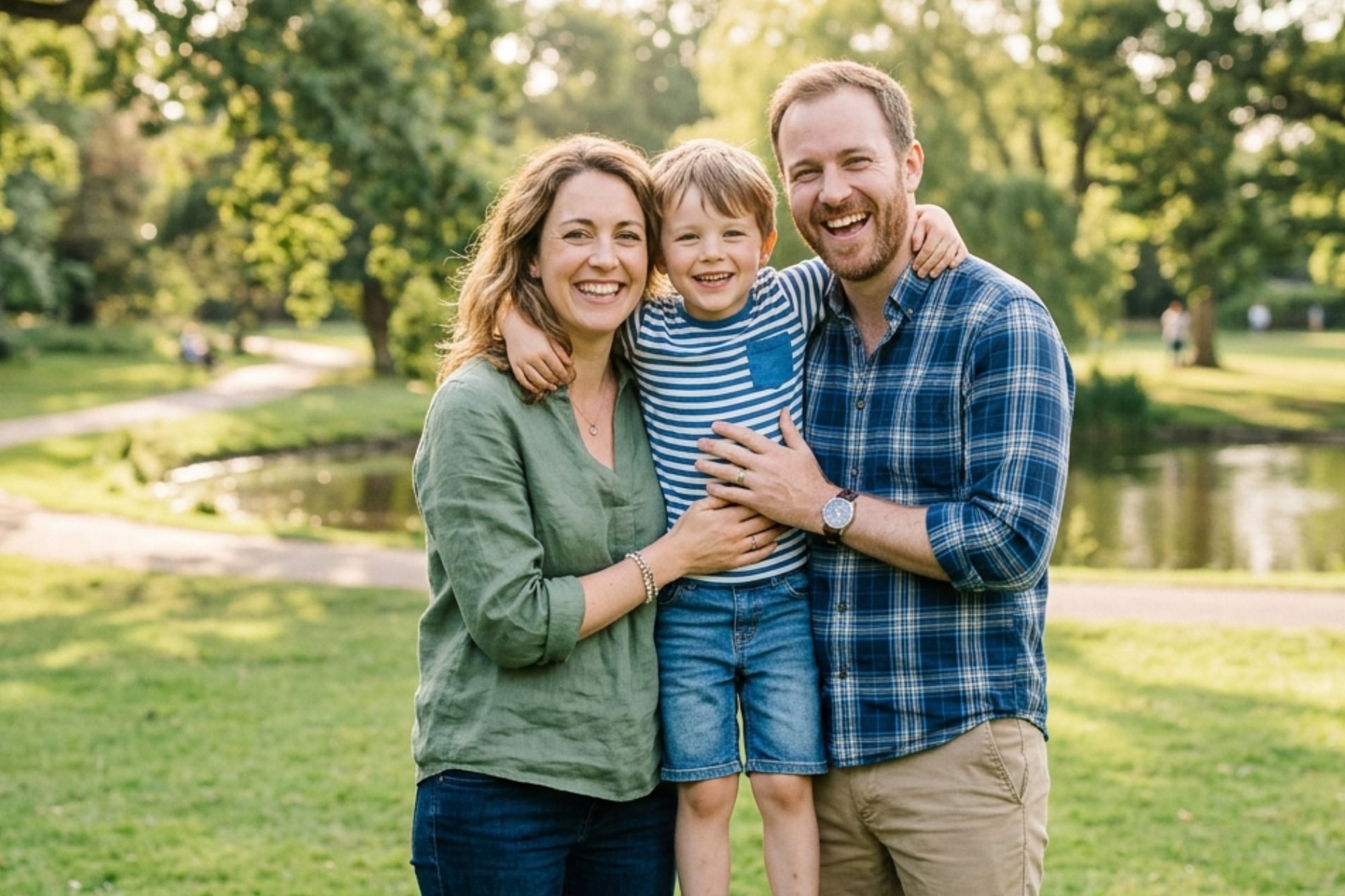
Why people who grew up without siblings develop this particular personality trait
Translated from Spanish, summarized and contextualized by DistantNews.
TLDR
- Recent scientific studies challenge the negative stereotypes associated with being an only child.
- Research suggests that growing up without siblings can foster key adult life skills like self-regulation, independence, and emotional resilience.
- The quality of the emotional environment and upbringing appears more critical for development than family structure alone.
Contrary to long-held popular beliefs and stereotypes, modern science is shedding new light on the experience of only children, revealing a nuanced picture that celebrates their development. For years, the narrative often painted only children as potentially lonely or socially awkward, but contemporary research is dismantling these myths.
Growing up without siblings not only lacks disadvantages but also strengthens fundamental skills for adult life, such as self-regulation, independence, and emotional resilience in complex scenarios.
Studies published in journals like the Asian Journal of Psychiatry indicate that growing up without siblings does not equate to a deficit in psychological strength. In fact, research suggests that only children often exhibit higher levels of emotional resilience compared to their peers who have siblings. This resilience seems to stem from increased interaction with adults and the necessity of managing periods of solitude, which can accelerate maturity and foster a strong sense of self-reliance.
Only children obtained higher scores in emotional resilience when comparing their profiles with those of firstborns who live with siblings.
From a Latin American perspective, particularly in countries like Argentina where family structures and dynamics are deeply valued, these findings offer a refreshing counterpoint to traditional views. La Nación highlights that the key to healthy development lies not in the number of siblings but in the quality of the emotional environment, the parental bond, and the opportunities for socialization. This emphasis on the quality of relationships and individualized attention challenges the notion that a larger family is inherently better, underscoring that autonomy and emotional support are paramount for a child's robust development.
Resilience does not depend solely on the number of siblings, but on the quality of relationships, upbringing, and lived experiences.
DistantNews Editorial
Originally published by La Nación in Spanish. Translated, summarized, and contextualized by our editorial team with added local perspective. Read our editorial standards.
More Stories


From Our Blog

What Gets Lost (and Found) When News Is Translated

The Critical Role of Diaspora Media in Global News

What Travellers Should Know About Countries with Restricted Press

A Digital Nomad's Guide to Following Local News

How the Same Story Looks Different in Different Countries
