


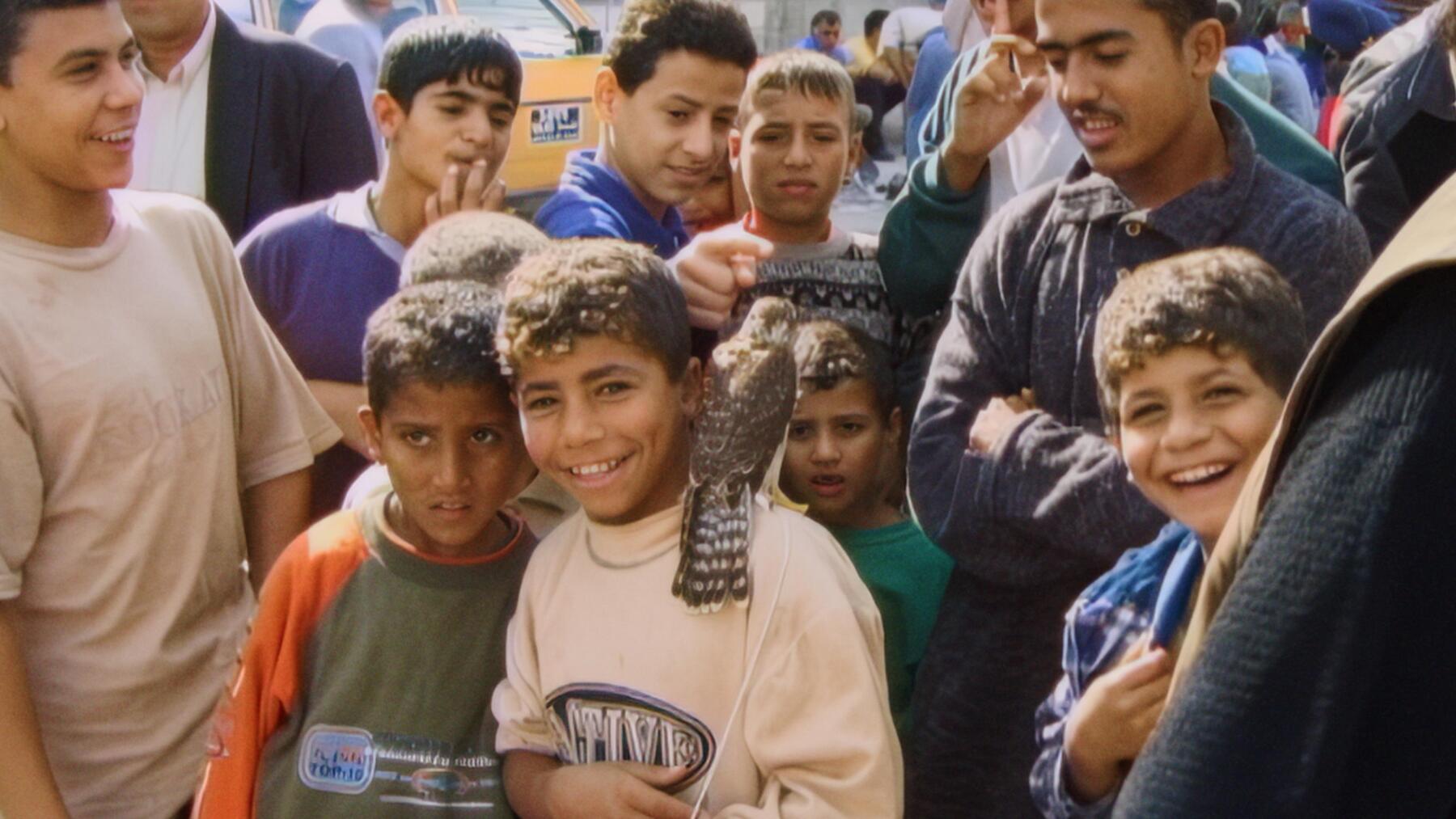
"With Hasan in Gaza": Blair Witch Project in the Occupied Territory
Translated from German, summarized and contextualized by DistantNews.
At a glance
In-depth
Sources not specified
Context piece
- Director Kamal Aljafari's documentary "With Hasan in Gaza" uses archival footage from November 2001.
- The film juxtaposes seemingly mundane scenes of daily life with underlying tensions and the realities of the Israeli-Palestinian conflict.
- It serves as a time capsule, hinting at the devastating present through glimpses of a Gaza that no longer exists.
Kamal Aljafari's documentary "With Hasan in Gaza" offers a poignant look at a specific moment in time, using rediscovered footage from November 2001 to explore the complexities of life in the Gaza Strip. The film begins with seemingly ordinary scenes: streets, cars, a bustling marketplace, children playing on the beach. These images, shot with a slightly unsteady hand, initially evoke the feel of a holiday film. However, the presence of Hasan, a former acquaintance from an Israeli youth prison and a fixer for journalists, and his father, who reveals he spent eight years in Israeli detention, quickly grounds the viewer in the reality of Gaza.
May death forget you.
Aljafari's footage, shot over a year after the second Intifada began and shortly after 9/11, captures a Gaza where militant Palestinian attacks and Israeli counter-strikes were escalating. The film prompts viewers to search for signs of latent violence in the mundane – the way men in a café slam their playing cards, the seemingly tense expressions of market-goers, or the identity of armed individuals on street corners.
He had spent eight years in Israeli prisons. Now he wanted to catch up on the lost time.
As the film progresses, Hasan guides Aljafari through scenes of destruction: Israeli settlements, tents, and rubble where houses once stood. Women speak of unprovoked shelling, and the sounds of military commands from loudspeakers create an increasingly surreal and threatening atmosphere. The documentary, while presenting itself as a simple travelogue, is imbued with the weight of history and the foreboding reality of the ongoing conflict, serving as a stark reminder of the devastating consequences of the situation.
everything destroyed
DistantNews Editorial
Originally published by Die Presse in German. Translated, summarized, and contextualized by our editorial team with added local perspective. Read our editorial standards.
More Stories



From Our Blog

What Gets Lost (and Found) When News Is Translated

The Critical Role of Diaspora Media in Global News

What Travellers Should Know About Countries with Restricted Press

A Digital Nomad's Guide to Following Local News

How the Same Story Looks Different in Different Countries
