



World's Longest Railway Tunnel Under Construction Beneath Alps
Translated from Romanian, summarized and contextualized by DistantNews.
TLDR
- The Brenner Base Tunnel, set to be the world's longest railway tunnel, is under construction beneath the Alps, connecting Austria and Italy.
- The 64-kilometer tunnel aims to significantly reduce road traffic and pollution on the Brenner Pass by shifting freight transport to rail.
- The project, costing nearly 11 billion euros, faces delays due to geological challenges and political disputes, with completion now expected in 2032.
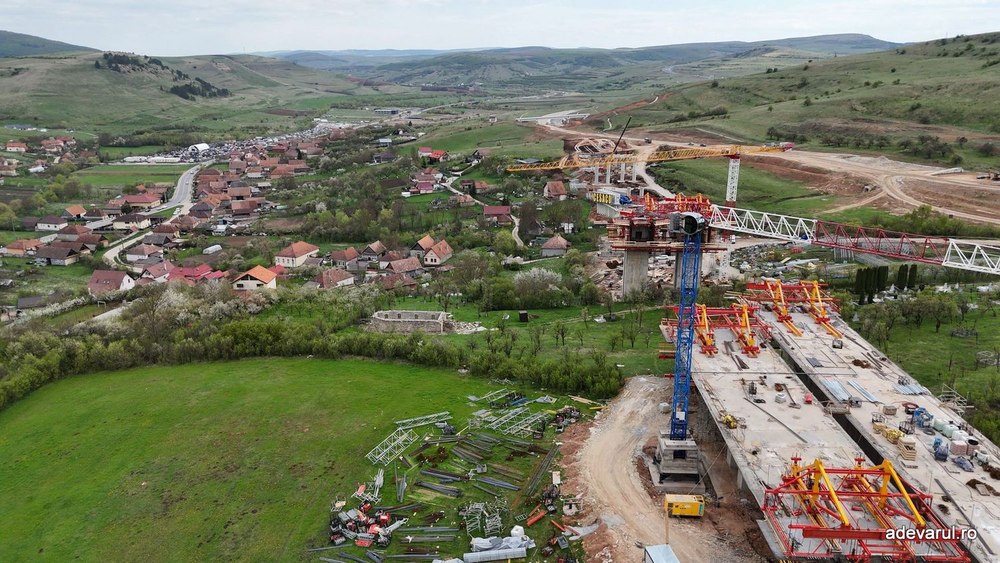
A monumental infrastructure project is taking shape beneath the Alps, poised to redefine European freight transport. The Brenner Base Tunnel, a 64-kilometer subterranean railway line, will soon link Austria and Italy, promising a future with significantly less road congestion and pollution on the vital Brenner Pass. This ambitious undertaking, part of the EU's TEN-T network, is crucial for seamless cargo movement between Scandinavia and Sicily.
Tunelul Brenner va deveni cea mai lungă linie feroviară subterană din lume, legând Austria de Italia și promițând să schimbe radical transportul european de marfă.
Currently, the Brenner Pass highway is plagued by heavy traffic and environmental concerns. The existing 19th-century railway line is inadequate for modern freight volumes. The new tunnel, built at the mountain's base, will accommodate longer, faster trains, thereby diverting a substantial portion of truck traffic to rail. This shift is not merely about efficiency; for Austria, a nation heavily impacted by transit traffic, it represents a major step towards environmental sustainability and reducing the strain on its infrastructure.
Proiectul este esențial pentru transportul de mărfuri între nordul și sudul continentului, făcând parte dintr-un coridor ce leagă Scandinavia de Sicilia.
Despite its strategic importance, the project has encountered significant hurdles. The estimated cost has ballooned by approximately 40% to nearly 11 billion euros, with the EU contributing a substantial 2.3 billion euros. Unforeseen geological conditions and technical complexities have led to delays, pushing the completion date from the original 2019 target to 2032. Furthermore, the crucial connection to Germany remains stalled due to protracted political and administrative disputes in Bavaria. The tunnel's success hinges on this integrated network, highlighting how cross-border cooperation is essential for such large-scale European projects.
Costurile totale se apropie de 11 miliarde de euro, din care UE a alocat până acum 2,3 miliarde.
Over 1,300 workers from 11 European countries are involved, employing advanced tunneling techniques. One tunnel boring machine, 'Günther,' has even set a world record for excavation speed. The project's scale is immense, involving the installation of around 322,000 concrete rings for structural support. The potential to transfer up to one million trucks annually from road to rail underscores the transformative impact this tunnel will have, not just for Austria and Italy, but for the entire European logistics landscape.
Dacă termenul va fi respectat, până la un milion de camioane pe an ar putea fi transferate pe calea ferată, reducând semnificativ traficul rutier din Alpi.
DistantNews Editorial
Originally published by Adevărul in Romanian. Translated, summarized, and contextualized by our editorial team with added local perspective. Read our editorial standards.
More Stories

From Our Blog

What Gets Lost (and Found) When News Is Translated

The Critical Role of Diaspora Media in Global News

What Travellers Should Know About Countries with Restricted Press

A Digital Nomad's Guide to Following Local News

How the Same Story Looks Different in Different Countries
