


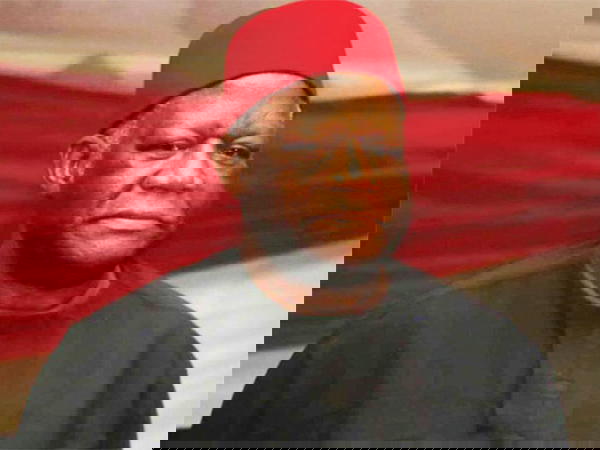
Xenophobia has no place in Africa, Nwachukwu warns
Summarized and contextualized by DistantNews.
At a glance
News
Sources not specified
Context piece
- Former Nigerian Military Administrator Ike Nwachukwu warned against xenophobia in Africa, stating it must not replace apartheid.
- He commended President Tinubu's condemnation of attacks against Nigerians in South Africa and stressed that Africans should not turn against each other.
- Nwachukwu also emphasized that lasting peace requires justice, trust, opportunity, legitimacy, and responsive leadership, not just military force.
Former Nigerian Military Administrator Ike Nwachukwu has issued a strong warning against xenophobia in Africa, asserting that the continent must not exchange the legacy of apartheid for a new form of hatred. Speaking at the South-East Regional Security Summit in Umuahia, Abia State, Nwachukwu condemned the recent attacks against Nigerians and other Africans in South Africa.
Our country worked hard to put down apartheid. We will not replace apartheid in Africa with xenophobia. We cannot fight apartheid with our blood, our money and our sweat, only to have Africans turning against fellow Africans.
Nwachukwu commended President Bola Ahmed Tinubu for his firm stance against the xenophobic attacks. He highlighted Nigeria's significant role in dismantling apartheid, emphasizing the irony of Africans now targeting fellow Africans. "We cannot fight apartheid with our blood, our money and our sweat, only to have Africans turning against fellow Africans. Xenophobia is a non-starter on our continent," Nwachukwu declared.
The summit, organized by the Minister of Defence and the South-East Governors' Forum, brought together regional leaders and security chiefs. Nwachukwu broadened the discussion on security, stating that true peace extends beyond the absence of violence. He identified justice, trust, opportunity, legitimacy, and responsive leadership as crucial elements for achieving sustainable peace.
Xenophobia is a non-starter on our continent.
He pointed to issues like kidnapping and violent crime as symptoms of deeper societal problems, including declining public confidence in institutions and leadership. "No security architecture can succeed where trust has collapsed. Military force is indispensable, but military force alone has never permanently solved political, economic or social problems," he stated. Nwachukwu advocated for intelligence-led policing, community involvement, youth empowerment, regional cooperation, and security sector reforms. He stressed the importance of citizens as intelligence assets and urged authorities to build trust to encourage information sharing.
No security architecture can succeed where trust has collapsed. Military force is indispensable, but military force alone has never permanently solved political, economic or social problems.
Furthermore, Nwachukwu called for the establishment of an additional military division in the South-East, citing the region's strategic importance, economic activity, and population density. He urged enhanced cooperation among governors, security agencies, traditional rulers, and community leaders through intelligence sharing and coordinated operations.
The greatest intelligence asset any nation possesses is the civilian who believes that government will protect rather than punish.
DistantNews Editorial
Originally published by Vanguard. Summarized and contextualized by our editorial team with added local perspective. Read our editorial standards.
More Stories


From Our Blog

How the Same Story Looks Different in Different Countries

What Gets Lost (and Found) When News Is Translated

The Critical Role of Diaspora Media in Global News

What Travellers Should Know About Countries with Restricted Press

A Digital Nomad's Guide to Following Local News
