

Yangtze Flood Controls May Worsen Risks, Chinese Scientists Find
Translated from English, summarized and contextualized by DistantNews.
At a glance
News
Named sources
Context piece
- A new study suggests that some human interventions along China's Yangtze River, such as embankments and lake reclamation, may have intensified flood risks instead of mitigating them.
- Researchers reconstructed 500 years of flood variability using sediment archives, historical documents, and climate data, finding that climate remains the primary driver of floods.
- The study indicates that embankments amplified 100-year floods by 18% and lake enclosures by 8%, highlighting a paradox where efforts to control floods may have worsened their magnitude.
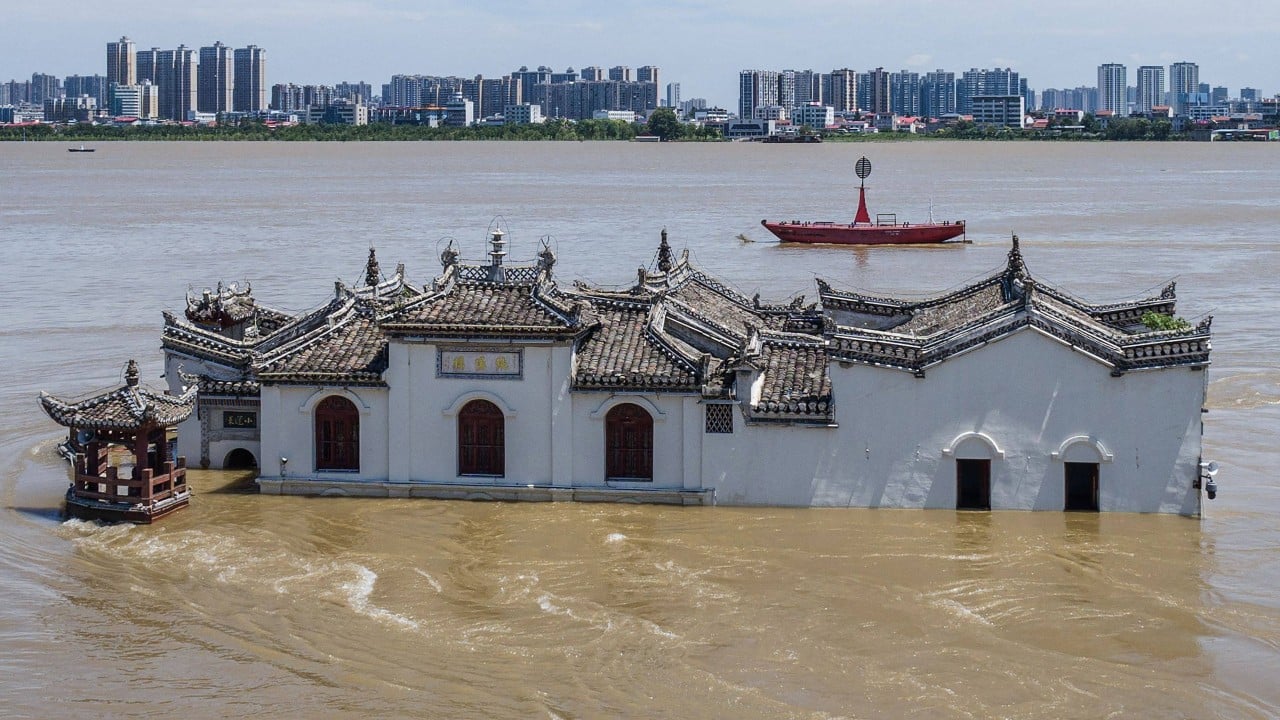
For centuries, the Yangtze River has been a vital artery for China, but its devastating floods have claimed countless lives. While extensive flood-control systems, from ancient dykes to the modern Three Gorges Dam, have been engineered to tame its waters, a recent study reveals a concerning paradox: some human interventions may have inadvertently amplified the very flood risks they were designed to mitigate.
A team of scientists from China and Europe published findings in the Proceedings of the National Academy of Sciences of the United States of America, indicating that human activities on the Yangtze have intensified climate-driven flood risks. Their research reconstructed 500 years of flood variability since 1500, utilizing lake sediment archives, historical documents, and high-resolution climate data. While acknowledging climate as the primary factor influencing flood occurrence, the study highlights the significant impact of human modifications.
The analysis revealed that constructing embankments for agricultural use amplified the magnitude of 100-year floods, those with a 1% chance of occurring annually, by 18%. Similarly, lake reclamation projects, also for agricultural purposes, intensified these major floods by 8%. This suggests that the extensive engineering efforts aimed at controlling the river's flow may have, counterintuitively, increased the severity of major flood events, particularly during periods like the Little Ice Age (1500-1850) when flood frequency peaked.
We show that flood frequency peaked during the Little Ice Age [1500−1850] … and that human interventions, particularly embankments and lake reclamation, amplified climate-driven flood magnitudes.
DistantNews Editorial
Originally published by South China Morning Post in English. Translated, summarized, and contextualized by our editorial team with added local perspective. Read our editorial standards.
More Stories
From Our Blog

Countries Without a Free Press: What You Need to Know

What Press Freedom Means for the News You Read

What Gets Lost (and Found) When News Is Translated

The Critical Role of Diaspora Media in Global News

What Travellers Should Know About Countries with Restricted Press
