


Young Vietnamese Embrace Electric Vehicles Amidst Fuel Price Volatility
Translated from Vietnamese, summarized and contextualized by DistantNews.
TLDR
- Many young Vietnamese are shifting to electric vehicles (EVs) due to unstable global gasoline prices.
- Riders like Nguyen Thanh Long find EVs more economical, with charging costs significantly lower than refueling gasoline.
- The convenience of charging at home and the availability of battery swapping stations are further boosting EV adoption among young professionals and gig workers.
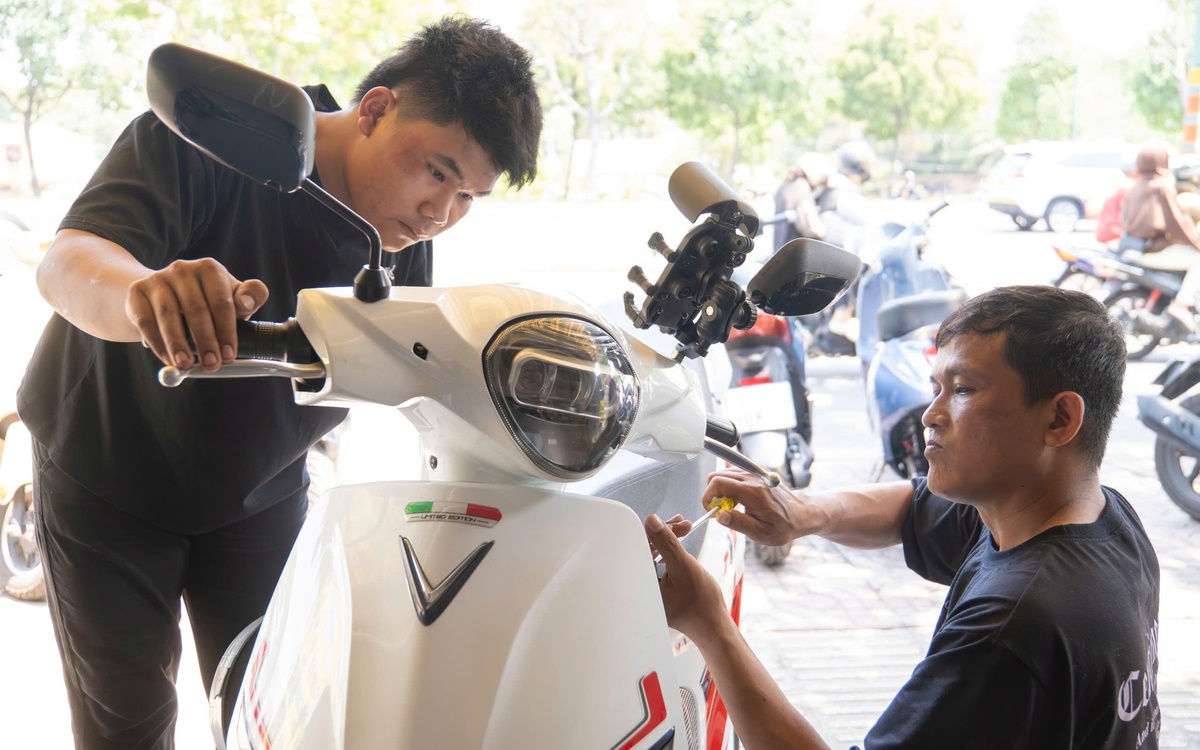
The rising and fluctuating global gasoline prices are compelling a growing number of young Vietnamese to reconsider their transportation choices, with electric vehicles (EVs) emerging as a popular and practical alternative. This shift is particularly evident among young professionals and ride-sharing drivers who are seeking more cost-effective and stable mobility solutions.
I don't watch it, I haven't cared about gas prices for a whole year.
Personal accounts, like that of Nguyen Thanh Long, a ride-sharing driver in Ho Chi Minh City, illustrate the economic advantages of EVs. Long highlights how his daily expenses have stabilized since switching to an electric motorcycle, contrasting it with the unpredictable costs associated with gasoline. He notes that charging his EV overnight costs significantly less than the multiple daily refueling stops required for gasoline-powered vehicles, directly impacting his daily earnings and financial planning.
Electricity is much cheaper than gasoline. On average, a full charge costs about 10,000-15,000 VND, which is enough to travel nearly 100km.
Beyond the cost savings, the convenience factor plays a crucial role. The ability to charge EVs at home eliminates the need for frequent trips to gas stations, a significant advantage in a bustling city like Ho Chi Minh City. Furthermore, the recent introduction of battery swapping stations by EV companies offers an even more streamlined experience, allowing riders to exchange a depleted battery for a fully charged one in minutes, minimizing downtime and maximizing operational efficiency.
Just take a new battery, put it in the car, leave the depleted battery in the cabinet, and then continue driving, no waiting.
From our perspective at Tuổi Trẻ, this trend signifies more than just a change in vehicle preference; it reflects a broader societal adaptation to economic realities and a growing embrace of sustainable technologies. While international coverage might focus on technological advancements, we emphasize the grassroots adoption driven by practical economic needs and the desire for greater financial stability. The increasing popularity of EVs among the youth underscores a forward-looking mindset, prioritizing long-term savings and environmental consciousness. This transition is not just about avoiding high fuel costs; it's about embracing a smarter, more sustainable way of life in Vietnam.
I saw it on the internet, many people were already riding them. But at that time, gasoline prices were not yet very high, so I kept hesitating.
DistantNews Editorial
Originally published by Tuổi Trẻ in Vietnamese. Translated, summarized, and contextualized by our editorial team with added local perspective. Read our editorial standards.
More Stories



From Our Blog

What Gets Lost (and Found) When News Is Translated

The Critical Role of Diaspora Media in Global News

What Travellers Should Know About Countries with Restricted Press

A Digital Nomad's Guide to Following Local News

How the Same Story Looks Different in Different Countries
