


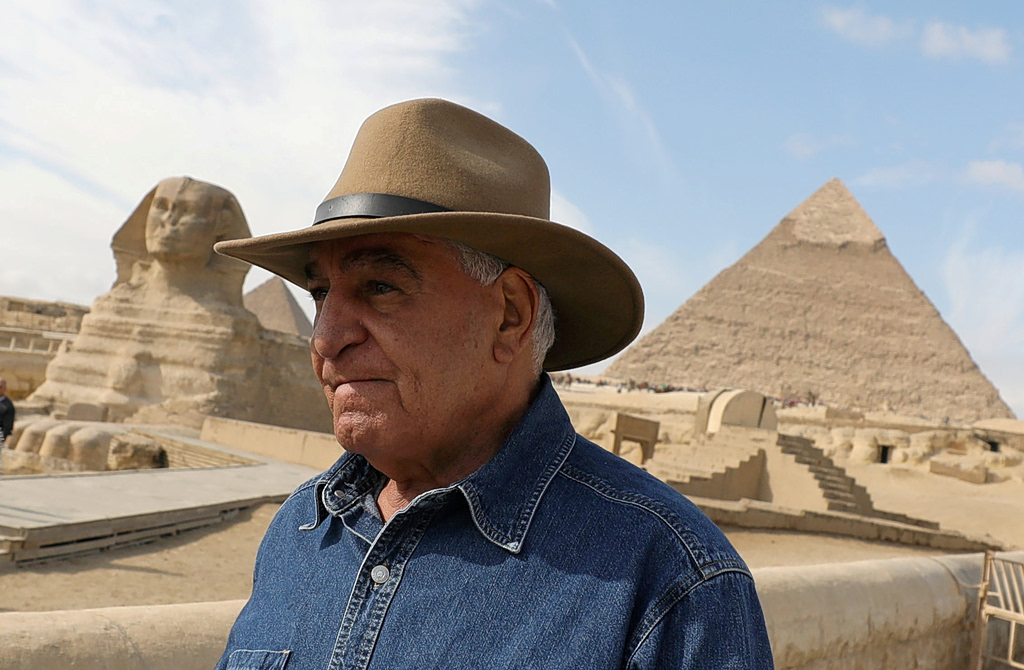
Zahi Hawass to Ta Nea: 'Return the Parthenon Sculptures – It's a Matter of Justice'
Translated from Greek, summarized and contextualized by DistantNews.
TLDR
- Renowned Egyptologist Zahi Hawass advocates for the return of the Parthenon Sculptures to Greece, calling it a matter of justice.
- Hawass supports Greece's claim against the British Museum and highlights his own campaigns for the repatriation of Egyptian artifacts, including the Rosetta Stone and the Nefertiti Bust.
- He proposes an international conference, potentially involving UNESCO, to address the restitution of cultural artifacts removed before 1970.
The Parthenon Sculptures, known as the Elgin Marbles, are a symbol of Greece's rich cultural heritage, and their rightful place is in Athens, not London. This sentiment is powerfully echoed by Dr. Zahi Hawass, the world-famous Egyptologist and former Egyptian Minister of State for Antiquities Affairs, in a recent interview with Ta Nea.
It is a matter of justice, but also something that must arise from public pressure.
Dr. Hawass, a staunch advocate for the repatriation of stolen antiquities, unequivocally states that the return of the Parthenon Sculptures is a matter of "justice." He expresses his strong support for Greece's ongoing efforts to reclaim these invaluable artifacts from the British Museum. His own tireless campaigns for the return of Egyptian treasures, such as the Rosetta Stone and the Nefertiti Bust, demonstrate his unwavering commitment to cultural restitution.
"I am very happy that Greece is claiming its antiquities from the British Museum," Hawass stated, emphasizing that such claims should be driven by public pressure. He also pointed to the significant number of artifacts, around 2,000, that have been reported stolen from the British Museum, questioning the institution's ability to safeguard the cultural heritage of other nations. This highlights a broader concern about the ethics and security practices of major international museums.
I am very happy that Greece is claiming its antiquities from the British Museum.
From a Greek perspective, the Parthenon Sculptures are not merely historical objects; they are integral to the national identity and the very soul of the country. Their removal represents a historical injustice that continues to resonate deeply. Hawass's international recognition and his powerful advocacy lend significant weight to Greece's cause, bringing it to the forefront of global discussions on cultural heritage. The call for an international conference, potentially with UNESCO's involvement, signals a crucial step towards establishing new, fairer international norms for the return of cultural property, particularly for items removed under dubious circumstances in the past.
We see, after all, what happened at the British Museum: about 2,000 items were stolen. How can we trust such an institution to protect the cultural heritage of other countries?
This issue transcends borders, resonating with nations worldwide that have seen their cultural patrimony dispersed. Hawass's perspective, informed by his deep understanding of both Egyptian and global heritage issues, underscores the universal principle that cultural artifacts belong to the people and the land from which they originated. His support is a significant boost to the Greek cause, framing the Parthenon Sculptures' return not just as a diplomatic negotiation, but as a fundamental act of historical and cultural justice.
I believe that an international conference should be organized with countries like Greece and Italy and others that have suffered losses. It is very important.
DistantNews Editorial
Originally published by Ta Nea in Greek. Translated, summarized, and contextualized by our editorial team with added local perspective. Read our editorial standards.
More Stories



From Our Blog

What Gets Lost (and Found) When News Is Translated

The Critical Role of Diaspora Media in Global News

What Travellers Should Know About Countries with Restricted Press

A Digital Nomad's Guide to Following Local News

How the Same Story Looks Different in Different Countries
