


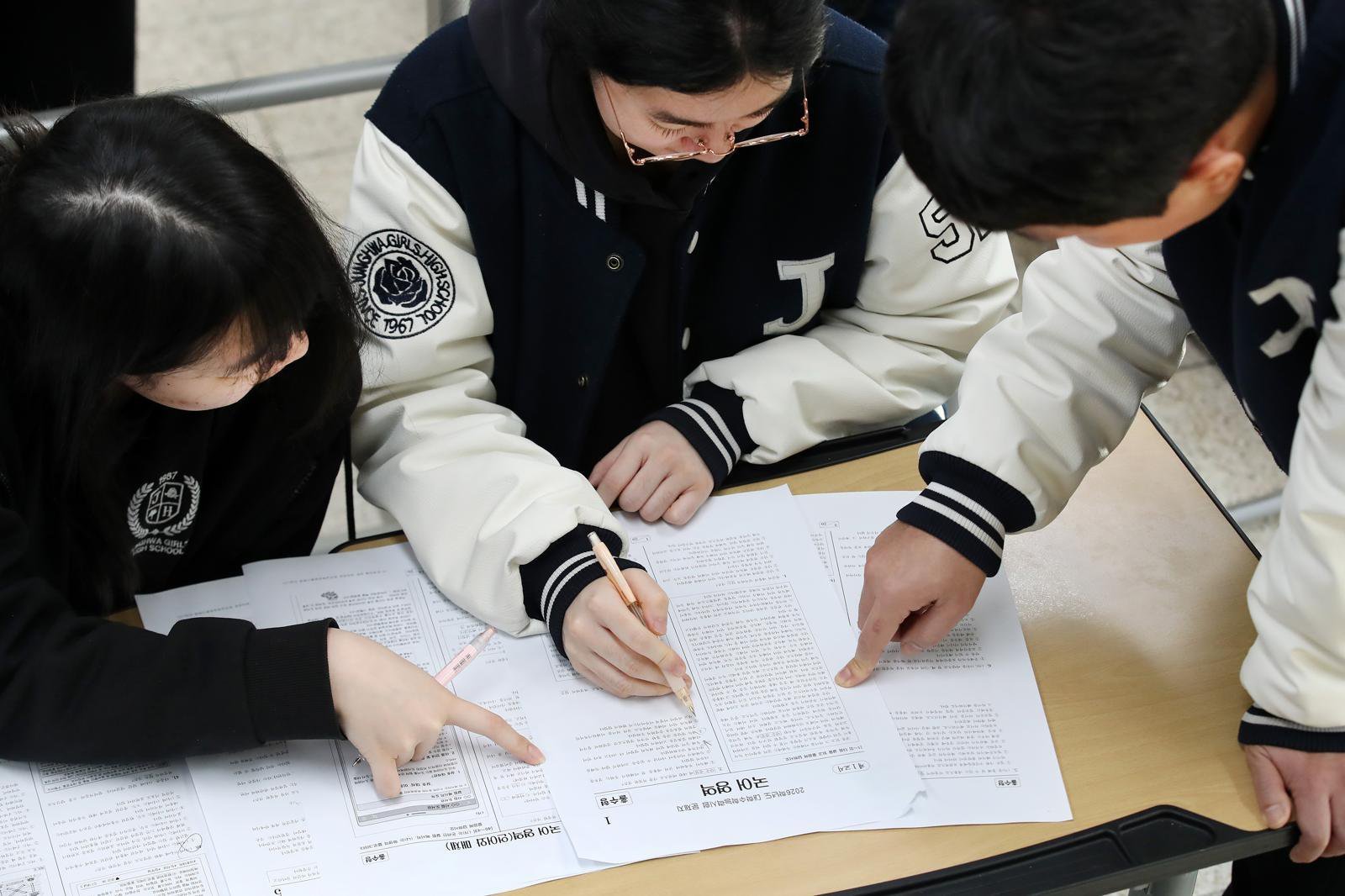
2028 Seoul National University, Yonsei University regular admissions to fall to 30% range; internal grades to become more important
Translated from Korean, summarized and contextualized by DistantNews.
TLDR
- The 2028 university entrance exam in South Korea will see a significant reduction in the proportion of students admitted through regular (jeongsi) admissions at Seoul National University and Yonsei University, dropping to the 30% range.
- The proportion of early admissions (susi) across all universities will reach a record high of 80.8%, increasing the importance of high school grades (naesin).
- Universities are introducing diverse evaluation methods for regular admissions, with some including high school records, to differentiate candidates under the new 'integrated' college entrance exam system.
South Korea's higher education landscape is undergoing a significant shift with the upcoming 2028 academic year, as top universities like Seoul National University and Yonsei University drastically cut their regular admission quotas to the 30% range. This move, detailed in the '2028 Academic Year University Admissions Plan' by the Korean Council for University Education (KCUE), signals a major pivot towards early admissions (susi), which will now account for a record 80.8% of all university enrollments. This dramatic increase in early admissions places an unprecedented emphasis on high school performance and internal school records (naesin).
The introduction of an 'integrated' college entrance exam (Suneung) for the 2028 academic year, which eliminates subject choices, has prompted universities to seek new ways to assess applicants. Many institutions, including eight of the top 15 universities, plan to incorporate high school records into their regular admission processes. Seoul National University, for instance, will use a two-stage process for its regular admissions, with the first stage relying solely on the Suneung and the second stage combining Suneung scores with an evaluation of academic capabilities. This reflects a broader trend of seeking more holistic evaluations beyond standardized test scores.
For students, this evolving admissions system presents a heightened pressure to excel not only in standardized tests but also in their day-to-day academic performance and extracurricular activities throughout high school. The shift away from a heavy reliance on the Suneung for regular admissions means that maintaining strong internal grades and a well-rounded student record is more critical than ever. Experts like Lim Sung-ho, CEO of Jongro Academy, advise students to recognize the reduced opportunities for Suneung-based admissions and to focus diligently on their in-school academic management. This change is particularly significant for South Korea, where the Suneung has historically been the ultimate determinant of university admission, and this adjustment reflects a national conversation about the best way to evaluate student potential.
DistantNews Editorial
Originally published by Dong-A Ilbo in Korean. Translated, summarized, and contextualized by our editorial team with added local perspective. Read our editorial standards.
More Stories


From Our Blog

What Gets Lost (and Found) When News Is Translated

The Critical Role of Diaspora Media in Global News

What Travellers Should Know About Countries with Restricted Press

A Digital Nomad's Guide to Following Local News

How the Same Story Looks Different in Different Countries
