


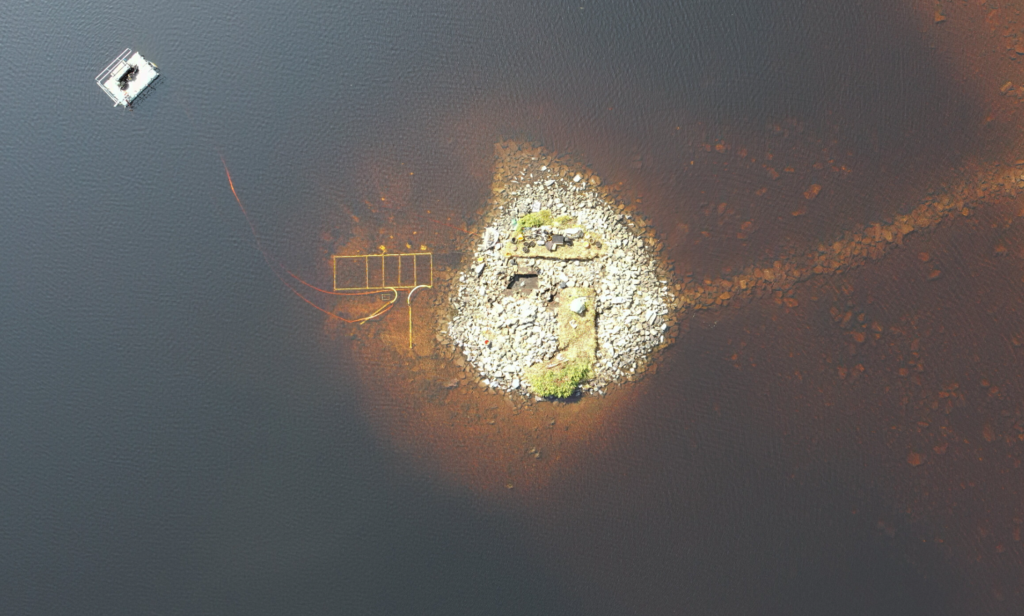
5,000-year-old wooden platform found beneath Scottish loch island
Translated from Greek, summarized and contextualized by DistantNews.
TLDR
- Archaeologists discovered a 5,000-year-old wooden platform beneath a man-made island in a Scottish loch.
- Using photogrammetry, researchers from the University of Southampton documented the Neolithic structure, older than Stonehenge, revealing its layered construction and associated pottery.
- The findings suggest complex societies and communal activities, with the site potentially used for cooking or celebrations.
A remarkable discovery in Scotland's ancient past has captured the attention of archaeologists and historians alike. Researchers from the University of Southampton, in collaboration with the University of Reading, have unearthed a substantial wooden platform dating back over 5,000 years, submerged beneath a stone-built island in Loch Borgue on the Isle of Lewis. This Neolithic crannog, predating even Stonehenge, offers a fascinating glimpse into the lives of early inhabitants.
Crannogs are small artificial islands, usually thousands of years old. Hundreds exist in the lochs of Scotland and many remain unexplored.
The application of advanced stereophotogrammetry, a technique adapted for shallow waters, allowed for an unprecedented, unified view of the structure both above and below the surface. This innovative approach revealed the crannog's layered development, from its initial wooden platform around 3300 BC to later additions in the Bronze and Iron Ages. The presence of hundreds of Neolithic pottery fragments, some containing food residue, strongly indicates the site was a hub for communal activities, possibly including cooking and celebrations.
Although for years it was thought they were built and used mainly from the Iron Age to the post-medieval period, today we know that some were created much earlier, during the Neolithic era, between 3800 and 3300 BC.
This find is particularly significant for Scotland, a country dotted with hundreds of crannogs, many of which remain unexplored. While previously thought to be primarily from the Iron Age, the discovery of this much older Neolithic structure challenges existing timelines and underscores the depth of Scotland's ancient history. The sheer scale of labor and resources required to construct such a site points to sophisticated social organization among its creators, a testament to the ingenuity of our ancestors.
Although we do not yet know why these islands were built, the resources and labor required indicate complex societies and the importance of these places.
What makes this discovery especially compelling from a Scottish perspective is how it enriches our understanding of our own heritage. While international coverage might focus on the age comparison with Stonehenge, for us, it's about connecting with the people who lived on these lochs millennia ago. It highlights the unique archaeological landscape of Scotland and the ongoing potential for groundbreaking discoveries within our own waters, reminding us of the enduring legacy of our ancient past.
The abundance of ceramics, often with food remains, suggests they were used for communal activities, such as cooking or celebrations.
DistantNews Editorial
Originally published by Ta Nea in Greek. Translated, summarized, and contextualized by our editorial team with added local perspective. Read our editorial standards.
More Stories


From Our Blog

What Gets Lost (and Found) When News Is Translated

The Critical Role of Diaspora Media in Global News

What Travellers Should Know About Countries with Restricted Press

A Digital Nomad's Guide to Following Local News

How the Same Story Looks Different in Different Countries
