


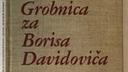
50 Years On, a Controversial Book Remains a Pillar of Croatian Literature
Translated from Croatian, summarized and contextualized by DistantNews.
TLDR
- A seminal book, "The Tomb for Boris Davidovich," published 50 years ago in Zagreb, is being re-examined for its literary and historical significance.
- The book, by Danilo Kiš, faced considerable controversy and opposition due to its critique of communism and collective ideology.
- Despite its challenging publication history and the author's subsequent difficulties, the book is now recognized as a landmark in Croatian literary history.
Fifty years ago, a book was published in Zagreb that would echo through Western literary circles and bring its author, Danilo Kiš, considerable hardship. "The Tomb for Boris Davidovich," a collection of seven novellas, was co-published by Belgrade's BIGZ and Zagreb's Liber, but it was largely Slavko Goldstein's initiative in Zagreb that brought it to light. The book's controversial nature, its sharp critique of communism and emotional collectivism, made its publication a sensitive and even dangerous undertaking, particularly in Belgrade due to relations with the Soviet Union and internal political maneuvering. In Zagreb, while some, like Zlatko Crnković, deemed it commercially unviable or perhaps feared its implications, Goldstein bravely pushed it forward. This act of courage by a Croatian publisher, using Croatian paper, ink, and resources, makes the book, from a local perspective, intrinsically tied to Croatia, even if it's often viewed through a broader Yugoslav or Serbian literary lens. The article highlights how figures like Kiš and Goldstein, due to their Jewish heritage and perceived 'otherness,' were targets for criticism, their work dismissed as 'anti-communist,' 'anti-national,' or the product of a 'non-people's soul.' This framing reveals a deep-seated tendency to pathologize dissent and individualistic thought within collective societies. The publication is now considered one of the most important events in post-1945 Croatian literary history, a testament to the enduring power of literature to challenge the status quo, even when its origins and contributions are sometimes contested or overlooked by the mainstream.
Uistinu, bila je to samo Slavkova knjiga. Nitko drugi nije se odvažio da je objavi.
DistantNews Editorial
Originally published by Večernji List in Croatian. Translated, summarized, and contextualized by our editorial team with added local perspective. Read our editorial standards.
More Stories



From Our Blog

What Gets Lost (and Found) When News Is Translated

The Critical Role of Diaspora Media in Global News

What Travellers Should Know About Countries with Restricted Press

A Digital Nomad's Guide to Following Local News

How the Same Story Looks Different in Different Countries
