


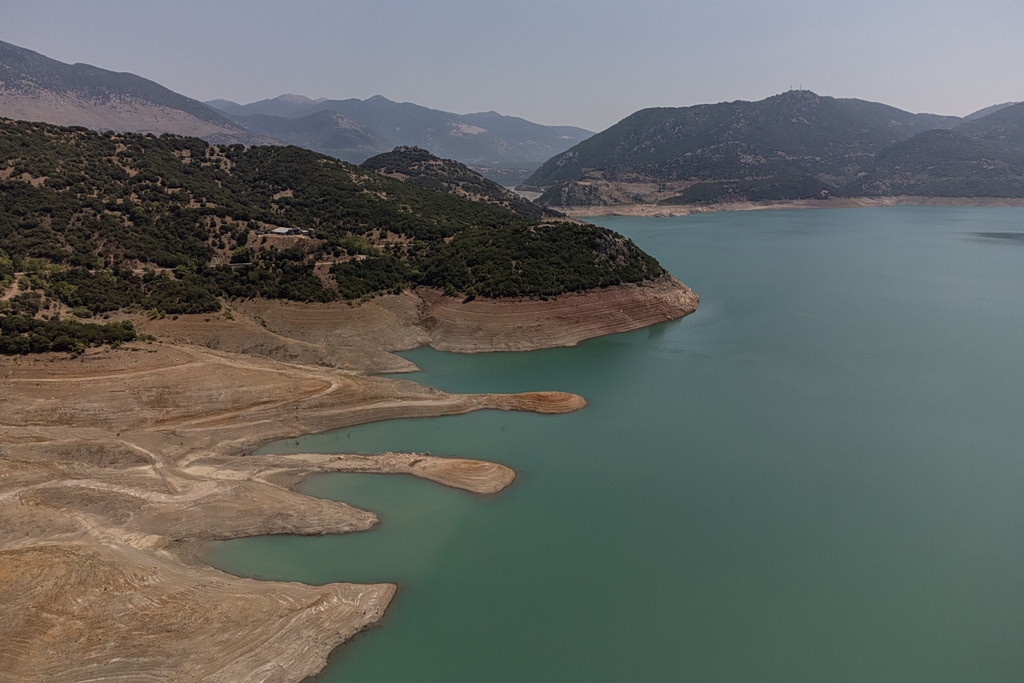
A Breath of Fresh Air for Water Reserves - How Much Did the Reservoirs Swell in the Last 7 Months?
Translated from Greek, summarized and contextualized by DistantNews.
TLDR
- Water reserves in Attica's reservoirs have significantly increased over the last seven months, nearly doubling since the start of the hydrological year.
- Total reserves reached 771.817 million cubic meters by April 29, a substantial rise from 640.610 million cubic meters last year and 402.160 million cubic meters on October 1.
- This improvement is attributed to heavy winter rains and floods, which replenished key reservoirs despite causing some initial problems.
The recent surge in water reserves across Attica's reservoirs offers a much-needed reprieve, with levels nearly doubling since the beginning of the hydrological year. As of April 29, total reserves stand at an impressive 771,817,000 cubic meters. This marks a significant improvement compared to the same period last year (640,610,000 cubic meters) and a dramatic increase from the mere 402,160,000 cubic meters recorded on October 1.
Αύξηση στα αποθέματα νερού καταγράφεται το τελευταίο διάστημα στους ταμιευτήρες, προσφέροντας σημαντική ανάσα για την υδροδότηση της Αττικής.
This welcome development is largely credited to the intense and successive storms that characterized this past winter. While these heavy rains and subsequent floods did cause some localized issues, they were instrumental in refilling the primary reservoirs supplying Athens – Marathon, Yliki, Mornos, and Evinos – as well as the interconnected Mornos-Evinos tunnel system and groundwater sources. It's noteworthy that reserves have surpassed the 700 million cubic meter mark again, a level not seen since August 2024.
The Mornos Lake, a crucial water source for Athens, shows a particularly encouraging recovery. Satellite data from April 27 indicates its surface area reached 15.5 square kilometers, a notable improvement from its February low of 13.0 km². While still slightly below the 2016-2024 average of 17.5 km², this recovery within just two months highlights the positive impact of the recent weather patterns.
Οι ισχυρές βροχοπτώσεις και οι πλημμύρες προκάλεσαν προβλήματα, αλλά συνέβαλαν καθοριστικά στο «γέμισμα» των βασικών ταμιευτήρων της πρωτεύουσας
Despite this positive trend, Ta Nea emphasizes that water scarcity remains a persistent challenge. Scientists caution that these fluctuations are directly linked to extreme weather events driven by climate change. Therefore, the need for continuous monitoring and rational management of water resources is paramount to ensure future water security for Attica. While international news might focus on the broader implications of climate change, for us in Greece, this is a story of immediate, tangible relief and a stark reminder of our vulnerability to weather patterns.
Η ανάγκη για συνεχή παρακολούθηση και ορθολογική διαχείριση των υδάτινων πόρων παραμένει επιτακτική, ώστε να διασφαλιστεί η επάρκεια νερού για το μέλλον της Αττικής.
DistantNews Editorial
Originally published by Ta Nea in Greek. Translated, summarized, and contextualized by our editorial team with added local perspective. Read our editorial standards.
More Stories

From Our Blog

What Gets Lost (and Found) When News Is Translated

The Critical Role of Diaspora Media in Global News

What Travellers Should Know About Countries with Restricted Press

A Digital Nomad's Guide to Following Local News

How the Same Story Looks Different in Different Countries
