

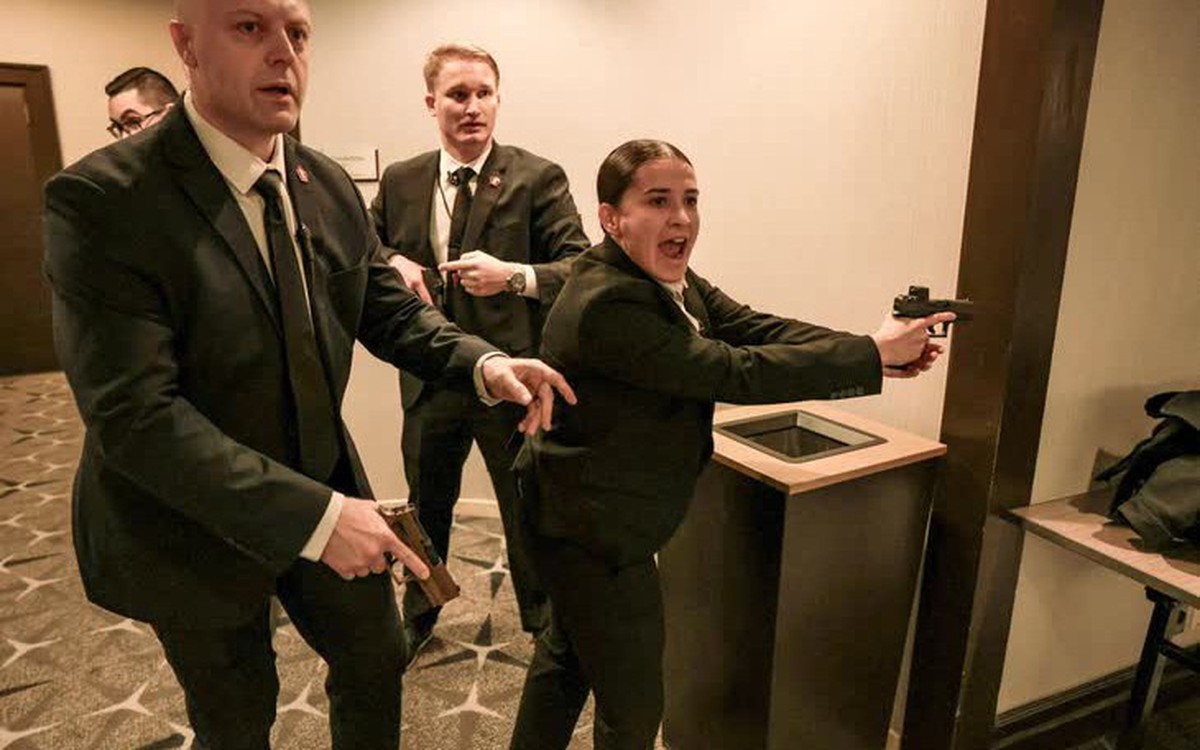
AI Fake News Spreads Rapidly Following White House Press Party Shooting
Translated from Vietnamese, summarized and contextualized by DistantNews.
TLDR
- AI-generated fake images and information are spreading rapidly on social media, linked to the suspect in an alleged assassination attempt on U.S. President Donald Trump.
- The fabricated content, often featuring celebrities and politicians, is created by AI
The recent incident at the White House Correspondents' Association event, where a suspect was apprehended, has unfortunately become fertile ground for the proliferation of AI-generated disinformation. As Vietnam's Tuổi Trẻ newspaper, we observe with concern how quickly fabricated images and narratives are spreading across social media platforms like Facebook.
This is essentially the familiar behavior of garbage content farms, only now accelerated by AI.
These AI-generated visuals, which falsely associate the suspect, Cole Tomas Allen, with numerous celebrities and public figures, highlight a disturbing trend. Experts point to this as a prime example of "AI slop" – low-cost, mass-produced content designed to maximize engagement. This phenomenon, while familiar in the realm of clickbait farms, is now supercharged by artificial intelligence, making it harder than ever to discern truth from fiction.
The ease with which AI can now manipulate images, even altering clothing, backgrounds, or swapping faces with minimal effort, is alarming. What once required skilled photo editing can now be automated at an unprecedented scale. This technological advancement, as noted by Professor Jen Golbeck, allows for the creation of convincing fakes not just of celebrities, but of virtually anyone, a stark contrast to earlier limitations.
Technology today allows for easy photo editing; with just one original photo, AI can change clothing, backgrounds, or even swap faces in a short time.
From our perspective in Vietnam, this development is particularly worrying. While international media may focus on the political implications or the technological novelty, we see the immediate threat to public trust and the potential for widespread confusion. The ability of social media algorithms to amplify viral content further exacerbates the problem, potentially overwhelming users' capacity to distinguish reality from fabrication. This underscores the urgent need for enhanced digital literacy and robust fact-checking mechanisms, not just in the U.S. but globally.
Previously, creating convincing fake images mainly applied to celebrities with a lot of online data, but now the technology allows doing the same for almost anyone.
DistantNews Editorial
Originally published by Tuổi Trẻ in Vietnamese. Translated, summarized, and contextualized by our editorial team with added local perspective. Read our editorial standards.
More Stories

From Our Blog

What Gets Lost (and Found) When News Is Translated

The Critical Role of Diaspora Media in Global News

What Travellers Should Know About Countries with Restricted Press

A Digital Nomad's Guide to Following Local News

How the Same Story Looks Different in Different Countries
