


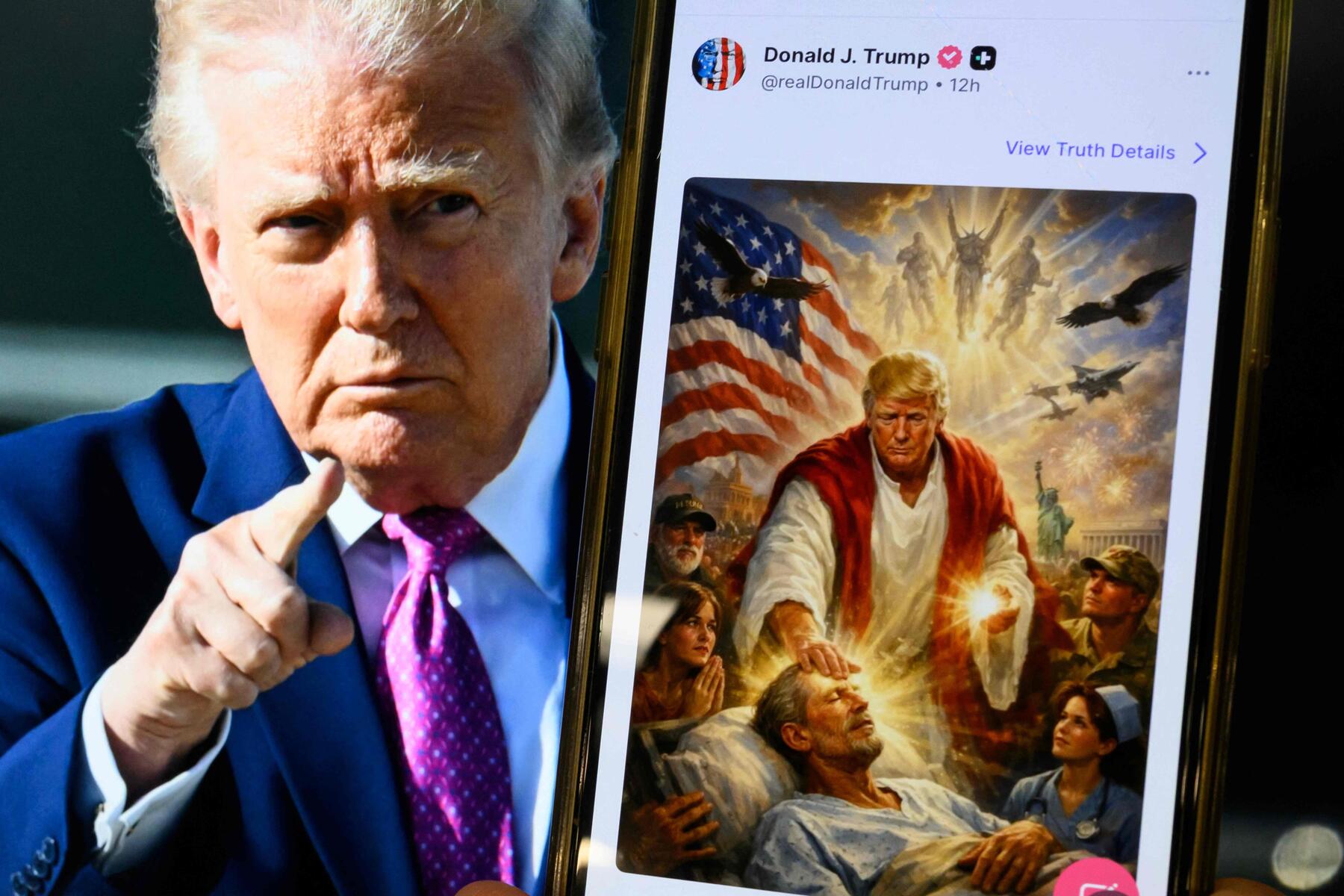
Anti-Catholicism: Old Resentments Surface in the USA
Translated from German, summarized and contextualized by DistantNews.
TLDR
- Recent verbal attacks by US President Donald Trump on Pope Leo XIV have reignited discussions about anti-Catholic sentiment in the US.
- Historically, anti-Catholicism was a deeply rooted prejudice in the US, influencing politics and society from the colonial era through the 20th century.
- Despite a significant Catholic population, historical biases have resurfaced, raising questions about their contemporary relevance.
The recent exchange between President Donald Trump and Pope Leo XIV, as reported by Die Presse, has brought to the forefront the persistent issue of anti-Catholicism in the United States. Trump's alleged depiction as Jesus on a social media post, though later deleted, and his verbal sparring with the Pope, echo historical prejudices that have long shaped American society and politics. This incident prompts a re-examination of Arthur Schlesinger's assertion that anti-Catholicism is the 'most deeply rooted prejudice in the history of the American people.'
Historically, the United States was founded by predominantly Protestant settlers who harbored significant distrust towards the Catholic Church. This sentiment fueled discrimination and violence, from the burning of monasteries and churches in the 19th century to the intense backlash against Al Smith, the first Catholic presidential candidate in 1928. Smith's candidacy triggered fears that a Catholic president would be beholden to the Vatican, leading to widespread 'anti-Catholic hysteria.' It took until 1960 for a Catholic, John F. Kennedy, to be elected president, and even he faced significant anti-Catholic attacks during his campaign, forcing him to publicly affirm his loyalty to the US Constitution over the Pope.
From an American perspective, the resurgence of these historical tensions is particularly noteworthy. While Catholicism became the largest single religious group in the US by 1850 and remains a significant force today, the legacy of anti-Catholic prejudice lingers. The election of two Catholic presidents, Joe Biden in 2020 following Kennedy, might suggest a fading of these old biases. However, incidents like Trump's remarks indicate that these deeply ingrained sentiments can be easily stirred, especially in a polarized political climate. Die Presse's analysis highlights how these historical undercurrents continue to influence contemporary American discourse, reminding us that religious prejudice, even when seemingly overcome, can resurface with surprising potency.
DistantNews Editorial
Originally published by Die Presse in German. Translated, summarized, and contextualized by our editorial team with added local perspective. Read our editorial standards.
More Stories


From Our Blog

What Gets Lost (and Found) When News Is Translated

The Critical Role of Diaspora Media in Global News

What Travellers Should Know About Countries with Restricted Press

A Digital Nomad's Guide to Following Local News

How the Same Story Looks Different in Different Countries
