

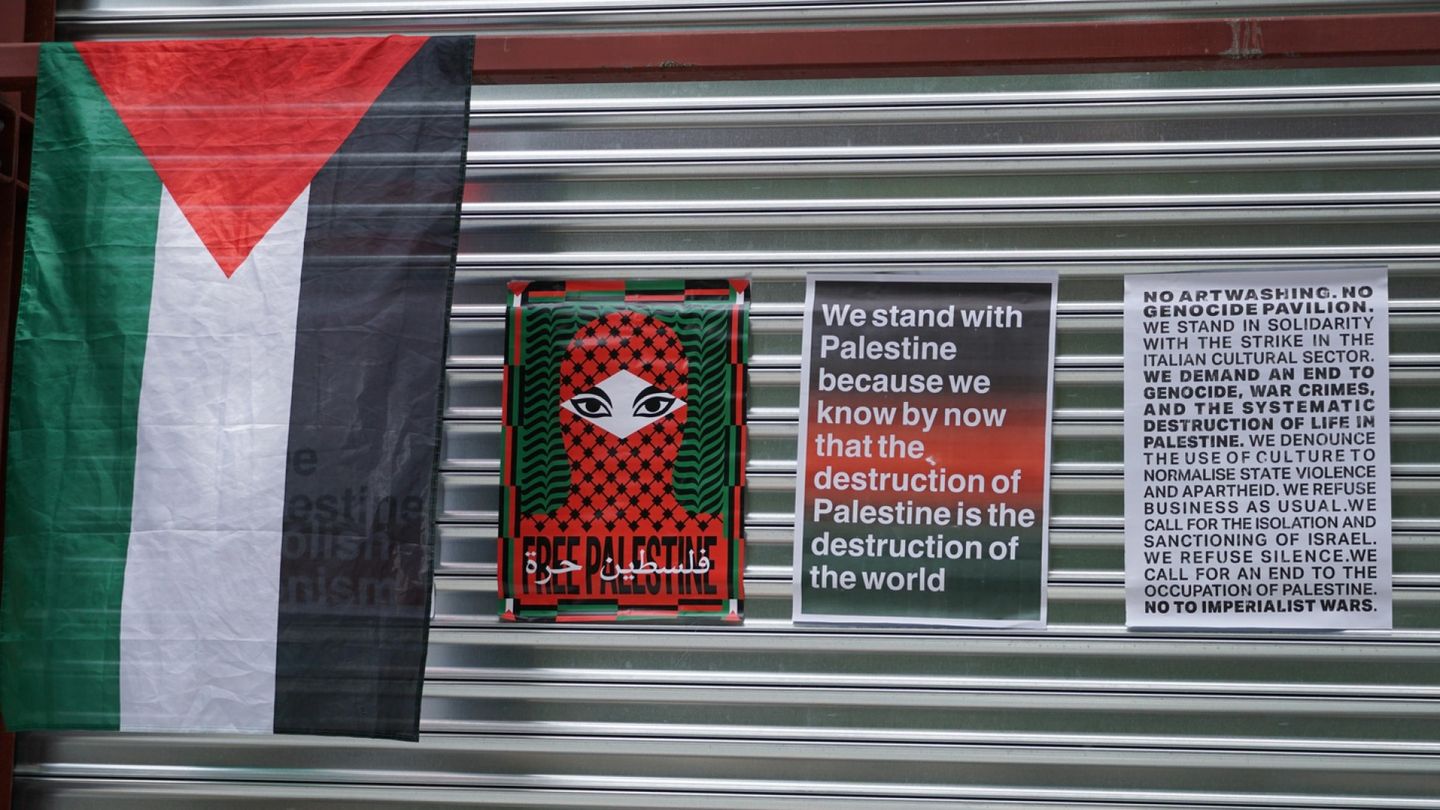
Art: Venice Biennale workers protest, strike over Israel's participation; Finland's pavilion also closed
Translated from Finnish, summarized and contextualized by DistantNews.
TLDR
- Some Venice Biennale workers began a protest strike due to the inclusion of Israel, leading to the closure of several national pavilions, including Finland's.
- The protest targets the Biennale's management decision to include countries accused of violating international law.
- While the Biennale officially opens to the public on Saturday, the strike and pavilion closures occurred during the professional preview days.
The Venice Biennale, a globally recognized platform for contemporary art, finds itself at the center of a significant political protest, with workers initiating a strike over Israel's participation. This action, which has led to the closure of several national pavilions including Finland's, underscores the deep divisions and intense emotions surrounding international conflicts and their intersection with cultural events. As journalists covering this event, we observe that the decision by the Biennale's management to include Israel, despite widespread criticism and accusations of violating international law, has ignited a powerful response from artists, activists, and now, Biennale staff.
Finland's decision to support this protest by closing its pavilion, as confirmed by Juha Huuskonen, CEO of Frame Contemporary Art Finland, reflects a solidarity with the striking workers and a broader critique of the Biennale's curatorial choices. This move highlights how cultural institutions are increasingly navigating complex geopolitical landscapes. The Biennale, typically a space for artistic exchange and dialogue, has become a stage for political expression, demonstrating that art cannot always remain detached from the world's pressing issues. The closure of pavilions from Estonia, the Netherlands, Austria, and Poland further emphasizes the widespread nature of this dissent.
We decided to support this activity, and our doors will be closed at 4 p.m.
This protest is not isolated; it builds upon previous demonstrations, such as the one by the Russian activist group Pussy Riot outside the Russian pavilion. The Biennale's management faces a difficult challenge in balancing artistic freedom with the ethical considerations of including nations involved in international disputes. For us, covering this story from a Finnish perspective, it is crucial to note that our national pavilion's closure is a deliberate act of protest, signaling our commitment to principles of international law and human rights. It raises important questions about the responsibility of cultural institutions in times of global crisis and how they choose to engage with, or distance themselves from, politically charged participation.
In the bigger picture, it concerns Israel and Russia. The United States has also been mentioned in comments.
DistantNews Editorial
Originally published by Helsingin Sanomat in Finnish. Translated, summarized, and contextualized by our editorial team with added local perspective. Read our editorial standards.
More Stories

From Our Blog

What Gets Lost (and Found) When News Is Translated

The Critical Role of Diaspora Media in Global News

What Travellers Should Know About Countries with Restricted Press

A Digital Nomad's Guide to Following Local News

How the Same Story Looks Different in Different Countries
