


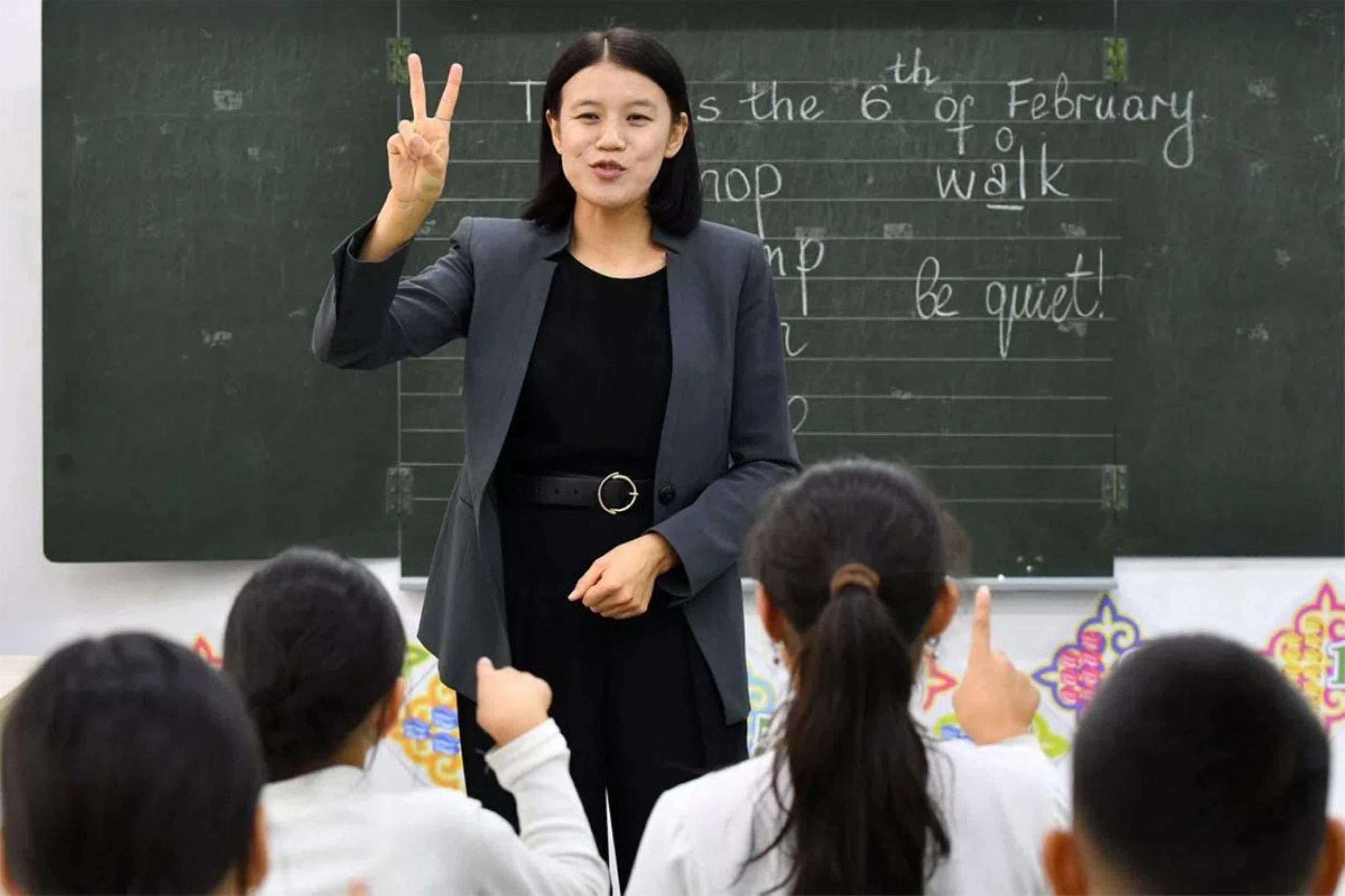
As population surges, Kyrgyzstan’s schools buckle under the strain
Translated from English, summarized and contextualized by DistantNews.
TLDR
- Kyrgyzstan's education system is struggling to cope with a rapidly growing youth population, leading to teacher shortages and overcrowded classrooms.
- The country faces challenges including underfunding, outdated materials, and dilapidated facilities, with unions warning of a "brink of collapse."
- Despite government efforts to modernize the curriculum and improve conditions, the system's issues are seen as a significant drag on national development.
Kyrgyzstan, a nation grappling with a demographic boom, finds its educational infrastructure strained to its limits. The capital, Bishkek, exemplifies the crisis, with schools like the one attended by Azamat Bekenov's son starting the academic year without essential staff, such as a math teacher. This situation forces parents into the unusual position of actively seeking candidates through social media, highlighting the depth of the crisis.
My son didn't have a maths teacher in the first term — high-school students were teaching instead.
The Central Asian nation, home to approximately seven million people, is battling a confluence of problems: a burgeoning young population, chronic underfunding, outdated textbooks, severely overcrowded classrooms, and crumbling facilities. Trade unions have issued stark warnings, describing the state of the schools as being on the "brink of collapse." Officials acknowledge that these educational deficiencies are a significant impediment to the country's overall prosperity.
President Sadyr Japarov notes a staggering increase of 500,000 students over the past decade, a 50% surge that the system has been unable to accommodate. Bekenov's observation of 52 students in one class and 50 in another underscores the scale of overcrowding. The government is attempting to address these issues by overhauling an "irretrievably obsolete" curriculum and acknowledging the low standards among teachers trained post-Soviet era. Efforts include extending compulsory schooling, constructing new schools, and increasing teacher salaries, with education receiving about 22% of the state budget.
There are 52 students in my son's class and 50 in my daughter's.
However, the reality within many classrooms remains bleak. Teachers like Gulmira Umetalieva in Karakol describe a lack of basic resources – no computers, projectors, or even simple screens – in their dilapidated rooms with wobbly desks and squeaking chairs. Government statistics reveal that 113 out of roughly 2,400 schools are in critical condition. From a Kyrgyz perspective, these challenges are not merely administrative issues; they represent a fundamental threat to the nation's future, impacting labor productivity, which is the lowest in the region, and hindering the development of a skilled workforce capable of driving the country forward.
But there is nothing in the classroom. No computer, no projector, not even a simple screen. The classrooms are run-down, the desks are wobbly, the chairs squeak.
DistantNews Editorial
Originally published by Gulf Today in English. Translated, summarized, and contextualized by our editorial team with added local perspective. Read our editorial standards.
More Stories
From Our Blog

What Gets Lost (and Found) When News Is Translated

The Critical Role of Diaspora Media in Global News

What Travellers Should Know About Countries with Restricted Press

A Digital Nomad's Guide to Following Local News

How the Same Story Looks Different in Different Countries
