


Attending the Islamic Congress, Deputy Minister: Politics is Not a Path to Wealth
Translated from Indonesian, summarized and contextualized by DistantNews.
At a glance
News
Sources not specified
Context piece
- Indonesian Deputy Coordinating Minister for Political and Security Affairs, Lodewijk F Paulus, stated that politics should be about service, not wealth or power.
- He emphasized that national political challenges stem from both global geopolitics and domestic practices.
- Paulus urged for a stronger synergy between political parties, Islamic organizations, and government to achieve Indonesia's 2045 goals.
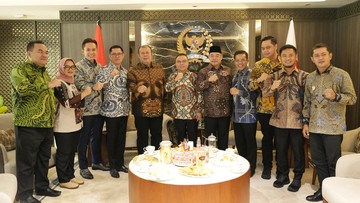
Politics is a path of service to the nation and country, not a route to personal wealth or power, stated Indonesian Deputy Coordinating Minister for Political and Security Affairs, Lt. Gen. (Ret.) Lodewijk F Paulus. Speaking at the 8th Indonesian Islamic Congress in Jakarta, Paulus asserted that the true essence of politics lies in devotion, not in the accumulation of riches or authority.
Paulus highlighted that Indonesia's national political landscape faces challenges not only from global geopolitical dynamics but also from the quality of domestic political practices. He argued that Indonesia's political system must be built upon a correct understanding of politics itself. A service-oriented approach to politics, he explained, fosters leadership that prioritizes national interests above personal or group gains. Conversely, viewing politics solely as a tool for acquiring power can perpetuate transactional practices and various forms of deviation.
The Deputy Minister also addressed several persistent challenges within Indonesia, including high-cost transactional politics, negative and smear campaigns, oligarchy, dynastic politics, and a democracy that remains largely procedural. He described these issues as shared responsibilities requiring collective effort to build a healthier and more equitable political system. Paulus called upon all elements of the Islamic community to cultivate a political paradigm where national interests are intrinsically linked to the interests of the ummah (community).
Furthermore, Paulus advocated for political education grounded in the values of moderate Islam and "Rahmatan lil 'Alamin" (mercy to all creation). He stressed the importance of encouraging citizens to select leaders based on integrity, capacity, and work programs, rather than succumbing to political promises or vote-buying. He urged all national components, especially the Muslim community, to strengthen synergy among political parties, Islamic mass organizations, community leaders, and state institutions to foster a democracy that benefits the public.
Achieving the vision of "Indonesia Emas 2045" (Golden Indonesia 2045) is contingent upon a national political system capable of producing a moral, transparent, just, and genuinely people-centric government, Paulus concluded. He emphasized that national improvement must begin with enhancing the quality of politics and the active participation of the ummah in national life, stating, "There is no political improvement without self-improvement, and there is no national improvement without the active role of the ummah."
DistantNews Editorial
Originally published by Republika in Indonesian. Translated, summarized, and contextualized by our editorial team with added local perspective. Read our editorial standards.
More Stories

From Our Blog

What Gets Lost (and Found) When News Is Translated

The Critical Role of Diaspora Media in Global News

What Travellers Should Know About Countries with Restricted Press

A Digital Nomad's Guide to Following Local News

How the Same Story Looks Different in Different Countries
