


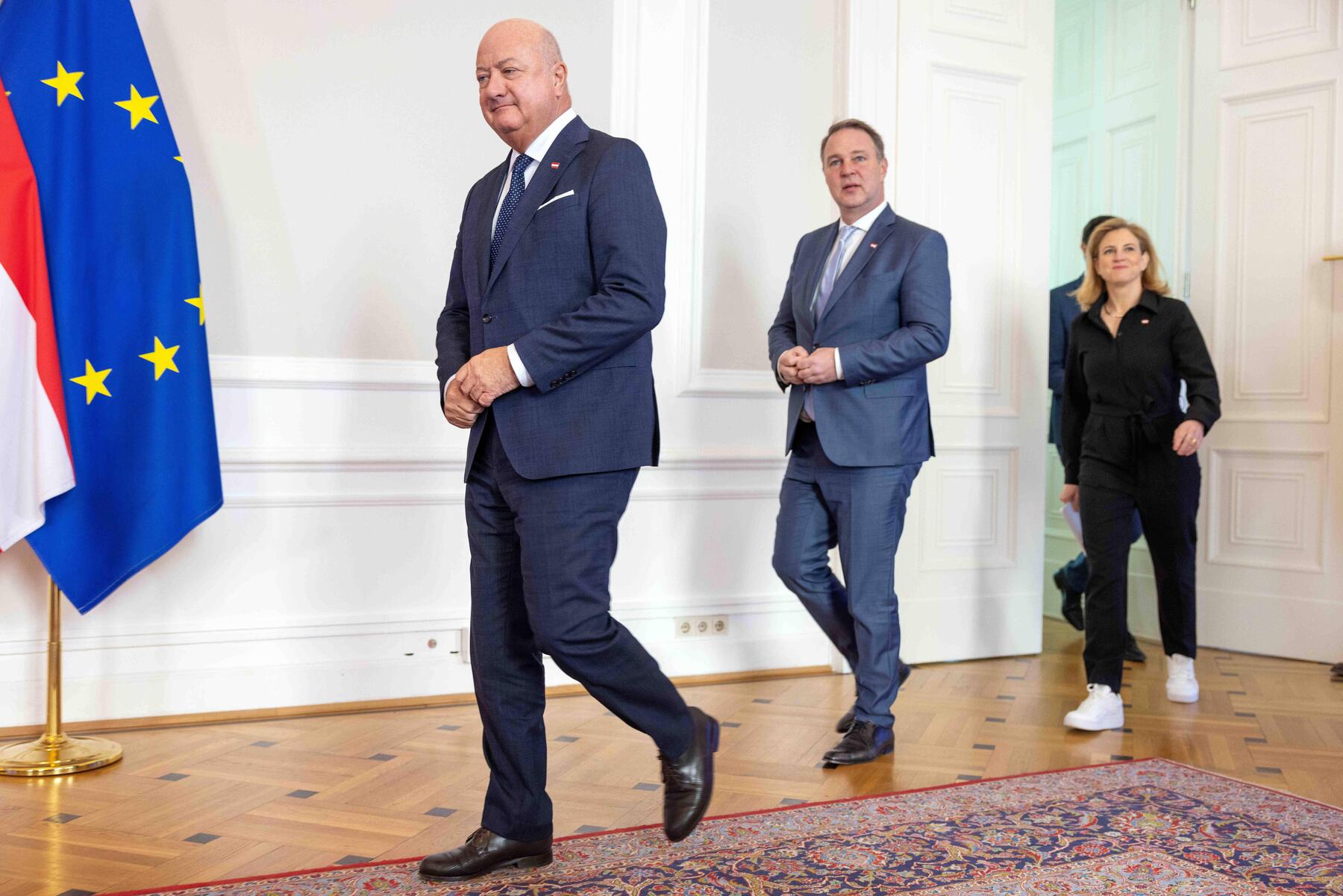
Austria's coalition agrees on 2027-28 budget, plans €5bn savings
Translated from German, summarized and contextualized by DistantNews.
TLDR
- Austria's governing coalition has reached a preliminary agreement on the budget for 2027 and 2028, aiming for 5 billion euros in savings over two years.
- The budget plan includes moderate pension cuts and a reduction in wage contributions, alongside investments in the labor market, care, and early childhood education.
- Key measures for savings include a higher bank levy and a slight increase in corporate tax, while specific details on pension adjustments are still being finalized.
After weeks of intense negotiations, Austria's governing coalition—comprising the conservative ÖVP (Türkis), the Social Democrats (Rot), and the Greens (Pink)—has finally hammered out a preliminary agreement on the budget for 2027 and 2028. This budget, framed by Chancellor Karl Nehammer (ÖVP) as a "budget in crisis" despite not being a crisis budget, aims to consolidate public finances by 5 billion euros over the next two years.
The agreement, which was reported first by 'Die Presse', balances consolidation measures with "offensive measures." While 2.5 billion euros are earmarked for savings, another 2.6 billion euros will be invested in areas such as the labor market, elderly care, and early childhood education. This approach seeks to address fiscal challenges while also pursuing policy goals important to the coalition partners.
but it is a budget in crisis
Significant aspects of the consolidation include a moderate reduction in pensions and a decrease in wage contributions. However, the specifics of the pension cuts are still being finalized, indicating potential for further debate. To bolster government revenue, the coalition plans to increase the bank levy—a move pushed by the SPÖ—and slightly raise the corporate tax rate from 23% to 24% for profits above a certain threshold.
Chancellor Nehammer emphasized that the government acted "with good judgment" in navigating these difficult decisions. The protracted negotiations, which involved multiple late-night rounds and consultations with various stakeholders, including senior representatives, underscore the political sensitivity surrounding budget allocations and fiscal policy in Austria. The agreement now sets the stage for detailed negotiations within individual ministries.
with good judgment
DistantNews Editorial
Originally published by Die Presse in German. Translated, summarized, and contextualized by our editorial team with added local perspective. Read our editorial standards.
More Stories


From Our Blog

What Gets Lost (and Found) When News Is Translated

The Critical Role of Diaspora Media in Global News

What Travellers Should Know About Countries with Restricted Press

A Digital Nomad's Guide to Following Local News

How the Same Story Looks Different in Different Countries
