


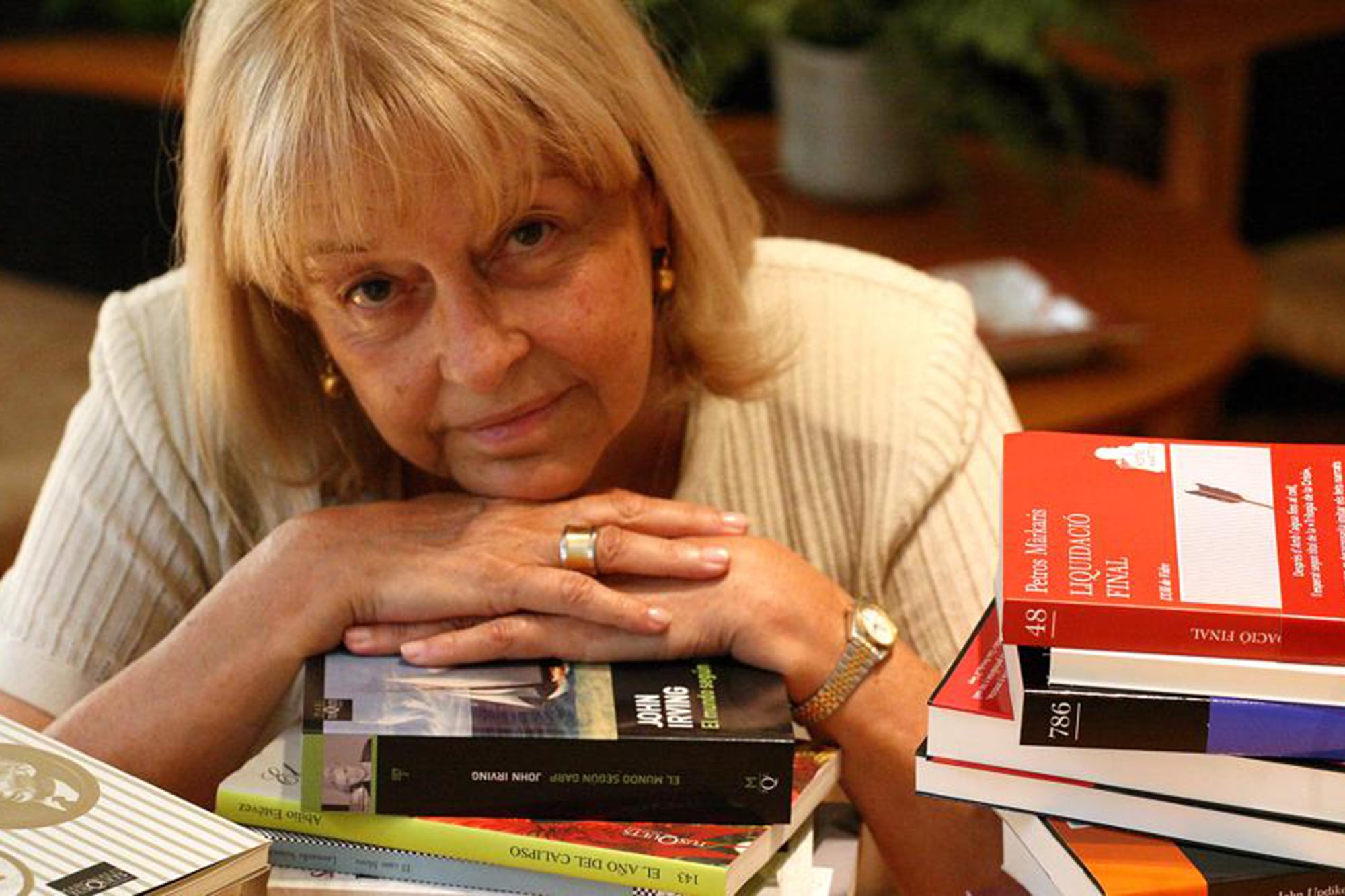
Beatriz de Moura, Legendary Editor and Founder of Tusquets, Dies at 87
Translated from Spanish, summarized and contextualized by DistantNews.
TLDR
- Beatriz de Moura, the founder of Tusquets Editores, has died at the age of 87.
- She was a pivotal figure in Spanish-language publishing, known for a catalog that balanced literary merit with international appeal and new voices.
- De Moura established Tusquets in 1969, building it into an influential independent press that published key contemporary authors and fostered close relationships with writers.
The literary world mourns the loss of Beatriz de Moura, a towering figure whose vision and dedication shaped Tusquets Editores into one of the most significant publishing houses in the Spanish-speaking world. Her passing at 87 marks the end of an era for Spanish letters, leaving behind a legacy of intellectual rigor and a profound commitment to literary excellence.
Born in Rio de Janeiro and later settling in Barcelona, de Moura's journey in publishing began at Lumen, where she honed her craft before embarking on her own ambitious venture. In 1969, alongside architect Óscar Tusquets, she founded Tusquets Editores. Operating initially from her own apartment, she navigated the challenging landscape of post-Franco Spain, establishing an independent press that championed both literary quality and international perspectives. This was no small feat in an era marked by censorship and a desire for cultural renewal.
De Moura's curatorial genius lay in her ability to cultivate a diverse and distinguished catalog. Tusquets became synonymous with groundbreaking works by international authors such as Milan Kundera and Annie Ernaux, alongside nurturing Spanish-language talents like Almudena Grandes and Fernando Aramburu. The publication of Samuel Beckett's "Residua" in 1969 and Gabriel García Márquez's "Relato de un náufrago" in 1970, which became the imprint's first bestseller, exemplify her keen eye for both literary significance and market potential.
Beyond individual titles, de Moura fostered a unique publishing philosophy centered on sustained author support and a coherent editorial vision. This approach, which she described as a "work of accompaniment," ensured that Tusquets maintained a distinct identity throughout decades of industry transformation. Her influence extended to initiatives like "La Sonrisa Vertical," a collection dedicated to erotic literature, which reflected the era's evolving social and cultural currents. Her deep connection with authors and her unwavering dedication to the craft of editing leave an indelible mark on literature in Spanish.
I created the publishing house in an apartment where I lived, in 1968. Alone. For eight years I had been working at the Lumen publishing house, founded and directed by Esther Tusquets. Then I married her brother, who is an architect, and that's how the Tusquets name came about. He provided the money, and I, the work. At Lumen, I had the best training for someone who wants to become an editor. Esther Tusquets was a very important person, a great editor and a good writer, as well as a curious character.
DistantNews Editorial
Originally published by La Nación in Spanish. Translated, summarized, and contextualized by our editorial team with added local perspective. Read our editorial standards.
More Stories



From Our Blog

What Gets Lost (and Found) When News Is Translated

The Critical Role of Diaspora Media in Global News

What Travellers Should Know About Countries with Restricted Press

A Digital Nomad's Guide to Following Local News

How the Same Story Looks Different in Different Countries
