


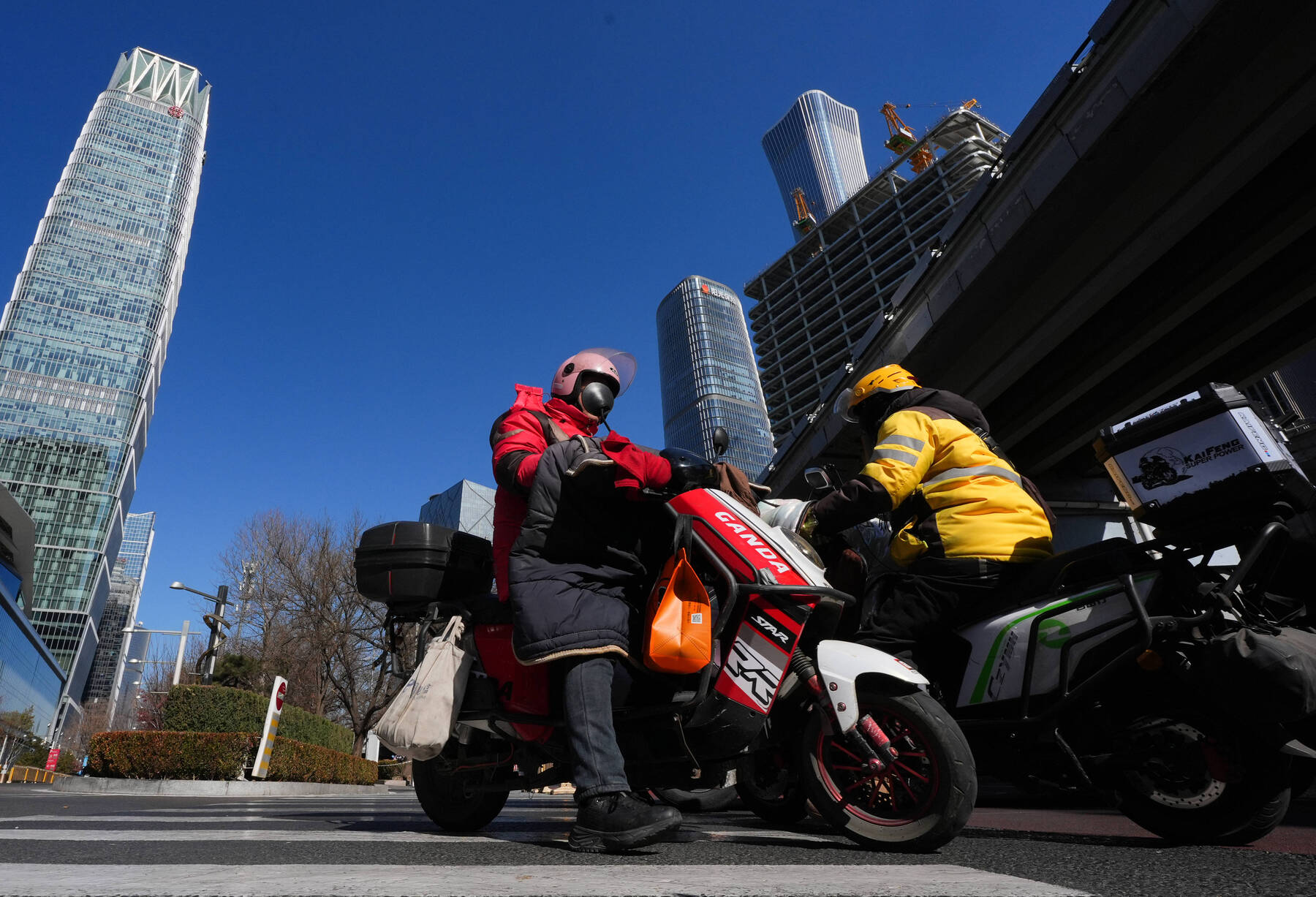
Beijing Credits Red Light Wait Times for Food Couriers to Ease Pressure
Translated from German, summarized and contextualized by DistantNews.
At a glance
News
Official statement
Ongoing story
- Beijing is implementing a new rule where waiting times at red lights will be credited to food delivery couriers' delivery times.
- This change aims to reduce the immense time pressure on couriers, who often face algorithm-driven schedules.
- The new system, developed with delivery platforms, will be tested in September and also includes adjustments for weather and order transfers.
Beijing authorities are introducing an innovative measure to alleviate the intense time pressure faced by food delivery couriers. In collaboration with major delivery platforms, the city will now credit couriers for time spent waiting at red lights. This move addresses the demanding, algorithm-controlled work environment where couriers often resort to speeding or traffic violations to meet delivery deadlines.
Under the new system, waiting times at traffic signals will be automatically deducted from the calculated delivery duration, which impacts courier performance evaluations. Delivery platforms will receive traffic light data from authorities to implement this. For instance, a 90-second wait at a red light will add 90 seconds to the courier's allotted time. This initiative is slated for a pilot test in parts of the city starting in September.
Further adjustments are being made to the delivery time calculations. The system will now assume a maximum average speed of 15 kilometers per hour. Couriers will receive extended delivery times during adverse weather conditions or difficult traffic situations. Additionally, time will be added for transferred orders. Millions of couriers in China's large cities rely on the volume of completed orders for their income, and while direct penalties for late deliveries have decreased, the pressure remains high.
DistantNews Editorial
Originally published by Die Presse in German. Translated, summarized, and contextualized by our editorial team with added local perspective. Read our editorial standards.
More Stories



From Our Blog

What Gets Lost (and Found) When News Is Translated

The Critical Role of Diaspora Media in Global News

What Travellers Should Know About Countries with Restricted Press

A Digital Nomad's Guide to Following Local News

How the Same Story Looks Different in Different Countries
