

Beijing Park's Tree Die-Off Highlights Risks of Rapid Groundwater Recovery
Translated from English, summarized and contextualized by DistantNews.
At a glance
News
Named sources
New plan
- Thousands of trees in Beijing's Jinzhandian Park have died due to excessively wet conditions, likely caused by rising groundwater levels.
- The park, a recently opened flood-storage wetland, has experienced a significant die-off across several wooded areas, affecting various tree species.
- Park officials are assessing the situation and implementing maintenance measures, including drainage and growth-promoting treatments, for surviving trees.
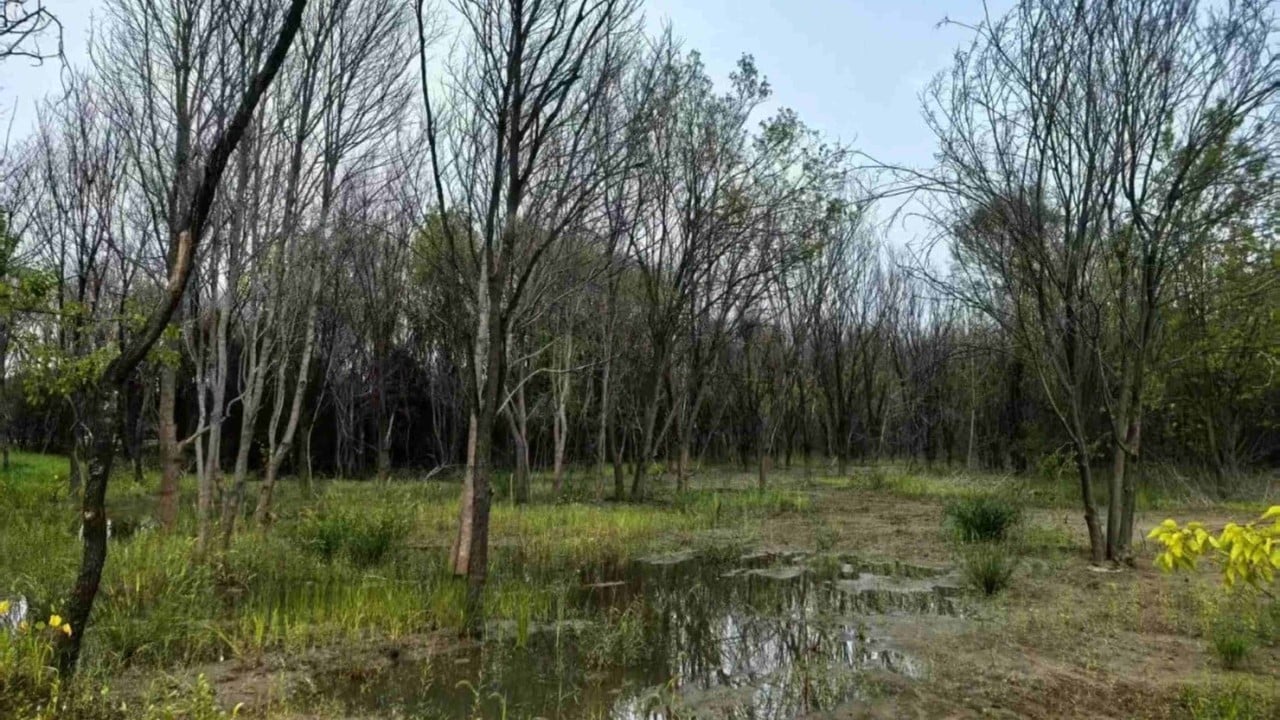
Beijing is grappling with an unusual environmental problem as thousands of trees in the newly opened Jinzhandian Park have withered and died, not from drought, but from being waterlogged.
The official Beijing Daily reported that rising groundwater levels are the likely culprit behind the extensive tree mortality in the Chaoyang district park. Jinzhandian Park, designed as a flood-storage wetland and nicknamed Beijing’s “Little Lake Baikal,” has become a popular destination since its September opening.
most likely due to prolonged waterlogging
However, the park's lush appearance is marred by the widespread death of trees, including locust, poplar, willow, ginkgo, and pine species, across four wooded sections near the water. While most affected trees were newly planted, some were approximately 20 years old and had previously thrived.
A park staff member indicated that prolonged waterlogging is the most probable cause for the large-scale die-off along the water's edge. An official from the Chaoyang district water bureau, responsible for the park's saplings, confirmed that a rising groundwater table can negatively impact tree growth. The bureau is currently evaluating the number of dead trees and developing strategies to address the issue, including enhanced maintenance for surviving trees with growth treatments and improved drainage.
When the groundwater table rises, it can have an impact on tree growth and the trees do not grow well.
DistantNews Editorial
Originally published by South China Morning Post in English. Translated, summarized, and contextualized by our editorial team with added local perspective. Read our editorial standards.
More Stories
From Our Blog

Countries Without a Free Press: What You Need to Know

What Press Freedom Means for the News You Read

What Gets Lost (and Found) When News Is Translated

The Critical Role of Diaspora Media in Global News

What Travellers Should Know About Countries with Restricted Press
