


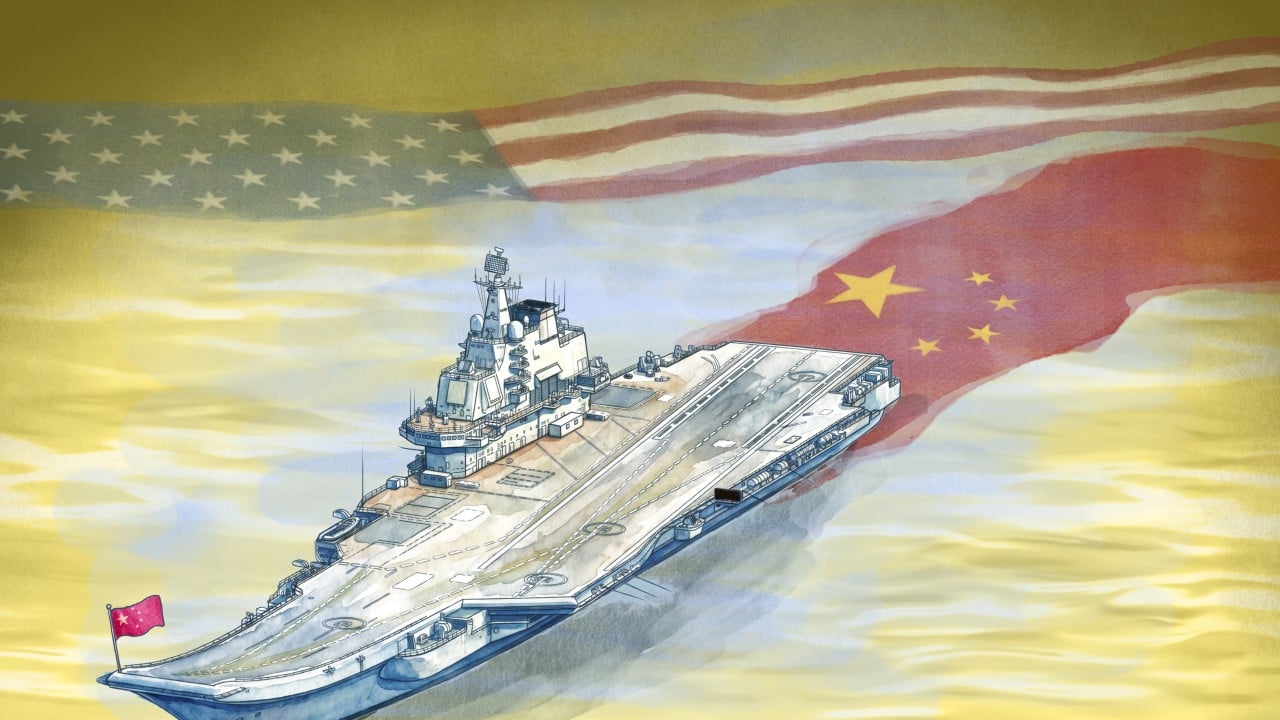
Beyond the numbers: why China’s carrier force won’t copy the US model
Summarized and contextualized by DistantNews.
At a glance
Analysis
Sources not specified
Context piece
- China's aircraft carrier doctrine is evolving to be distinct from the US model, focusing on complementing land-based air power and anti-ship missiles.
- Experts suggest evaluating China's navy through its own strategic conditions, not just by comparing equipment to the US Navy.
- The People's Liberation Army's evolving strategy, including its carrier force, aims to extend reach into the western Pacific and beyond.
As the People's Liberation Army approaches its centenary, its evolving military strategy, particularly concerning aircraft carriers, reveals a doctrine distinct from that of the United States. While the Pentagon estimates China will expand its carrier fleet to nine by 2035, experts highlight that the focus should be on quieter changes in pilot recruitment, command structures, and fleet integration.
Brendan Mulvaney, director of the China Aerospace Studies Institute, cautions against evaluating the Chinese navy through the lens of the US Navy's doctrine. He emphasizes that shared equipment does not equate to shared operational methods. China's goals, missions, and challenges differ, leading to unique "Chinese solutions to Chinese problems."
The biggest misconception among Western analysts is the tendency to evaluate the [Chinese navy] through the doctrinal mirror of the US Navy.
Unlike the US doctrine of projecting power thousands of kilometers from home, China's carriers appear designed to work in concert with its existing military assets. These include land-based air power, long-range anti-ship missiles, integrated air-defense systems, and rocket forces positioned along its coastline. This integrated approach aims to extend the People's Liberation Army's operational reach further into the western Pacific and beyond.
Just because they have the same kinds of equipment doesn’t mean they will use it in the same way as the US. Their goals, missions and challenges are different than ours; they will come up with Chinese solutions to Chinese problems.
DistantNews Editorial
Originally published by South China Morning Post. Summarized and contextualized by our editorial team with added local perspective. Read our editorial standards.
More Stories

From Our Blog

Countries Without a Free Press: What You Need to Know

What Press Freedom Means for the News You Read

What Gets Lost (and Found) When News Is Translated

The Critical Role of Diaspora Media in Global News

What Travellers Should Know About Countries with Restricted Press
