


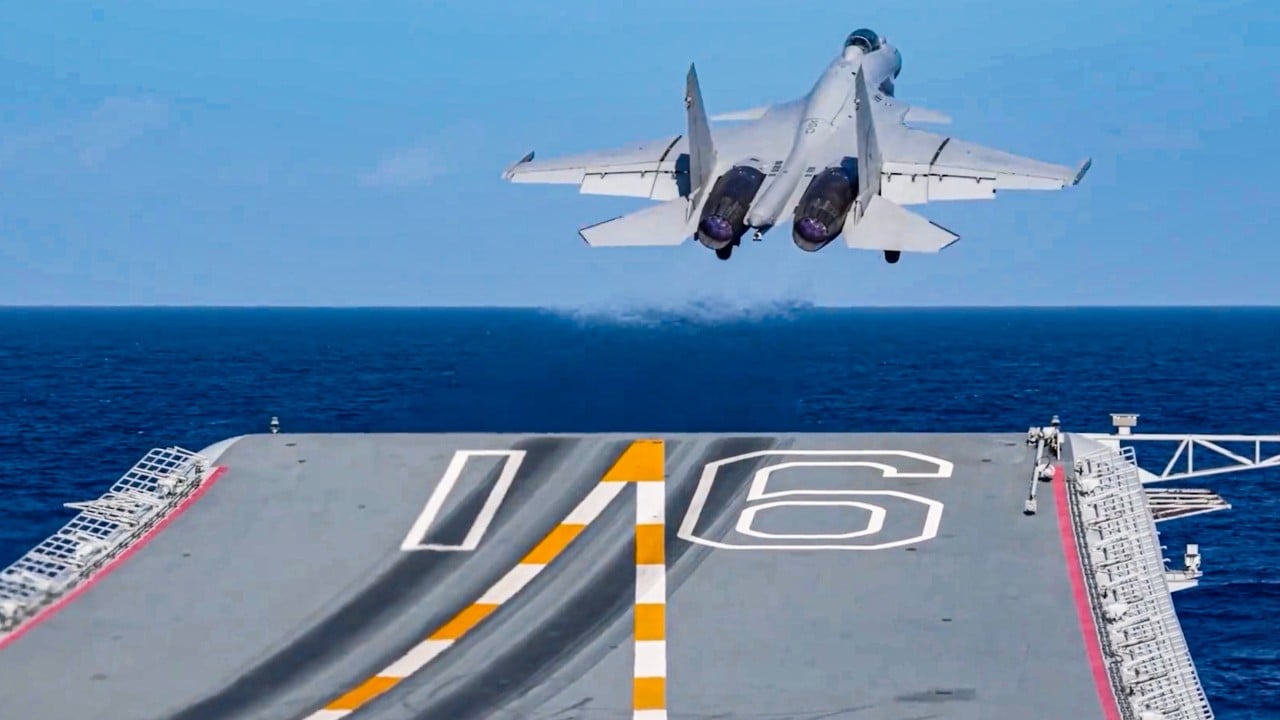
Submarine attacks may be Achilles' heel for China's new carrier fleet
Translated from English, summarized and contextualized by DistantNews.
At a glance
Analysis
Documents & data
Context piece
- China's expanding aircraft carrier fleet may be vulnerable to submarine attacks, according to a new report.
- The US Navy's attack submarines are identified as a significant threat due to gaps in China's undersea detection capabilities.
- A "cost-imposition" strategy, including submarine ambushes, could exploit these vulnerabilities.
China's rapidly growing fleet of aircraft carriers could be significantly vulnerable to submarine attacks, an area where its defensive capabilities lag behind those of the United States, according to a recent report.
The report, from the Washington-based Centre for Strategic and International Studies, outlines a "cost-imposition" strategy designed to challenge China's naval expansion. This strategy involves multiple elements, including land-based strike networks, long-range air power supported by satellites, cyber and electromagnetic attacks, and drone swarms.
However, analysts believe that submarine ambushes represent the most critical vulnerability for China's carrier groups. The report specifically highlights U.S. attack submarines operating in the western Pacific as a potent threat. It suggests that deficiencies in the Chinese navy's undersea detection and tracking systems could leave its high-value aircraft carriers exposed to attack.
This potential weakness underscores the ongoing strategic competition between the U.S. and China in naval power. Exploiting these gaps in China's undersea warfare capabilities could become a key component of U.S. and allied strategies to counter the expanding Chinese fleet.
DistantNews Editorial
Originally published by South China Morning Post in English. Translated, summarized, and contextualized by our editorial team with added local perspective. Read our editorial standards.
More Stories


From Our Blog

Countries Without a Free Press: What You Need to Know

What Press Freedom Means for the News You Read

What Gets Lost (and Found) When News Is Translated

The Critical Role of Diaspora Media in Global News

What Travellers Should Know About Countries with Restricted Press
