


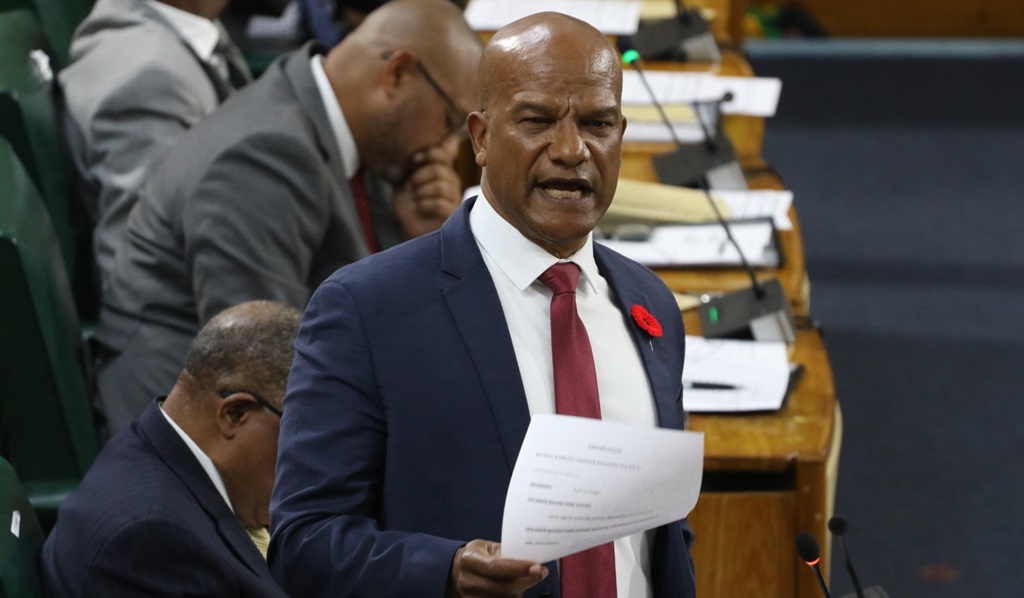
Bunting Blasts NaRRA Bill as 'Fiscal Free-for-All'; Seiveright Defends Rebuild Plan
Translated from English, summarized and contextualized by DistantNews.
TLDR
- Jamaica's opposition MP Peter Bunting has strongly criticized the proposed National Reconstruction and Resilience Authority (NaRRA) Bill.
- Bunting argues the bill grants excessive power to the executive, lacks sufficient safeguards, and risks unchecked spending of public funds.
- Minister Delano Seiveright defended the bill, stating it is necessary to expedite reconstruction efforts following Hurricane Melissa.
The Jamaica Observer reports on a contentious debate in the House of Representatives regarding the National Reconstruction and Resilience Authority (NaRRA) Bill, highlighting a sharp disagreement between opposition MP Peter Bunting and government minister Delano Seiveright.
It is a blank check without guardrails. This legislation creates an authority with sweeping powers over billions of dollars in reconstruction expenditure, yet strips away the very safeguards that protect public funds.
Bunting, representing Manchester Southern, launched a fierce critique, labeling the bill a "fiscal free-for-all." His core argument is that the legislation concentrates immense power within the executive branch, particularly the Prime Minister, while stripping away essential checks and balances. He expressed grave concern that the authority could procure goods and services directly and access unlimited funds, creating a situation ripe for mismanagement and a lack of accountability. Bunting warned that this framework sets a dangerous precedent for how Jamaica handles large-scale public expenditure during crises, potentially weakening democratic institutions.
This is not reconstruction governance, this is a fiscal free-for-all.
Conversely, Minister of Industry, Investment and Commerce Delano Seiveright defended the NaRRA Bill, framing it as a necessary and urgent response to the devastation wrought by Hurricane Melissa. He argued that the proposed authority is crucial for coordinating and fast-tracking the complex reconstruction efforts required across the island. Seiveright's perspective emphasizes the need for decisive action and streamlined processes to ensure the country can rebuild efficiently and resiliently.
The prime minister is controlling everything [and] the architecture of this authority is not independent. It is subordinate to the executive.
From a Jamaican perspective, this debate is critical. It pits the urgency of post-disaster recovery against the fundamental principles of good governance and fiscal responsibility. The opposition's concerns about executive overreach and potential for corruption are deeply resonant in a country that has historically grappled with issues of transparency and accountability in public spending. The government's focus on speed and efficiency in reconstruction is also understandable given the scale of the disaster. The coverage in the Jamaica Observer reflects this tension, presenting both sides of the argument and allowing readers to weigh the immediate need for rebuilding against the long-term implications for democratic oversight and the prudent management of national resources.
This bill sets a dangerous precedent. It is not merely about reconstruction. It is about how Jamaica governs large-scale public expenditure in times of crisis.
DistantNews Editorial
Originally published by Jamaica Observer in English. Translated, summarized, and contextualized by our editorial team with added local perspective. Read our editorial standards.
More Stories


From Our Blog

What Gets Lost (and Found) When News Is Translated

The Critical Role of Diaspora Media in Global News

What Travellers Should Know About Countries with Restricted Press

A Digital Nomad's Guide to Following Local News

How the Same Story Looks Different in Different Countries
