


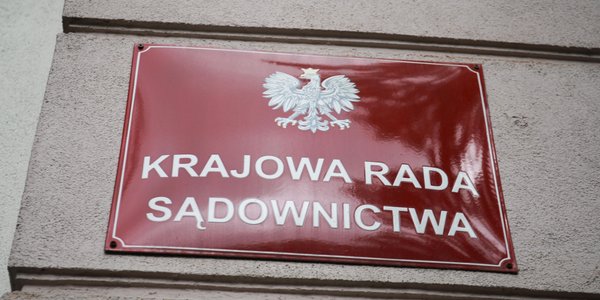
Can Poland's New KRS Mend Judicial Disputes?
Translated from Polish, summarized and contextualized by DistantNews.
TLDR
- Poland's new National Council of the Judiciary (KRS) faces the challenge of bridging the divide within the judicial community.
- The current government aims to reform the KRS by returning to an older law, incorporating preliminary elections where judges select 60 candidates, from whom the Sejm will choose 15 KRS members.
- This move comes after the president vetoed previous reform plans, and the success of the new KRS hinges on its ability to represent the entire judiciary, not just a faction.
The Polish judiciary is at a critical juncture, grappling with a nearly decade-long dispute over the appointment and promotion of judges. The recent legislative maneuver by the current government, aiming to establish a new National Council of the Judiciary (KRS), represents a significant step in this ongoing saga.
Recognizing the setback caused by the presidential veto of their earlier reform proposals, the government has opted to revert to a previous iteration of the KRS law. This revised approach introduces a novel element: informal primary elections within the courts. Here, judges will nominate 60 candidates, a pool from which the Sejm (the lower house of the Polish parliament) will ultimately select the 15 members of the KRS. This process, while seemingly democratic, carries the weight of past controversies and the potential for future discord.
From our vantage point at Rzeczpospolita, the success of this new KRS hinges on a delicate balance. The council, likely composed largely of judges appointed under previous administrations, must transcend narrow interests. It cannot afford to represent only a segment of the judiciary or, worse, a particular political faction. The true test will be whether this body can foster reconciliation and stability within the judicial system, or if it will exacerbate existing tensions.
The international community, particularly bodies like The New York Times with whom we offer joint subscriptions, often views these developments through a lens of democratic backsliding or institutional reform. However, for Poland, this is a deeply internal struggle over the very nature and independence of our judiciary. The hope is that reason will prevail, and this new KRS will serve as a unifying force, rather than a catalyst for further judicial upheaval. The path forward requires careful navigation and a commitment to the principles of justice for all Poles.
DistantNews Editorial
Originally published by Rzeczpospolita in Polish. Translated, summarized, and contextualized by our editorial team with added local perspective. Read our editorial standards.
More Stories



From Our Blog

What Gets Lost (and Found) When News Is Translated

The Critical Role of Diaspora Media in Global News

What Travellers Should Know About Countries with Restricted Press

A Digital Nomad's Guide to Following Local News

How the Same Story Looks Different in Different Countries
