


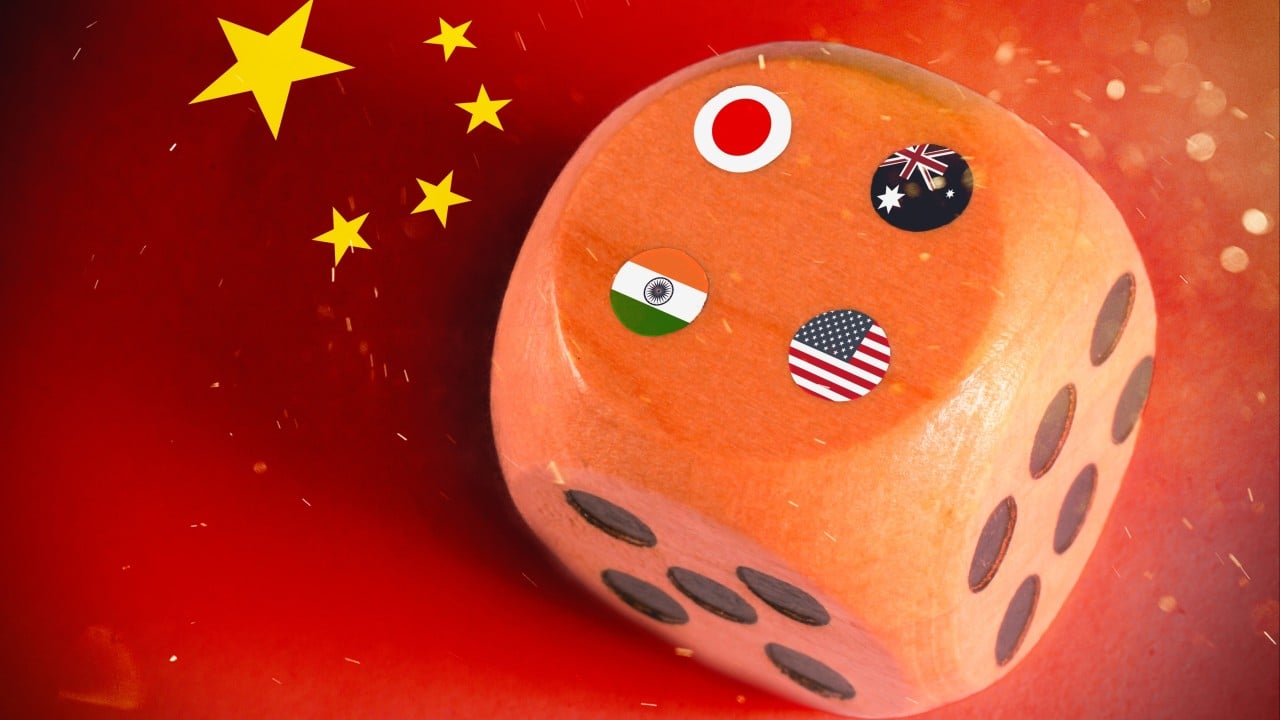
Can Quad break China’s mineral monopoly amid US-India rift?
Summarized and contextualized by DistantNews.
At a glance
News
Named sources
Ongoing story
- A recent US strike in the Gulf of Oman, which killed Indian sailors, has strained US-India relations and cast doubt on the Quad alliance's unity.
- Despite tensions, shared concerns over China's dominance in critical minerals could strengthen the Quad's resolve to diversify supply chains.
- Analysts suggest that while bilateral frictions may slow the Quad's progress, the commitment to reducing dependence on China remains a unifying factor.
A recent US strike on an oil tanker in the Gulf of Oman has not only resulted in the deaths of three Indian sailors but has also significantly strained US-India relations. This incident has cast a shadow over the Quad, an informal partnership comprising the United States, Japan, Australia, and India, and has raised questions about the group's ability to advance its agenda, particularly concerning China's dominant position in the critical minerals sector.
Despite the persistent friction between the US and India, which could potentially impede the Quad's momentum, analysts believe a shared concern may ultimately serve as a stronger unifying force. The partner countries are increasingly anxious about their reliance on China for essential supply chains. Geoffrey Pyatt, assistant secretary of state for energy resources in the Biden administration, affirmed that "all of the governments are committed to this."
All of the governments are committed to this.
Rick Rossow, a senior adviser at the Centre for Strategic and International Studies (CSIS) specializing in India and emerging Asian economies, echoed this sentiment. He suggested that while the prevailing tensions might "slow" the Quad's agenda, all four member nations "still recognise the critical importance of supply chain diversification." This shared objective could provide the necessary impetus to overcome bilateral disagreements.
However, the grouping must still navigate underlying tensions. When US Secretary of State Marco Rubio visited India for the Quad foreign ministers' meeting, he conveyed a dual message: reassurance to ease bilateral frictions with New Delhi and a reaffirmation of Washington's commitment to the alliance. This diplomatic effort highlights the delicate balance the Quad must maintain as it seeks to counter China's influence while managing internal relationships.
still recognise the critical importance of supply chain diversification
DistantNews Editorial
Originally published by South China Morning Post. Summarized and contextualized by our editorial team with added local perspective. Read our editorial standards.
More Stories

From Our Blog

Countries Without a Free Press: What You Need to Know

What Press Freedom Means for the News You Read

What Gets Lost (and Found) When News Is Translated

The Critical Role of Diaspora Media in Global News

What Travellers Should Know About Countries with Restricted Press
