


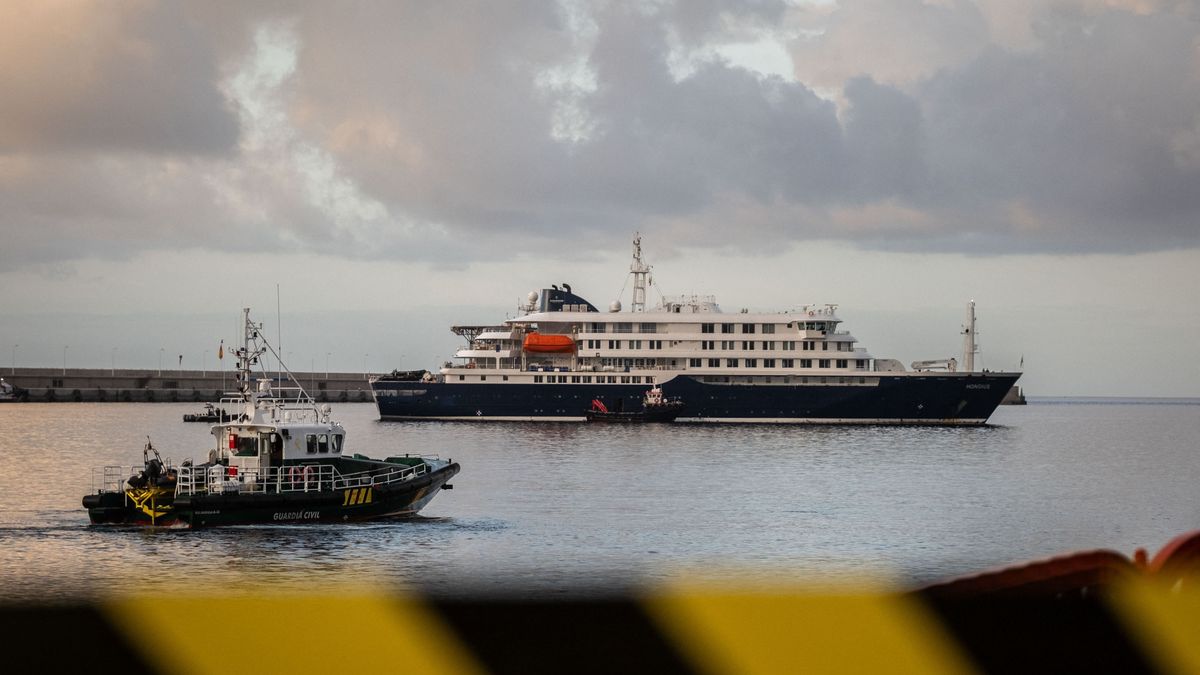
Canary Islands Deny Cruise Ship Docking Amid Evacuation Dispute
Translated from Hungarian, summarized and contextualized by DistantNews.
TLDR
- The Canary Islands regional president has refused to allow the cruise ship Hondius to dock at Granadilla de Abona's cargo port due to concerns about passenger evacuation.
- The regional government's proposal to evacuate passengers not met by flights on Sunday using other aircraft was not accepted by the Spanish government.
- Passengers are reportedly asymptomatic, and the evacuation is proceeding calmly, with many having voluntarily isolated themselves on board.
The Canary Islands are standing firm against a potential health crisis, prioritizing the safety of our citizens and the integrity of our ports. Regional President Fernando Clavijo has made the decisive move to deny the cruise ship Hondius docking privileges at Granadilla de Abona's cargo port. This action comes after it became clear that the evacuation of passengers would not be completed by Sunday, a critical deadline.
President Clavijo expressed his strong disapproval of the Spanish government's failure to accept a sensible proposal: to evacuate any passengers not met by immediate flights on other available aircraft. This pragmatic solution, aimed at swift and safe disembarkation, was unfortunately rejected. The regional government views this as a matter of both moral and legal obligation, aligning with the World Health Organization's (WHO) requests and the principles of offering a safe harbor.
I will not allow the Hondius to anchor in the cargo port of Granadilla de Abona, after it became clear that the evacuation of passengers will not be completed on Sunday.
While the situation is being managed with calm and the passengers are reported to be asymptomatic, the underlying issue remains. The Spanish government's inaction and the subsequent complications highlight a disconnect in crisis management. The Canary Islands, as a vital hub, must be equipped to handle such situations efficiently and with the full cooperation of national authorities. The smooth, albeit delayed, evacuation of the first passengers, some of whom were already isolating onboard, is a small relief, but the broader implications for public health and inter-governmental coordination are significant.
Accepting the request of the World Health Organization (WHO) and offering a safe harbor is a moral and legal obligation to our citizens, Europe, and international law.
DistantNews Editorial
Originally published by Magyar Nemzet in Hungarian. Translated, summarized, and contextualized by our editorial team with added local perspective. Read our editorial standards.
More Stories


From Our Blog

Countries Without a Free Press: What You Need to Know

What Press Freedom Means for the News You Read

What Gets Lost (and Found) When News Is Translated

The Critical Role of Diaspora Media in Global News

What Travellers Should Know About Countries with Restricted Press
