


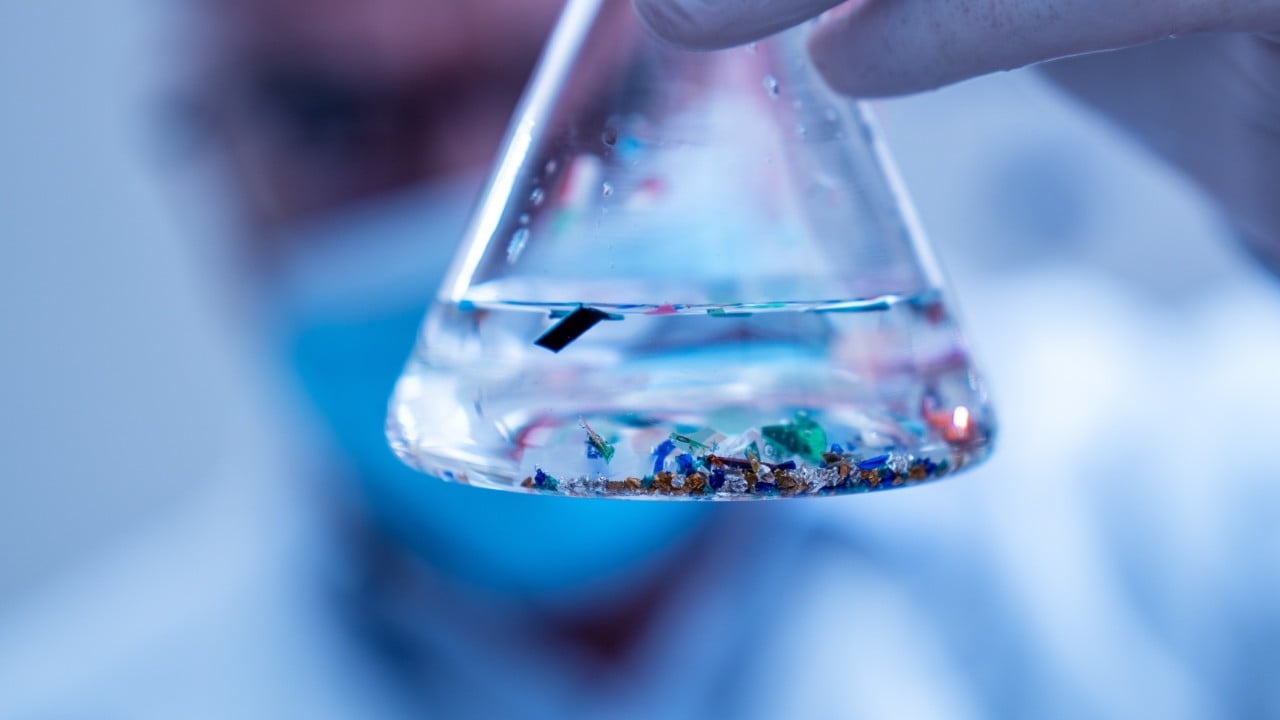
China can turn plastic waste to jet fuel at a low cost: study
Summarized and contextualized by DistantNews.
At a glance
News
Sources not specified
Context piece
- Chinese researchers have developed a cost-effective technology to convert plastic waste into aviation fuel.
- The process uses hydrogenolysis of polyolefins, which constitute over 60% of plastic waste, under mild conditions with metal catalysts.
- This innovation offers a promising solution to the environmental impact of plastic waste, which currently relies on polluting incineration and landfill methods.
A groundbreaking study from China presents a potentially low-cost method for converting plastic waste into usable aviation fuel, offering a novel solution to the escalating global plastic pollution crisis. The technology addresses the environmental burden posed by the more than 460 million tonnes of plastic produced annually.
Researchers from the Shanghai Advanced Research Institute of the Chinese Academy of Sciences and Fudan University have pioneered a chemical technique based on the hydrogenolysis of polyolefins. This process converts common plastics, primarily polythene and polypropylene, which account for over 60% of plastic waste, into valuable hydrocarbon components suitable for aviation fuel. The reaction operates under relatively mild conditions, allowing for tunable product selectivity.
Traditional methods of plastic disposal, such as incineration and landfilling, are not only inefficient but also contribute significantly to pollution. This new chemical approach, however, offers a more sustainable pathway. Aviation fuel typically requires hydrocarbons in the C8-C16 range, and the researchers' method precisely breaks down the inert polyolefins into these specific molecular lengths, akin to carefully cutting a fishing net rather than shredding it.
The core of this chemistry relies on metal catalysts that facilitate the selective cleavage and rearrangement of carbon-carbon bonds. While this route has faced challenges, the Chinese research team appears to have overcome key hurdles, enabling the efficient conversion of notoriously difficult-to-break-down plastics into a high-demand product.
This development holds significant promise for tackling the environmental impact of plastic waste. By transforming discarded plastics into a valuable commodity like jet fuel, the technology could incentivize collection and recycling efforts, potentially reducing the volume of plastic accumulating in landfills and polluting natural environments.
DistantNews Editorial
Originally published by South China Morning Post. Summarized and contextualized by our editorial team with added local perspective. Read our editorial standards.
More Stories

From Our Blog

Countries Without a Free Press: What You Need to Know

What Press Freedom Means for the News You Read

What Gets Lost (and Found) When News Is Translated

The Critical Role of Diaspora Media in Global News

What Travellers Should Know About Countries with Restricted Press
