

China completes first high-speed rail tunnel under Yangtze River
Translated from English, summarized and contextualized by DistantNews.
At a glance
News
From a news agency
New plan
- China has completed the first high-speed rail tunnel beneath the Yangtze River, a 11.9km structure in Chongqing.
- The tunnel is a key part of a high-speed line connecting southwestern China with the southeastern coast.
- The project utilized a specialized boring machine to navigate challenging geological conditions under the river.
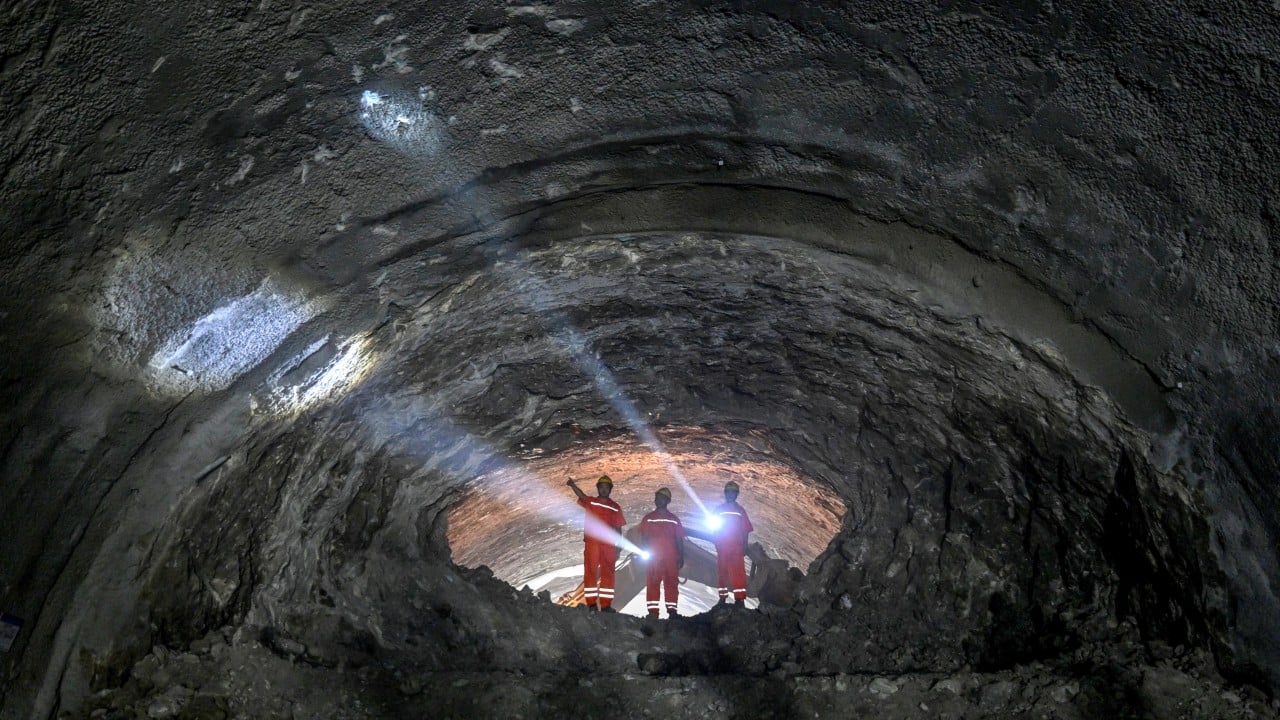
China has completed the Caiyuanba Yangtze River Railway Tunnel, the first high-speed rail tunnel to be constructed under the Yangtze River. This 11.9-kilometer (7.4-mile) tunnel in Chongqing marks a significant advancement in the nation's rail infrastructure development.
The tunnel links two districts within the megacity of Chongqing and is designated as a crucial component of a future high-speed rail line. This line is planned to connect major hubs in southwestern China with Xiamen, a city on the southeastern coast.
Construction faced considerable challenges due to Chongqing's complex geography, including tunneling beneath mountains, residential areas, and riverbeds. To overcome these obstacles, the constructor, China Railway 14th Bureau Group, employed a custom-built tunnel boring machine named "Changjiang." This machine is designed to withstand high water pressure and effectively cut through alternating rock layers deep beneath the riverbed, as reported by state news agency Xinhua.
The broader high-speed rail network aims to create a comprehensive grid of sixteen routes, eight north-south and eight east-west. This network will extend across vast distances, reaching Gansu province in the northwest, connecting to Hong Kong and Shenzhen on the southern coast, and extending to the northeastern transport hub of Harbin. As of March, construction on this extensive grid was reported to be 84 percent complete by the state-owned China Railway Group.
DistantNews Editorial
Originally published by South China Morning Post in English. Translated, summarized, and contextualized by our editorial team with added local perspective. Read our editorial standards.
More Stories

From Our Blog

Countries Without a Free Press: What You Need to Know

What Press Freedom Means for the News You Read

What Gets Lost (and Found) When News Is Translated

The Critical Role of Diaspora Media in Global News

What Travellers Should Know About Countries with Restricted Press
