


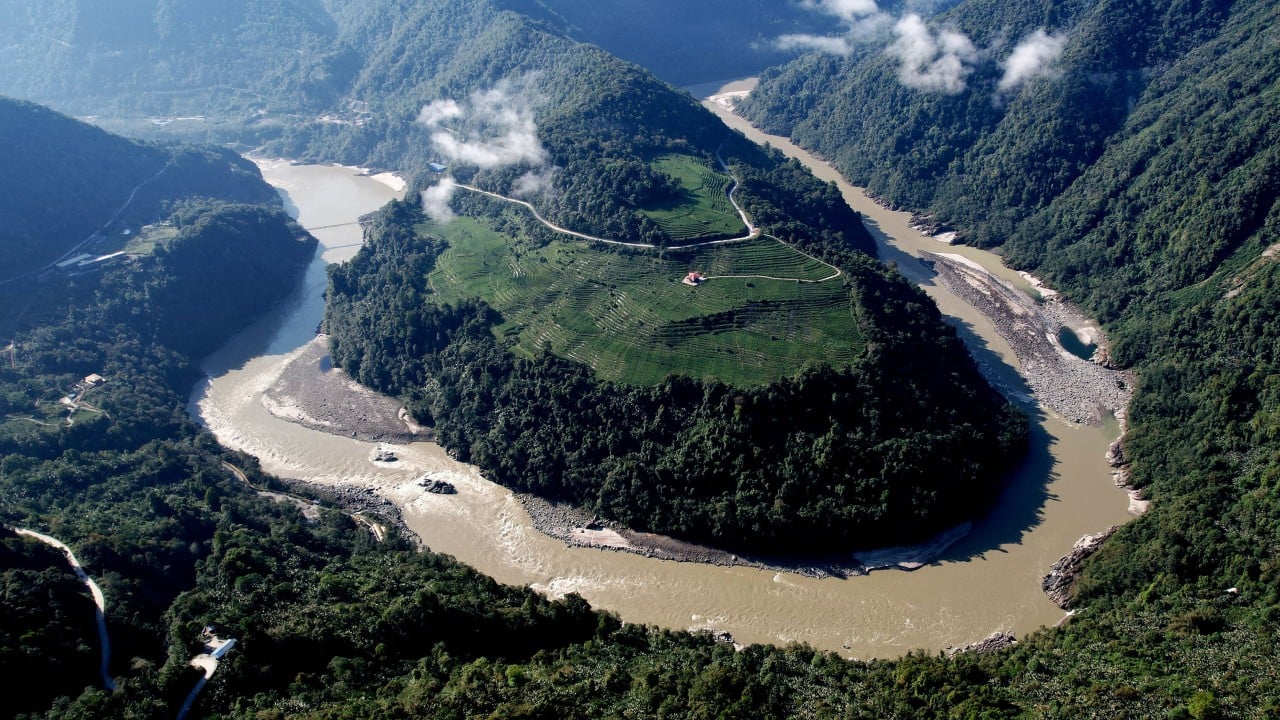
Active fault line threatens world’s biggest hydropower project, Chinese geologists warn
Summarized and contextualized by DistantNews.
At a glance
News
Documents & data
Context piece
- Chinese geologists warn an active fault line beneath the world's largest hydropower project on Tibet's Yarlung Tsangpo River threatens its structural integrity.
- The Paizhen Fault, active since the Ice Age, could significantly impact dams, roads, bridges, and tunnels in the area.
- Researchers urge engineers to enhance slope stability and implement protective measures against landslides and collapses.
An active fault line directly beneath the world's largest hydropower project poses a significant threat to the mega dam being constructed on Tibet’s Yarlung Tsangpo (Brahmaputra) River, according to Chinese geologists. The scientists identified a fracture in the Earth's crust in the eastern Himalayan region that could severely compromise the integrity of the massive infrastructure.
In a paper published in the Chinese-language journal Sedimentary Geology and Tethyan Geology, researchers from Chengdu University of Technology and the China Geological Survey highlighted the risks. They noted that the Paizhen Fault has been highly active since the Pleistocene epoch, also known as the Ice Age.
"The Paizhen Fault... will have a major impact on the structural stability and construction of nearby structures, including dams, roads, bridges and tunnels, as well as the reservoir area," the researchers wrote. The team urged engineers to strengthen slope stability and implement retaining protections to mitigate the risks of landslides and collapses.
The warning comes as hundreds were evacuated in China's Guangxi region due to heavy rains causing a dam collapse. While unrelated to the Tibet project, it underscores the potential dangers associated with large-scale water infrastructure in geologically active zones.
The Paizhen Fault, which has been highly active since the Pleistocene [also known as the Ice Age], will have a major impact on the structural stability and construction of nearby structures, including dams, roads, bridges and tunnels, as well as the reservoir area.
DistantNews Editorial
Originally published by South China Morning Post. Summarized and contextualized by our editorial team with added local perspective. Read our editorial standards.
More Stories

From Our Blog

Countries Without a Free Press: What You Need to Know

What Press Freedom Means for the News You Read

What Gets Lost (and Found) When News Is Translated

The Critical Role of Diaspora Media in Global News

What Travellers Should Know About Countries with Restricted Press
