


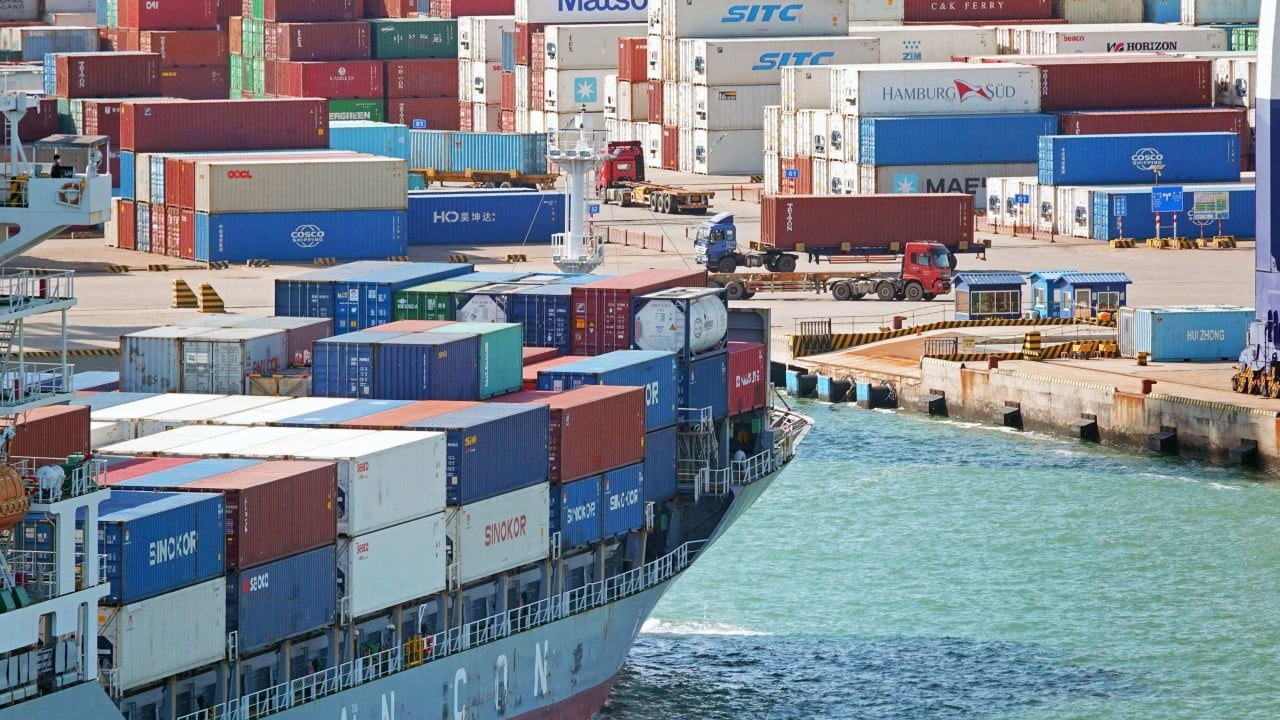
China's influence on African ports extends to software, automation, and AI: study
Translated from English, summarized and contextualized by DistantNews.
At a glance
News
Documents & data
New plan
- Chinese firms now control the software, automation, and AI tools running about one-third of African ports, extending their influence beyond operations and financing.
- Beijing's Belt and Road Initiative has led to significant investment in African port infrastructure, estimated at $50 billion, creating shipping corridors linking Africa to Chinese hubs.
- This deepening integration intertwines African trade with China's systems, impacting vital maritime routes for energy imports and global commerce.
Chinese companies have established a significant presence in Africa's maritime sector, not only operating, financing, and holding stakes in approximately one-third of the continent's ports but also controlling the crucial software, automation, and artificial intelligence (AI) systems that manage this infrastructure. This reach extends beyond the ports themselves, as Beijing finances and operates connected road, rail, and warehousing networks, effectively intertwining African trade with China's own trading systems.
These findings come from a study by the Africa Centre for Strategic Studies, which highlights how China has established shipping corridors connecting African port clusters to Chinese hub cities like Qingdao and Yantai. This development signifies Africa's increasing integration into China-centered maritime networks.
The report details that China's maritime influence covers key trade routes, including the Gulf of Aden, Gulf of Guinea, and Cape of Good Hope. These routes are vital for China's energy imports and other seaborne trade, collectively handling about $350 billion in annual commerce.
Much of this expansion is attributed to Beijing's Belt and Road Initiative, launched in 2013 to enhance global trade routes. Since its inception, China has invested an estimated $50 billion in African port infrastructure, according to the Africa Centre for Strategic Studies' research. This investment has coincided with a notable rise in China-Africa trade, which increased by nearly 18 percent in 2025, according to Chinese customs data.
DistantNews Editorial
Originally published by South China Morning Post in English. Translated, summarized, and contextualized by our editorial team with added local perspective. Read our editorial standards.
More Stories
From Our Blog

Countries Without a Free Press: What You Need to Know

What Press Freedom Means for the News You Read

What Gets Lost (and Found) When News Is Translated

The Critical Role of Diaspora Media in Global News

What Travellers Should Know About Countries with Restricted Press
