


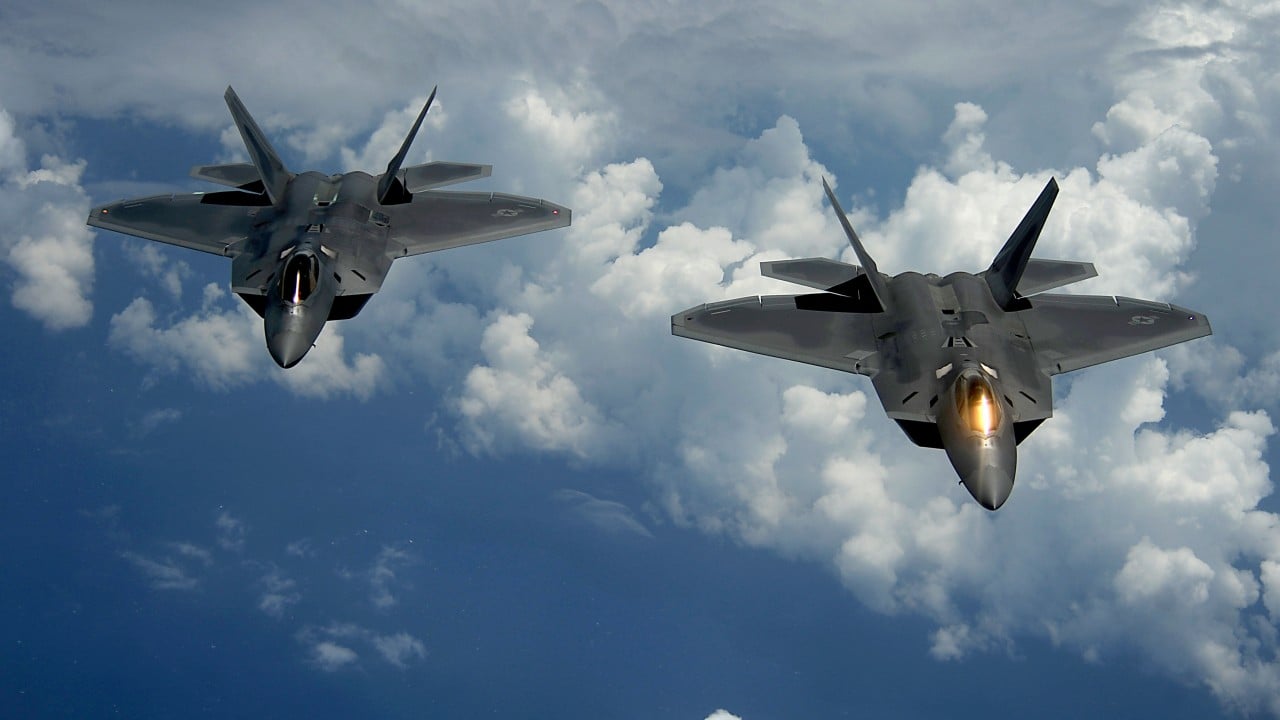
Chinese AI missile tech tracks F-22, F-35 heat signatures with over 90% accuracy
Translated from English, summarized and contextualized by DistantNews.
At a glance
News
Sources not specified
New plan
- Chinese researchers developed an artificial intelligence system capable of identifying advanced stealth fighter jets like the F-22 and F-35 by their heat signatures with over 90% accuracy.
- The AI system is designed to assist heat-seeking missiles in distinguishing between aircraft and flares, rendering traditional countermeasures ineffective.
- Researchers believe lightweight recognition models will become common in future air-to-air missiles due to their high-speed recognition and strong identification capabilities.
Chinese researchers have developed a sophisticated artificial intelligence system that can identify advanced stealth fighter jets, such as the U.S. F-22 and F-35, by their unique heat signatures with remarkable accuracy exceeding 90%.
This breakthrough technology aims to overcome a key limitation of stealth aircraft: their inability to completely hide their thermal output. While stealth fighters are designed to evade radar, they still emit heat from engine exhaust and air friction. The AI system analyzes these infrared signals, differentiating them from flares, which are typically used by aircraft to confuse heat-seeking missiles.
"Lightweight recognition models could become widely used in future air-to-air missiles because they can provide high-speed recognition while maintaining strong identification capabilities," stated An Jiangshan, the study's first author, on August 10. This suggests a future where traditional countermeasures like flares may become significantly less effective against heat-seeking munitions equipped with this AI.
The development signifies a potential shift in air combat capabilities, as the AI's ability to accurately track and identify high-value targets like the F-22 and F-35 could provide a significant advantage to heat-seeking missiles. The laboratory tests demonstrated the system's high accuracy against mock-up targets, paving the way for its integration into next-generation missile systems.
Lightweight recognition models could become widely used in future air-to-air missiles because they can provide high-speed recognition while maintaining strong identification capabilities.
DistantNews Editorial
Originally published by South China Morning Post in English. Translated, summarized, and contextualized by our editorial team with added local perspective. Read our editorial standards.
More Stories



From Our Blog

Countries Without a Free Press: What You Need to Know

What Press Freedom Means for the News You Read

What Gets Lost (and Found) When News Is Translated

The Critical Role of Diaspora Media in Global News

What Travellers Should Know About Countries with Restricted Press
