


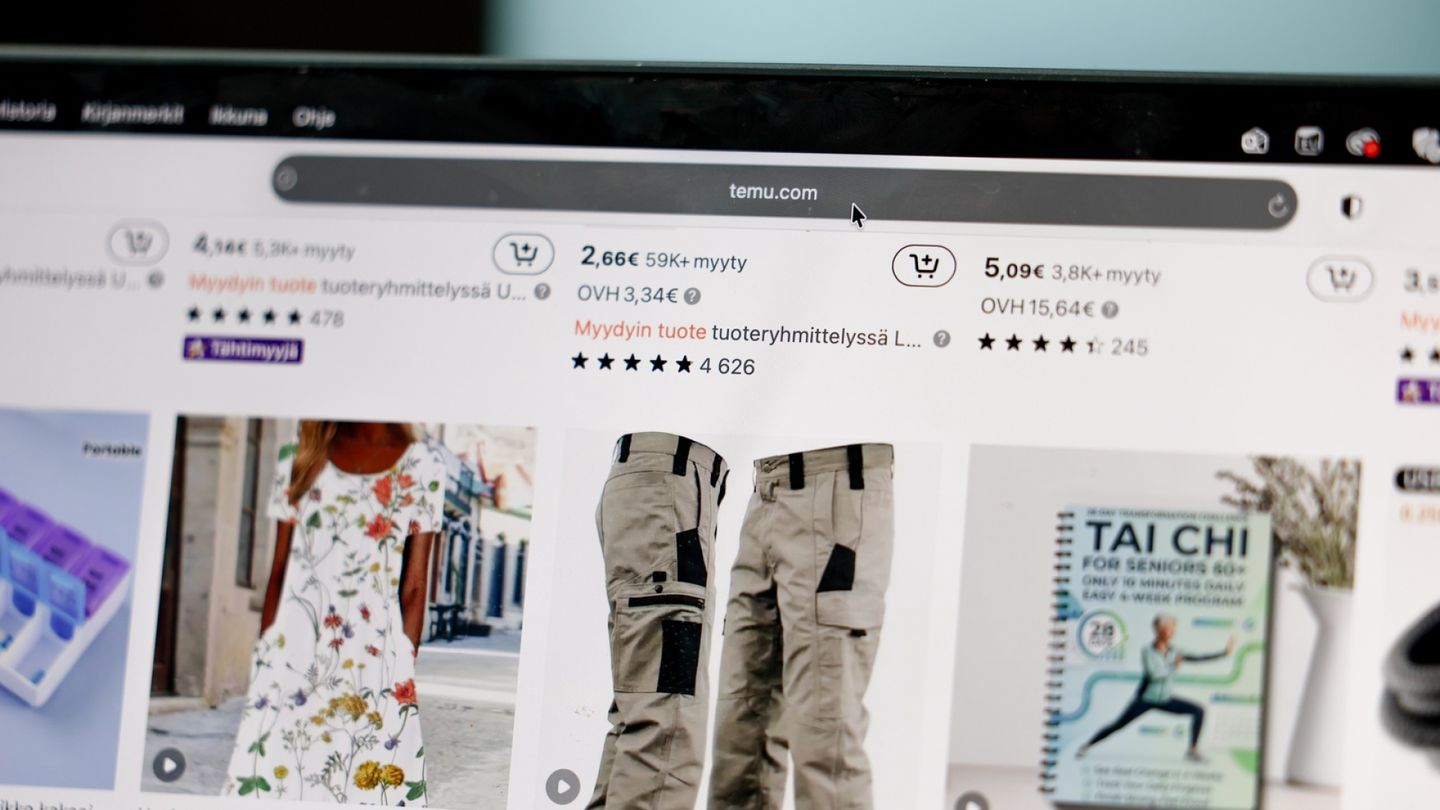
Chinese discount giant Temu becomes Finland's most popular online store
Translated from Finnish, summarized and contextualized by DistantNews.
TLDR
- Chinese e-commerce platform Temu has become Finland's most popular online store, surpassing Zalando, according to a PostNord consumer survey.
- Nearly one in three Finns made their first purchase from Temu in the last three months, with the 65-79 age group being the most frequent buyers.
- The NGO Finnwatch expresses concern over the rise of
The rapid ascent of Chinese e-commerce giant Temu to the top of Finland's online shopping scene, as reported by PostNord, is a development that warrants close attention. This surge in popularity, with nearly a third of Finns making their first purchase in the past three months, highlights a significant shift in consumer behavior. It's particularly noteworthy that older demographics, aged 65-79, are leading this trend, with half of them purchasing from China in the last quarter. This phenomenon, often termed "temuttaminen," presents both opportunities and challenges.
Finnwatch would like to curb "temutamine" with, for example, a ban on advertising for fast fashion.
From a Finnish perspective, the allure of ultra-low prices is undeniable, especially when considering the average price of these goods hovers around €5.95. However, as highlighted by the NGO Finnwatch, this low cost comes with significant concerns regarding product safety and environmental impact. The lack of oversight on products sold directly from Chinese manufacturers and the exclusion of items like clothing and air freight from carbon pricing mechanisms are critical issues. While Western media might focus on the economic disruption, our local concern is the potential for unchecked imports to flood the market with unsafe goods and bypass environmental regulations that Finnish businesses adhere to.
Nearly every 3rd Finn ordered something from Temu for the first time in the last 3 months.
The Finnish government's initiative to review legislation starting in March 2026 is a step in the right direction. Finnwatch's proposals for an advertising ban on fast fashion and a "junk tax" are pragmatic measures aimed at curbing the excesses of this business model. These are not just abstract economic policies; they directly impact our local retail environment and consumer safety standards. The fact that Temu has faced scrutiny from European consumer protection authorities underscores the need for a robust local response.
The most Chinese online shopping was done by 65–79-year-olds.
This story is uniquely interesting from a Finnish viewpoint because it directly challenges our established consumer protection frameworks and environmental standards. While international coverage might frame this as a simple market disruption, for us, it's about safeguarding our consumers and upholding our commitment to sustainability against a tide of low-cost, potentially unregulated goods. The sheer volume of low-value shipments, over 40 million from outside the EU in 2025 alone, nearly all from China, indicates the scale of this challenge. We must ensure that the convenience and affordability offered by platforms like Temu do not come at the expense of our safety and environmental values.
Finnish government launched a review of legislation changes in March 2026.
DistantNews Editorial
Originally published by Helsingin Sanomat in Finnish. Translated, summarized, and contextualized by our editorial team with added local perspective. Read our editorial standards.
More Stories



From Our Blog

What Gets Lost (and Found) When News Is Translated

The Critical Role of Diaspora Media in Global News

What Travellers Should Know About Countries with Restricted Press

A Digital Nomad's Guide to Following Local News

How the Same Story Looks Different in Different Countries
