


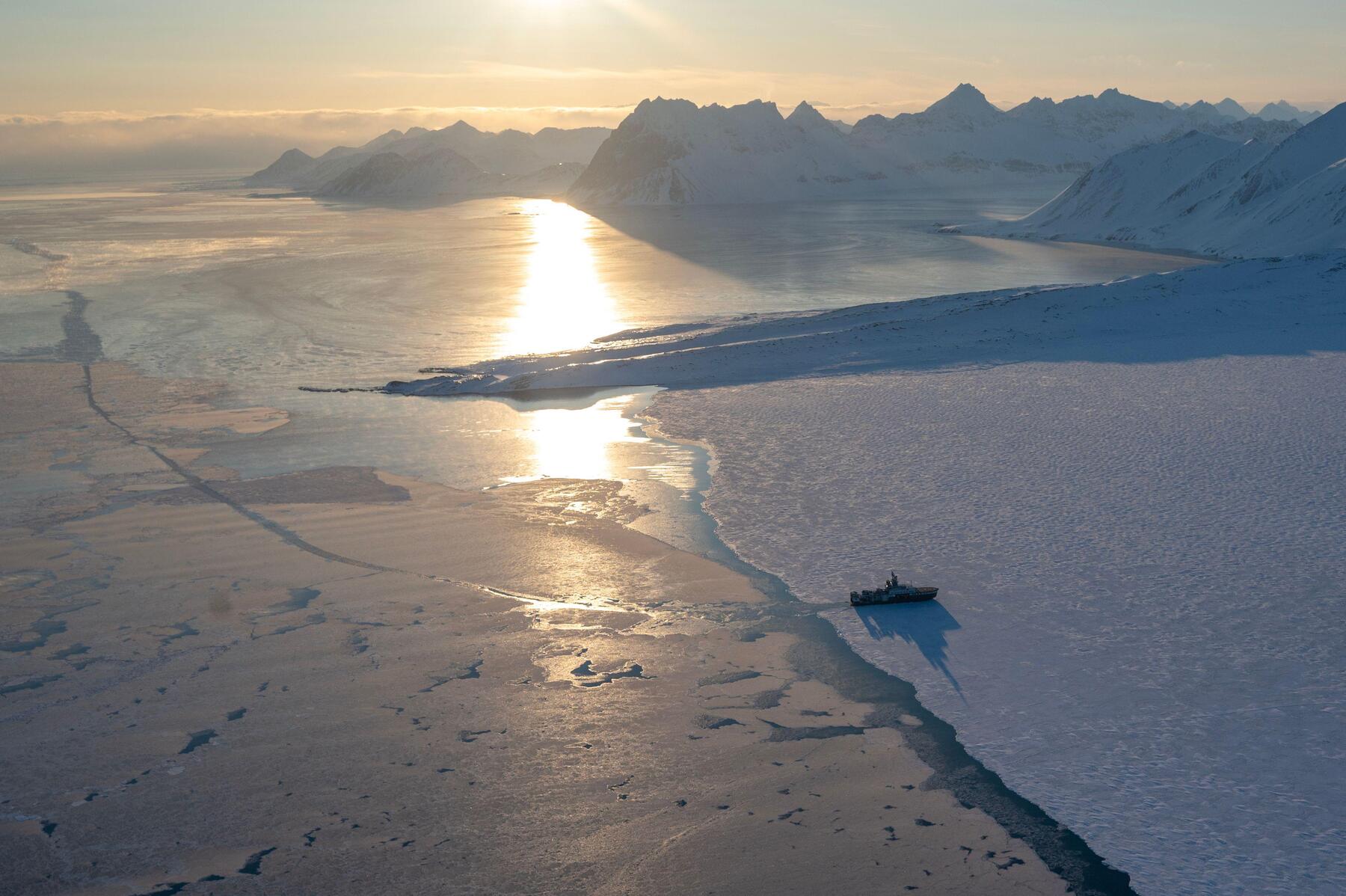
Climate Report Sounds Alarm: Over 30 Degrees Celsius in the High North
Translated from German, summarized and contextualized by DistantNews.
TLDR
- Europe's coldest regions, including the Arctic and Alps, are warming too rapidly, with dramatic consequences for sea levels and biodiversity.
- Norway, Sweden, and Finland experienced their worst heatwave on record in 2025, with temperatures exceeding 30 degrees Celsius for 21 consecutive days above the Arctic Circle.
- The European seas recorded their highest-ever annual surface temperature, impacting marine life and contributing to extreme coastal temperatures.
The latest European State of the Climate report paints a stark picture of accelerating climate change, with alarming temperature records being shattered across the continent. Our analysis at Die Presse confirms that the most dramatic impacts are unfolding in the coldest regions of Europe, a stark contrast to the mild summer and cool winter experienced in Austria last year. This report underscores that the brief respite was a global anomaly, not a trend.
The data reveals unprecedented heatwaves, particularly in Scandinavia, where Norway, Sweden, and Finland endured over three weeks of temperatures exceeding 30 degrees Celsius within the Arctic Circle. This extreme heat, coupled with the unusual warming of surrounding seas, has led to a significant melt of glaciers, with Greenland alone losing 139 billion tons of ice – equivalent to one and a half times the mass of all Alpine glaciers. This accelerated ice loss is a direct precursor to measurable sea-level rise, a critical concern for coastal communities across Europe.
Im Jahr 2025 erlebten Norwegen, Schweden und Finnland mit 21 aufeinanderfolgenden Tagen und Temperaturen von über 30 Grad Celsius innerhalb des Polarkreises ihre schlimmste Hitzewelle seit Beginn der Aufzeichnungen.
The Alps, a region synonymous with ice and snow, are also severely affected. The report highlights an extreme reduction in ice and snow cover, which normally plays a crucial role in regulating the climate through reflection. This loss not only impacts the delicate Alpine ecosystem but also disrupts the natural climate balance. Furthermore, European seas are experiencing record-breaking surface temperatures, a trend that has been escalating for years. This warming is devastating marine biodiversity and exacerbating extreme temperatures and humidity in coastal areas, making life increasingly difficult for residents.
While international news outlets may focus on the global implications, for Austria and the Alpine region, this report is a direct warning. The loss of glaciers and snowpack directly affects our water resources, tourism, and the very identity of our mountainous landscape. The warming seas, while a global phenomenon, have tangible effects on weather patterns that can influence our own climate. This is not a distant problem; it is unfolding in our backyard, demanding urgent attention and action.
In den kältesten Regionen Europas waren im vergangenen Jahr die Auswirkungen des Klimawandels am stärksten ausgeprägt.
DistantNews Editorial
Originally published by Die Presse in German. Translated, summarized, and contextualized by our editorial team with added local perspective. Read our editorial standards.
More Stories


From Our Blog

What Gets Lost (and Found) When News Is Translated

The Critical Role of Diaspora Media in Global News

What Travellers Should Know About Countries with Restricted Press

A Digital Nomad's Guide to Following Local News

How the Same Story Looks Different in Different Countries
