


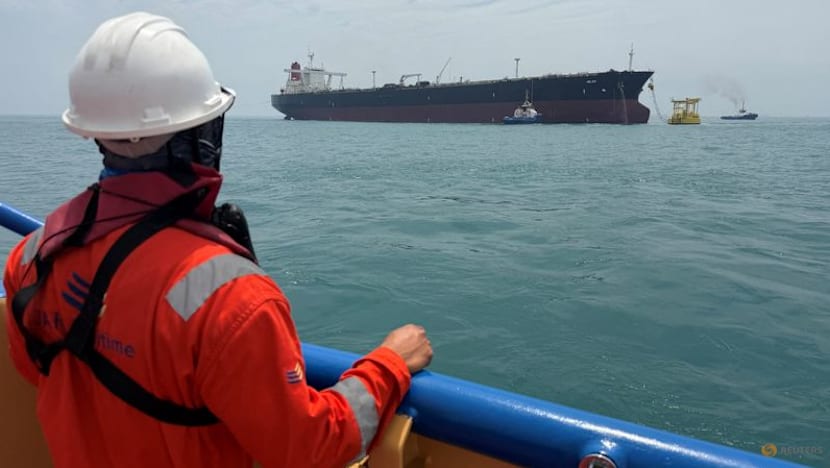
Commentary: Stranded seafarers in the Strait of Hormuz face missile fears, exhaustion and isolation
Summarized and contextualized by DistantNews.
TLDR
- Thousands of seafarers are stranded in and around the Strait of Hormuz due to its closure, facing dangers akin to combat zones.
- Crews are enduring exhaustion, dwindling supplies, and psychological stress, with limited access to safe harbors or adequate rest.
- The crisis highlights pre-existing issues of poor working conditions, financial insecurity, and isolation faced by seafarers globally, exacerbated by geopolitical tensions.
The ongoing closure of the Strait of Hormuz has plunged thousands of seafarers into a humanitarian crisis, trapping them in a precarious situation where they face not only the geopolitical dangers of the region but also the severe physical and psychological toll of prolonged isolation and exhaustion. As many as 20,000 seafarers on approximately 2,000 vessels are reportedly stranded, enduring conditions that a barrister describes as akin to combat zones. This dire situation underscores the vulnerability of maritime workers caught in the crossfire of international conflicts.
These seafarers are battling dwindling supplies, forced to ration food and water, and are denied the respite of safe harbors as nearby ports are deemed insecure. The psychological stress is immense, compounded by the constant risk of missile strikes or falling debris. Charities like Mission to Seafarers are attempting to provide aid, but even these efforts carry significant risks for the aid workers themselves. The extended crisis also means seafarers may be forced to work beyond their contracts, risking non-payment and the inability to return home, with some reportedly falling victim to scammers offering false promises of safe passage.
This harrowing ordeal serves as a stark reminder of the generally appalling working conditions that seafarers endure even in normal times. Financial insecurity, job uncertainty, overwork, isolation, and limited career prospects are endemic to the profession. Fatigue and sleep deprivation are constant companions, increasing the risk of serious accidents on vessels often lacking adequate medical facilities. The current crisis in the Strait of Hormuz has amplified these existing challenges to a critical level.
The situation echoes the broader issues brought to light during the COVID-19 pandemic, when hundreds of thousands of seafarers were stranded at sea, unpaid and unable to be repatriated. While amendments to the Maritime Labour Convention 2006 have since designated seafarers as "key workers" to facilitate crew changes and repatriation, these provisions do not take effect until December 2027. This leaves seafarers in the Strait of Hormuz in a particularly vulnerable position, reliant on international conventions that are not yet fully implemented and facing immediate dangers that demand urgent attention.
DistantNews Editorial
Originally published by CNA. Summarized and contextualized by our editorial team with added local perspective. Read our editorial standards.
More Stories


From Our Blog

What Gets Lost (and Found) When News Is Translated

The Critical Role of Diaspora Media in Global News

What Travellers Should Know About Countries with Restricted Press

A Digital Nomad's Guide to Following Local News

How the Same Story Looks Different in Different Countries
