


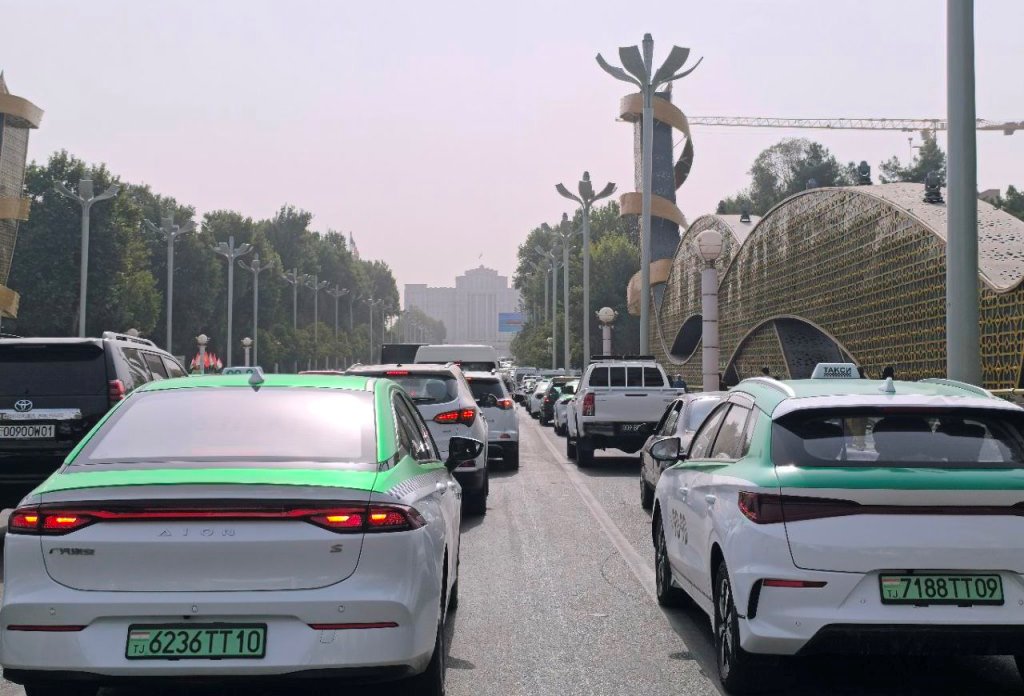
“Convenient, affordable, and cheap”: Dushanbe residents speak out on raids against shared taxis
Summarized and contextualized by DistantNews.
TLDR
- Dushanbe authorities are cracking down on illegal shared taxis, citing traffic congestion and disruption.
- Residents strongly oppose the raids, arguing that these shared taxis are affordable, convenient, and essential for many.
- The debate highlights issues with public transportation availability and affordability in the Tajik capital.
A contentious debate is unfolding in Dushanbe as authorities intensify raids against informal shared taxis, commonly known as '10-somoni taxis,' which operate on popular routes. The government's justification for these crackdowns centers on the belief that these vehicles contribute to traffic jams and disrupt urban mobility. However, this official stance is met with significant opposition from the city's residents, who view these shared taxis as a vital and affordable mode of transport.
They save the residents.
Surveys and online commentary reveal a strong consensus among Dushanbe's populace: these shared taxis are not just a convenience but a necessity. Residents laud their affordability, particularly compared to official taxis, and their reliability, especially during off-peak hours when public buses and trolleybuses cease operation. For many, especially those with modest incomes, the 10-somoni fare represents a lifeline, enabling them to commute to work, travel with family, or simply navigate the city without incurring prohibitive costs.
10-somoni taxis are very convenient and economical for the wallet.
The residents' perspective paints a picture of a public transport system struggling to meet the needs of the populace. The perceived unreliability and high cost of official taxis, coupled with the limited operating hours of public buses, leave a significant gap that the shared taxis fill. This situation underscores a broader concern about urban planning and the provision of accessible, affordable transportation in Dushanbe. The call for legalization and regulation, rather than outright bans, reflects a desire for solutions that acknowledge the practical realities faced by ordinary citizens, suggesting that authorities should focus on improving the existing system rather than eliminating a service that many depend on.
After 6 pm, buses and trolleybuses do not run around the city, their working day ends. How to get home? 10-somoni taxis come to the rescue.
DistantNews Editorial
Originally published by Asia-Plus. Summarized and contextualized by our editorial team with added local perspective. Read our editorial standards.
More Stories



From Our Blog

What Gets Lost (and Found) When News Is Translated

The Critical Role of Diaspora Media in Global News

What Travellers Should Know About Countries with Restricted Press

A Digital Nomad's Guide to Following Local News

How the Same Story Looks Different in Different Countries
