


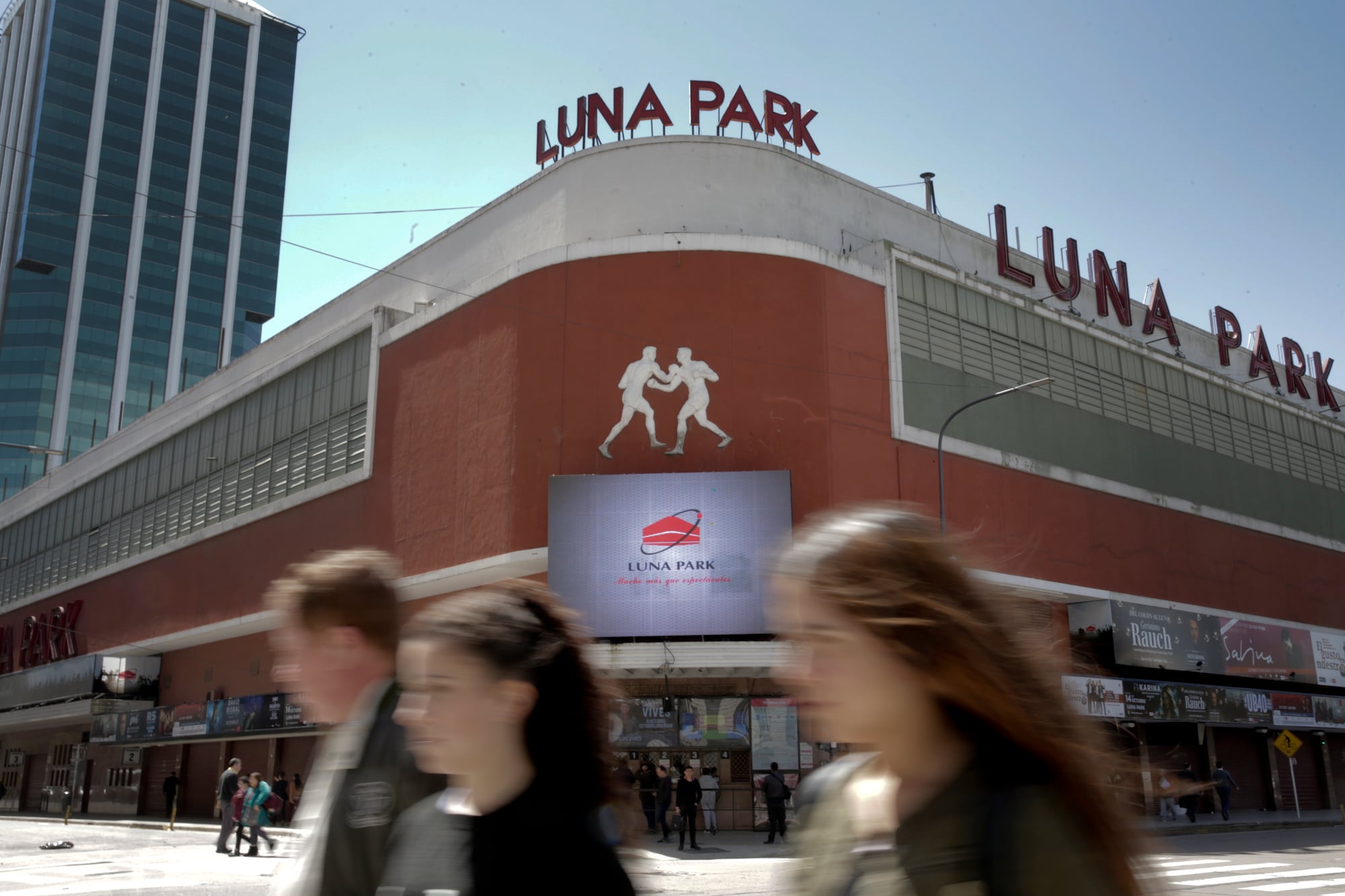
Court Halts Demolition of Historic Luna Park in Buenos Aires
Translated from Spanish, summarized and contextualized by DistantNews.
TLDR
- A court has suspended demolition and construction work on the historic Luna Park building in Buenos Aires.
- The building was declared a National Historic Monument, and the ruling protects its heritage from irreversible alterations.
- The decision overturns a lower court's authorization for demolition and construction of a new, larger building.
In a landmark decision for heritage preservation, Buenos Aires's Chamber of Appeals has halted the demolition of the iconic Luna Park stadium. This ruling, a significant victory for cultural patrimony, suspends all construction and demolition work on the building, which holds the esteemed status of National Historic Monument. The court's unanimous decision, delivered by judges Gabriela Seijas, Horacio Corti, and Hugo Ricardo Zuleta, effectively reverses a previous ruling that had permitted the stadium's demolition to make way for a much larger new development. The appeals were brought forth by lawyer Andrés Gil Domínguez and several civil society organizations, including Basta de Demoler, Fundación Ciudad, and Observatorio del Derecho a la Ciudad. These groups argued passionately that the Luna Park, a beloved landmark, should not be subjected to irreversible alterations that violate the city's Urban Planning Code. The Archbishopric of Buenos Aires, the current owner, had proposed a project that would demolish most of the interior and other protected sectors to erect a new structure, a plan that the court has now deemed unacceptable. This judicial intervention underscores a growing sentiment in Argentina, and particularly in Buenos Aires, to safeguard its architectural heritage against unchecked urban development. The ruling is seen as a crucial step in protecting the city's identity and ensuring that its historical fabric is not erased for the sake of modernization. From our perspective here in Argentina, this is not just about a building; it's about preserving the soul of our city and resisting the homogenizing forces that often prioritize new construction over historical significance. This victory highlights the power of collective action and legal recourse in defending cultural landmarks against powerful development interests.
DistantNews Editorial
Originally published by La Nación in Spanish. Translated, summarized, and contextualized by our editorial team with added local perspective. Read our editorial standards.
More Stories



From Our Blog

What Gets Lost (and Found) When News Is Translated

The Critical Role of Diaspora Media in Global News

What Travellers Should Know About Countries with Restricted Press

A Digital Nomad's Guide to Following Local News

How the Same Story Looks Different in Different Countries
